A stores number is dull engraving until you notice someone wrote a specification, twelve factories answered, and a corporal ordered a chronograph from a prison camp.
Pocket watches were a fumble in a trench, so soldiers soldered wire lugs onto small cases and strapped them on. They paid for those watches themselves. White dials flipped to black for night reading, and radium went on the hands. Louis Cartier drew the Tank in 1917 after looking at a Renault FT, a jewellery-house rectangle with a war machine's name.
1928-1931
Navigation instruments
Philip Van Horn Weems needed a watch settable to the second against a radio time signal, because thirty seconds of error could throw an aircraft miles off. Longines-Wittnauer built him a second-setting watch with a rotating central disc. Charles Lindbergh studied under Weems in 1928 and took the idea into the Hour Angle watch, in production at Longines from 1931, with longitude arithmetic on a rotating bezel.
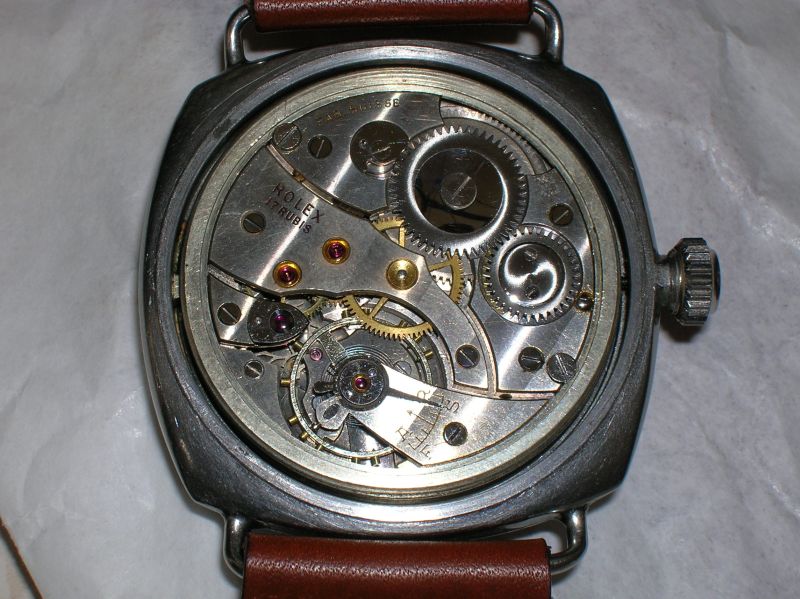
Panerai's reference 3646 was a large cushion-cased instrument issued to the Italian Navy's Decima Flottiglia MAS, the unit that rode manned torpedoes. Rolex made the cases; Panerai painted the Radiomir dials and assembled the watches in Florence. They were kit, not merchandise.
Britain wrote a waterproof general-service spec in 1944 and the W.W.W. watches arrived in 1945, after the war in Europe had ended. In the same years Hans Wilsdorf posted Oyster Chronographs to British officers in the camps on deferred payment. Corporal Clive Nutting ordered a 3525 from Stalag Luft III.
The RAF's Mark 11, stores reference 6B/346, put IWC's calibre 89 in a soft-iron cage for cockpit magnetism. The Royal Navy later asked Rolex to modify the Submariner: fixed bars, a 60-minute bezel, sword hands. Tudor had already been sending Submariners to the French Marine Nationale, with M.N. year stamps on the casebacks.
GG-W-113, from 1967, asked American makers for a sterile hacking field watch; Hamilton was one of them. MIL-W-50717 asked Benrus for a one-piece dive watch. In Vietnam, the Seiko 6105 that collectors call Captain Willard was bought at a post exchange with dollars, not signed for as kit.
CWC's G10, issued from 1980, was the first quartz watch British forces received as kit, named, the usual story goes, after the form used to draw it. Marathon's GSAR still carries a NATO stock number. Sinn's EZM line began with a 1997 mission timer for German customs special unit ZUZ. Tudor put the Marine Nationale relationship back on the Pelagos FXD in 2021.
Collectors talk about military watches as if the army kept a jewellery counter. Most of the pieces that get called that were bought with pay, or later with a card. The ones that belong on this list arrived with a stores number, a broad arrow, or a specification thick enough that a factory had to change the case. Issued means the watch was kit. It sat on a form, in a bin, and on a wrist that did not get to choose the logo.
That is a colder origin story than the advertising ones, and the paperwork is where the watches get interesting. Britain asked Switzerland for a waterproof wristwatch in 1944 and got twelve slightly different answers. Hans Wilsdorf posted chronographs into a prison camp on the honour system. American procurement wrote a dive-watch specification so detailed that Benrus answered it with a one-piece case you serviced from the front.
What follows runs by era, from the trench conversion that soldiers paid for themselves to the quartz G10 that British troops filled a form to receive. A Seiko bought at a PX sat beside issued kit in Vietnam. A Doxa sold through Cousteau's American company went to work without a Crown mark. Those two belong here as the cousins who paid.
Pocket watches grew lugs, then a navy officer asked for seconds
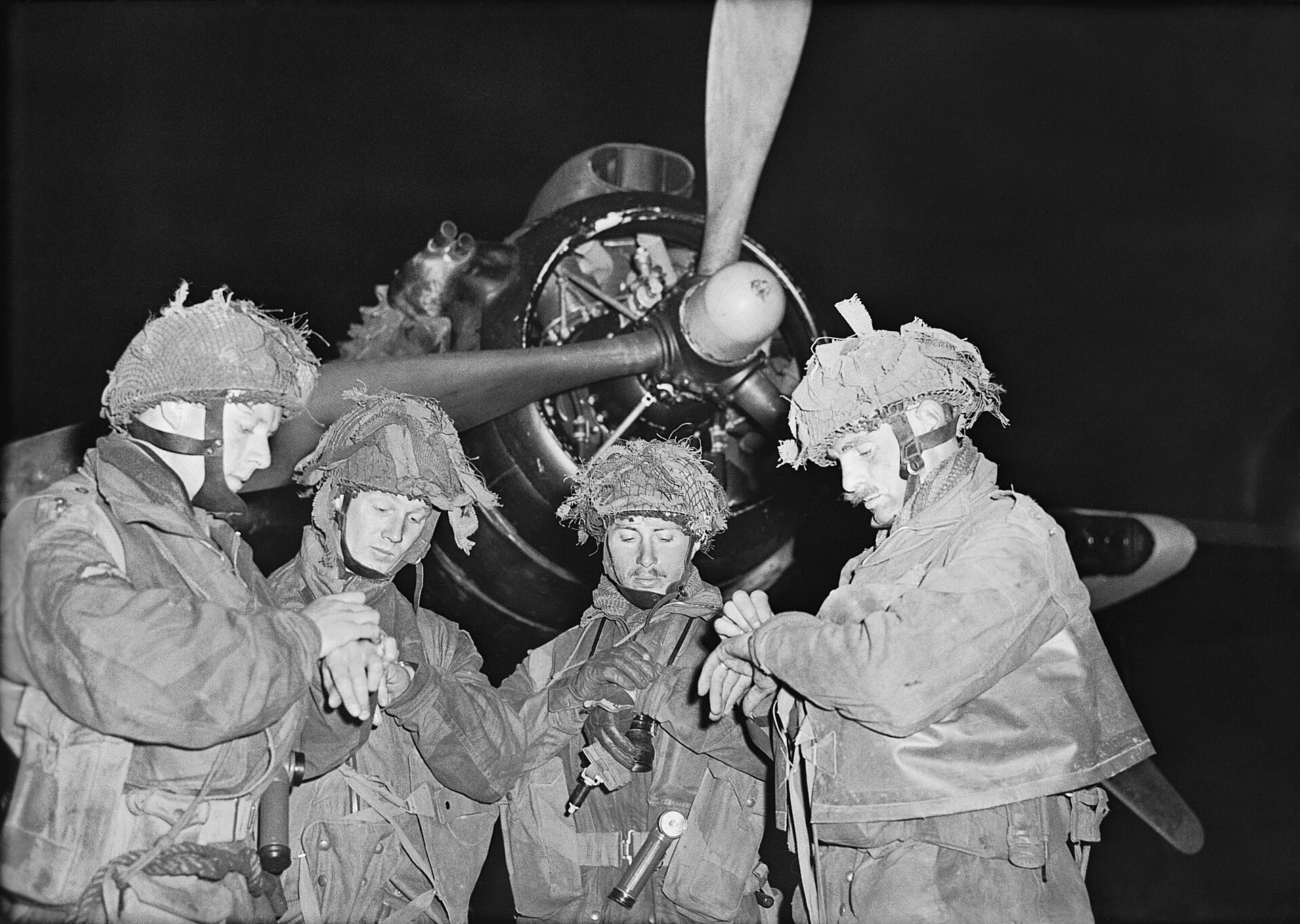
Wristwatches became ordinary in the First World War because a pocket watch in a trench was a fumble. Soldiers soldered wire lugs onto small pocket-watch cases, strapped them on, and paid for them themselves. The designs were not standardised. White dials flipped to black once pale numerals on a dark ground proved easier to read at night, and radium paint went on the hands so they glowed. Louis Cartier looked at a Renault FT from above in 1917 and drew the Tank, a jewellery-house rectangle with a war machine's name.
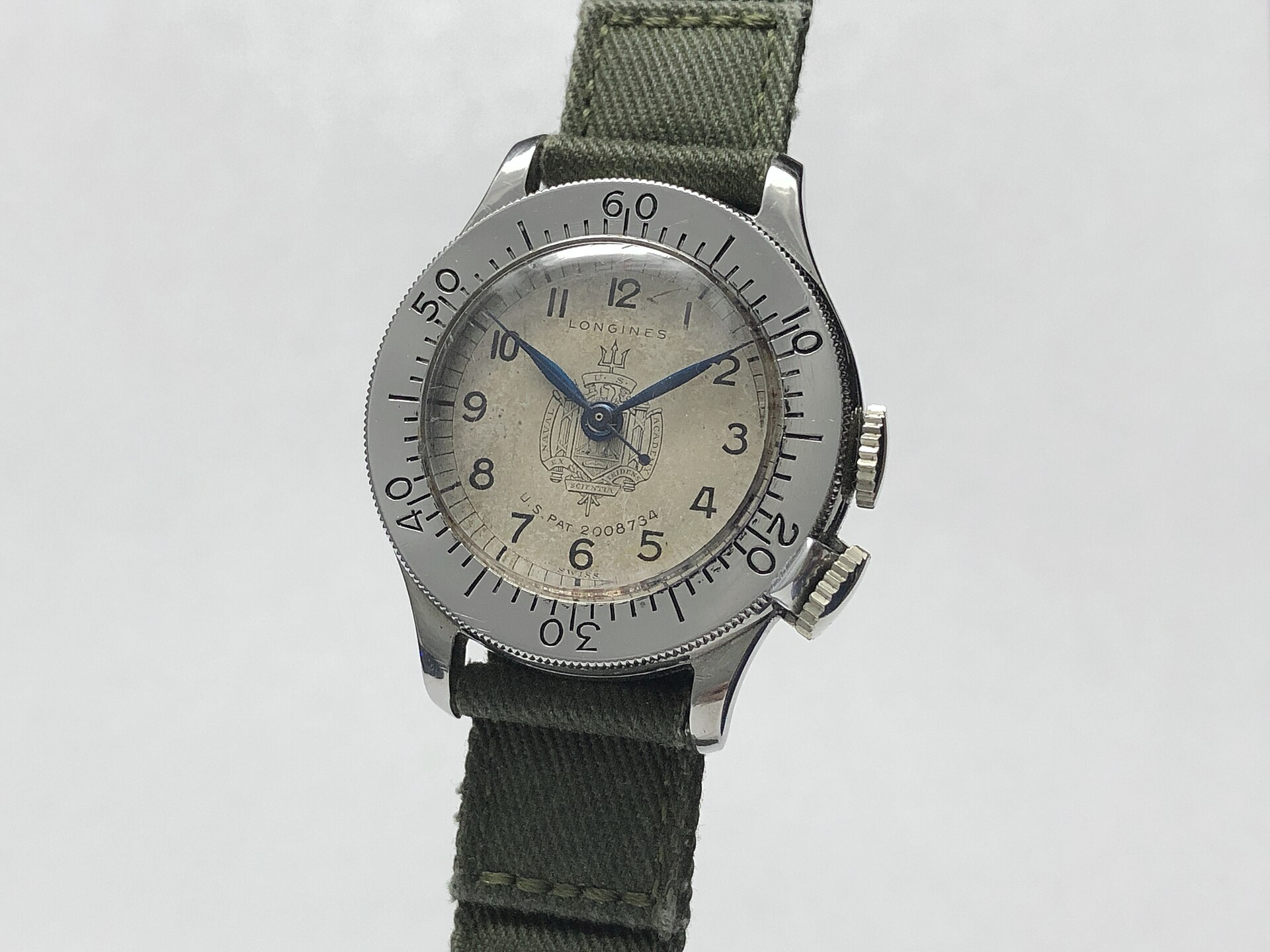
Between the wars the interesting military watch was a navigation instrument. Philip Van Horn Weems, a US Navy officer, needed to set a watch to the second against a radio time signal, because thirty seconds of error could throw an aircraft miles off. He worked with Longines-Wittnauer on a second-setting watch whose central disc could be rotated independently of the hands to match a radio time signal. Charles Lindbergh studied under Weems in 1928 and took the idea further. The Hour Angle watch, in production at Longines from 1931, put longitude arithmetic on a rotating bezel. Later Heritage Weems and Hour Angle watches keep the same idea in steel.
A Longines Weems second-setting watch, reference 4036, with the rotating centre disc a navigator turned to match a radio time signal. Thirty seconds of error could put an aircraft miles off course. That is why a navy cared about seconds. Longines183 / Wikimedia Commons - CC BY-SA 4.0
By 1943 the British Army still had no single general-service wristwatch worth the name. The earlier Army Trade Pattern pieces were imported Swiss civilian watches, 29 to 33 millimetres, chrome or steel, with white or silver dials, and nothing about them was built for water. The British Army wrote a new specification: 35 to 38 millimetres, black dial, Arabic numerals, railroad minutes, luminous hands, shatterproof crystal, 15-jewel movement, waterproof. The code on the caseback was W.W.W., Watch, Wristlet, Waterproof, plus the broad arrow that marks Crown property.
Twelve firms delivered, eleven Swiss and one British name with Swiss factories: Buren, Cyma, Eterna, Grana, IWC, Jaeger-LeCoultre, Lemania, Longines, Omega, Record, Timor and Vertex. Collectors later called them the Dirty Dozen, after the film and after the twelve names. About 145,000 watches arrived in 1945. Omega made the largest batch, around 25,000, so a W.W.W. Omega is the one you can still find. Grana made the fewest, a thousand to five thousand. IWC's was the odd one with a snap back. They were meant for general service. In practice that meant gunners and signallers, not every infantryman. Deliveries ran from May to December 1945, so they missed the war in Europe. Some were later restamped for the Royal Netherlands East Indies Army, then scratched over again by Indonesian forces.
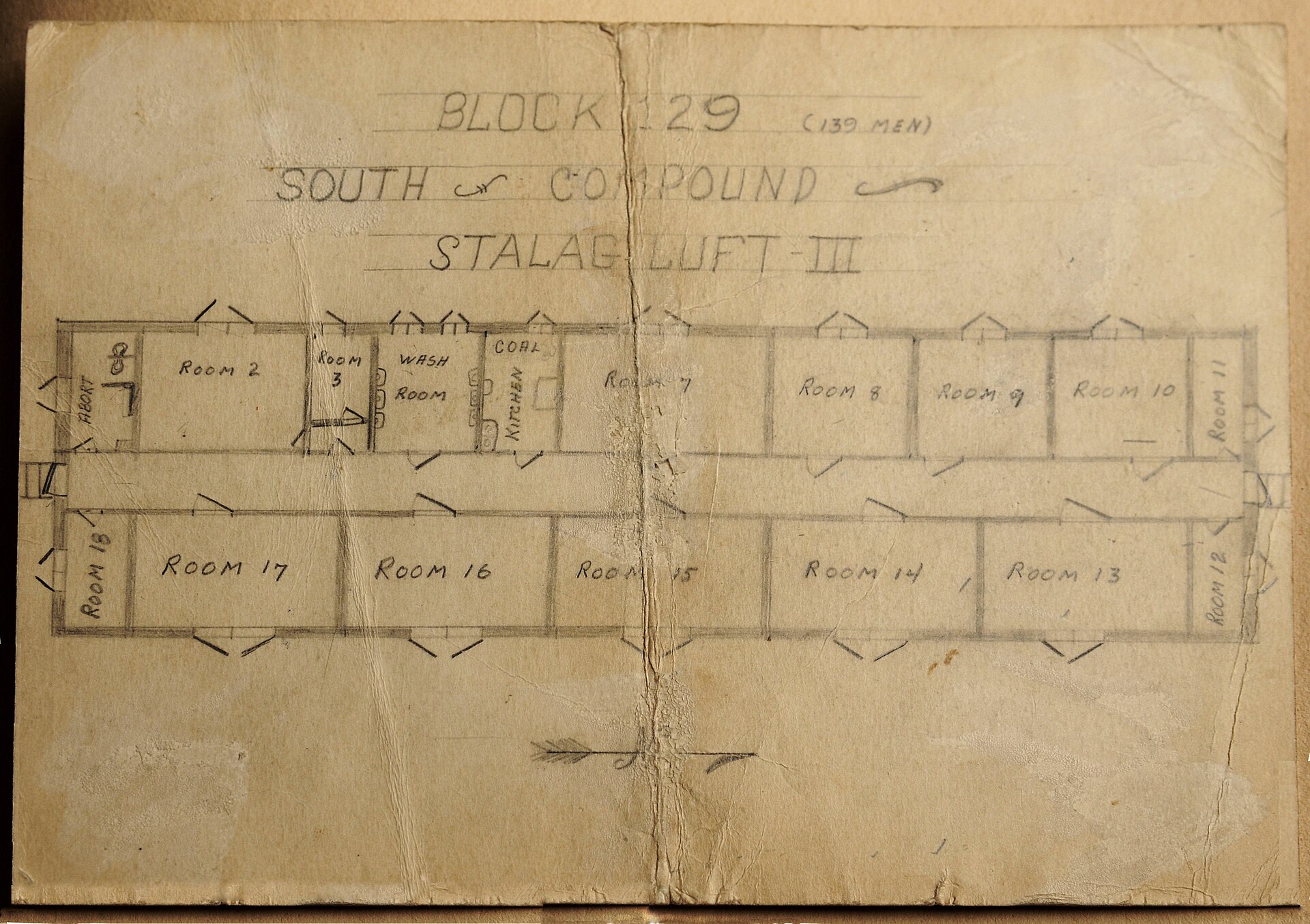
Rolex sat outside that contract. In the same war Hans Wilsdorf offered British officers in the camps watches on deferred payment, on the theory that an officer's word would survive the fighting. Corporal Clive Nutting, a shoemaker held at Stalag Luft III, wrote in 1943 for a steel Oyster Chronograph 3525 and said he would pay from camp wages. Wilsdorf sent the watch and told him not to think about the bill until the war stopped. Nutting kept it. The 3525 is a Valjoux 23 chronograph in an Oyster case, useful if you wanted to time a patrol. Whether his particular watch timed the tunnels at Sagan is a story people like, and the papers do not prove it.
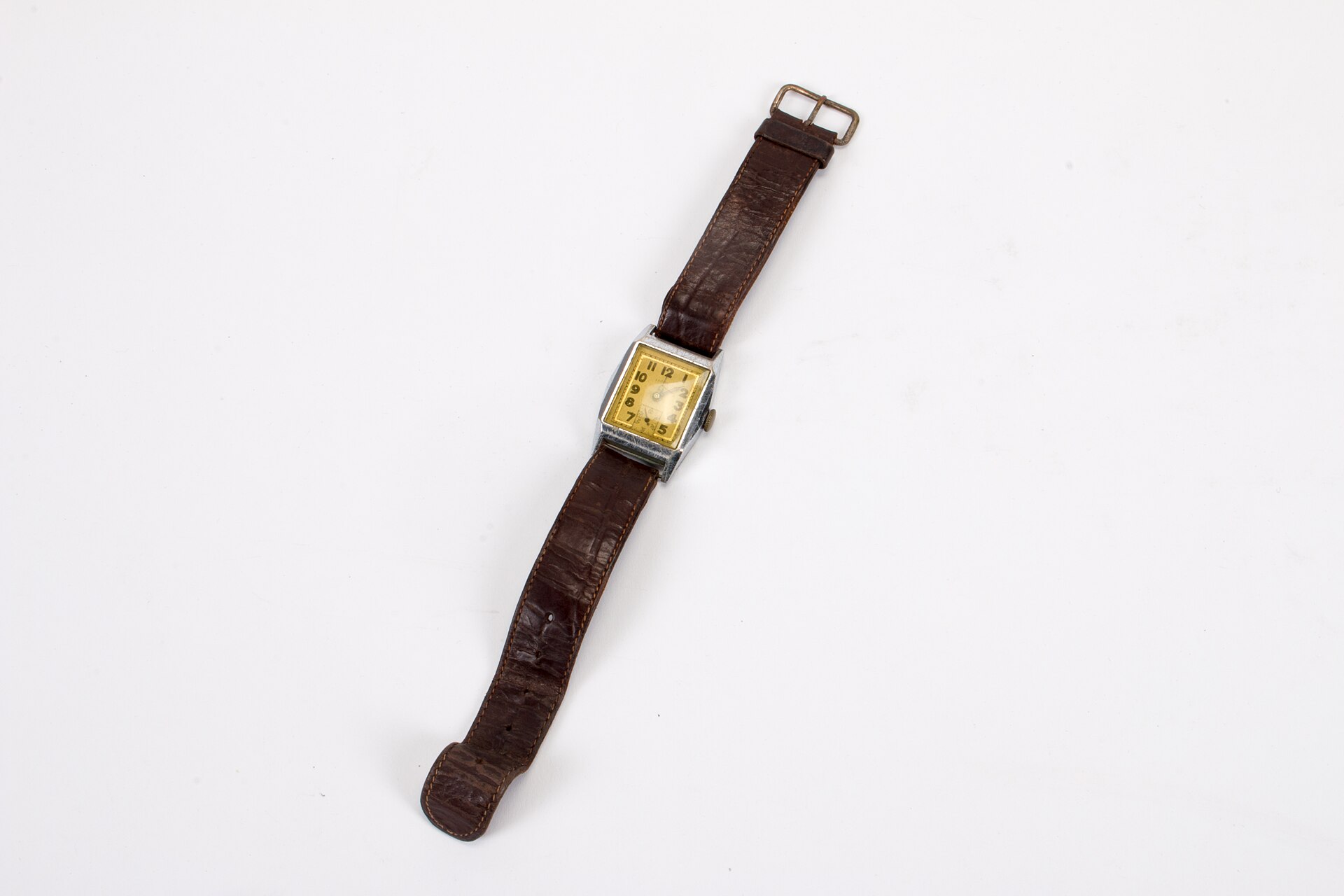
A prisoner's pencil plan of a barrack block at Stalag Luft III, the camp at Sagan where Corporal Clive Nutting wrote to Rolex in 1943 for a steel Oyster Chronograph and promised to pay from camp wages. Wilsdorf told him not to think about the bill until the war was over. Drawing: Lt. Robert M. Polich, Sr. Photograph: Kevin Rofidal (nephew of Robert M. Polich, Sr. ) / Wikimedia Commons - Public domainA small square wristwatch on a worn leather strap, probably worn by a Royal Army Service Corps soldier at Dunkirk and later in the war, now in the Auckland Museum. Before the W.W.W. specification, this is what most men actually wore: whatever they had paid for. Unknown author Unknown author / Wikimedia Commons - CC BY 4.0
Officine Panerai in Florence was a supplier to the Italian Navy long before it was a watch brand. Reference 3646, a large cushion case with Rolex-made Oyster architecture and a Radiomir-painted dial, was the instrument issued to the Decima Flottiglia MAS, the unit that rode manned torpedoes against ships in harbour. The cases and the Rolex-signed movements came from Geneva. The dials and assembly were Panerai's. Collectors split surviving 3646s into types A through G by dial and caseback. At the time it was a tool handed to a unit, not a product with a shop window.
The crown-protecting bridge and the name Luminor came after the war. The French combat swimmers who later asked Blancpain for the Fifty Fathoms were solving a similar problem in a different navy. 3646 is the Italian answer, from a war Italy lost, worn by men whose work was to attach mines in the dark.
The back of a Panerai 3646 with its Rolex calibre 618 exposed. The cases and movements came from Rolex, the dials and assembly from Florence, and the finished instrument went to the Italian Navy's frogmen as kit, not merchandise. Piero7 / Wikimedia Commons - Public domain
The Submariner grew welded bars, and the RAF kept a stores code
The RAF's navigator watch after the war was the Mark 11, stores reference 6B/346, a 36 millimetre IWC with calibre 89 and a soft-iron inner cage against cockpit magnetism. That lineage is IWC's to tell. What matters here is the stores code. 6B was the RAF's flying and navigation stores section, and 6B/346 was the specification the watch had to meet, so the number on the back is the brief, not a serial.
Rolex's contribution to issued diving was a Submariner the Ministry of Defence asked to change. Between 1971 and 1979 the firm delivered about 1,250 watches across three markings: a 5513 with military parts, a double-stamped 5513/5517, and a 5517 of its own. The civilian 5513 already had the 40 millimetre no-date case. The spec added fixed bars welded into the lugs so a strap could not dump the watch in the water, a bezel graduated for all sixty minutes, sword hands, a circled T for tritium, and a caseback with the 0552 Royal Navy code.
Tudor had been the French navy's diver for two decades by then. The first watches delivered to the Marine Nationale were the earliest Tudor Submariners, the 7922 and 7924, with the 7928, the 7016 and the 9401 following in turn. What made them kit rather than a good review was the caseback, engraved M.N. and a two-digit year for the navy that owned them. How the snowflake hands got there is Tudor's own story.
A specification in Virginia, a purchase in Subic Bay
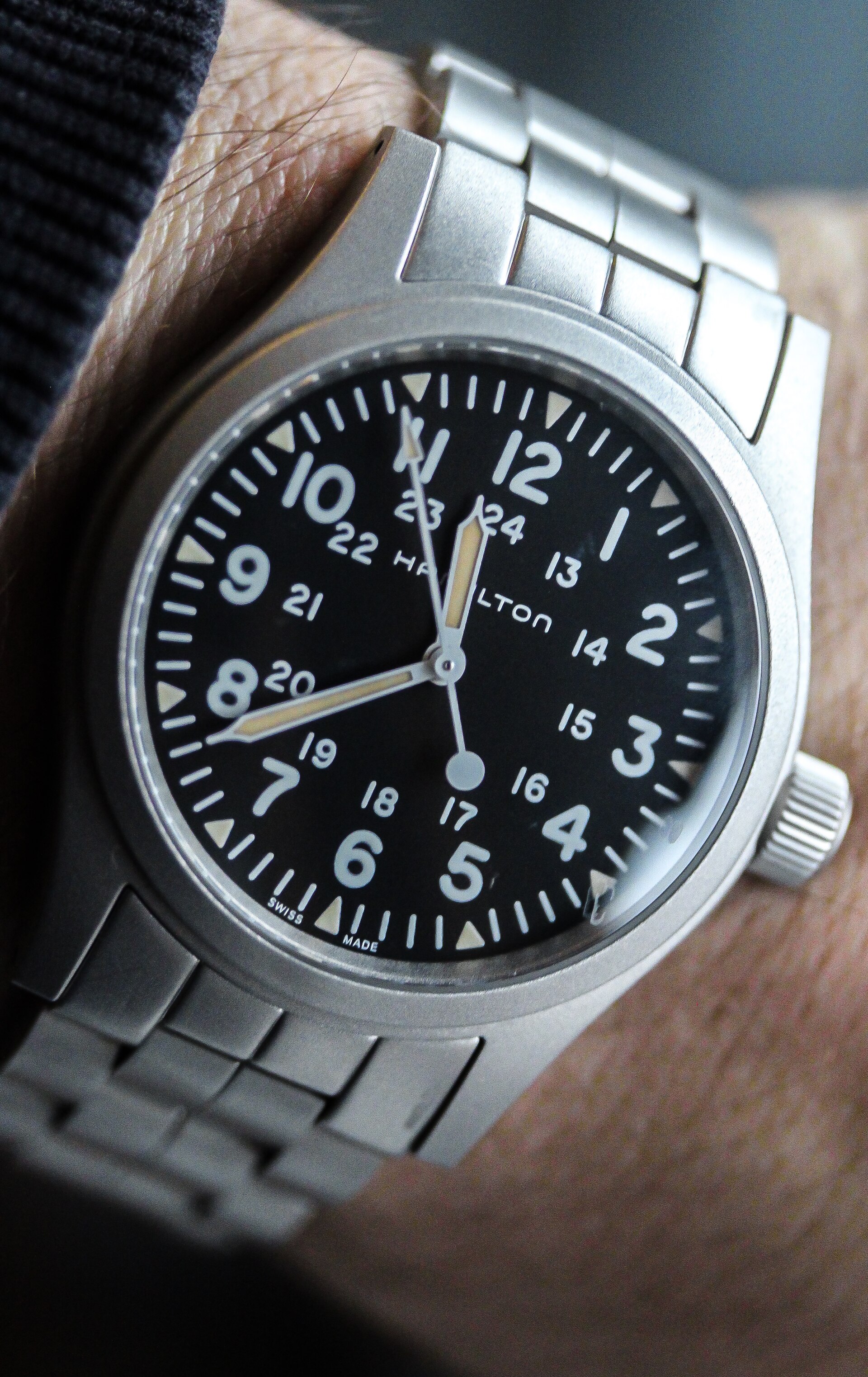
The American field watch of the late 1960s sat on a specification, GG-W-113, issued from 1967. It asked for a sterile black dial, a hacking 17-jewel hand-wound movement, shock resistance, and a watch a pilot could read. Hamilton made them, as did Benrus, Marathon and Altus, into the 1980s. Hamilton had already spent the Second World War on military production, more than a million watches and 19,000 marine chronometers, and five Army-Navy E awards. The modern Khaki Field Mechanical, the 38 millimetre H69439931 and the larger H69529933, keeps the Arabic numerals, 24-hour track and matte case of that grammar, on a strap you pick yourself.
Benrus got a denser brief in the early 1970s. MIL-W-50717 asked for a dive watch with a one-piece case, fixed bars, 1,200 feet of water resistance and a sterile face. Type I used a diver's markers. Type II used a 12/24 dial. Production ran from 1972 to 1980, a few thousand of each, plus a Class B with no lume at all. The vintage watches are the issued ones. The 2025 Type 2 reissue is a product with the same silhouette.
In Vietnam the watch most people picture arrived over a PX counter. GIs bought Seiko divers because they were cheap in dollars and hard to kill. The 6105-8000 cushion and the later 6105-8110, the one with the swollen crown guard at four, turned up on real wrists and then on Martin Sheen's in Apocalypse Now. Collectors say Captain Willard after the character; the PX receipt is the provenance.
A modern Hamilton Khaki Field Mechanical on the wrist: sterile-looking black dial, Arabic numerals, a 24-hour track and a matte case. The 1967 specification wrote the look, and Hamilton has been selling it to civilians ever since. Giordano Tonelli / Wikimedia Commons - CC BY-SA 4.0
Quartz on a G10 form, tritium tubes for search and rescue
In 1980 Cabot Watch Company, a British firm Ray Mellor started when Hamilton left the MoD contracts, supplied the first quartz watch issued to British forces. The G10 took its nickname, the usual story goes, from the stores form soldiers filled in to receive it. Fixed bars, a battery hatch so a quartermaster could change the cell without a watchmaker, acrylic crystal, about 36 millimetres. CWC has said a conservative 200,000 went to the military over decades, including 22,000 to the Royal Navy in 1991. Back in 1980, the year of the first G10, CWC had also taken the Royal Navy diver contract that followed the Rolex MilSub.
Marathon's GSAR, Government Search and Rescue, was built to a Canadian government requirement for search-and-rescue technicians and still carries a NATO stock number, with tritium tubes and 300 metres on a 41 millimetre steel case. Canadian and American units still draw it. Sinn's EZM line, Einsatzzeitmesser, started in 1997 when German customs special unit ZUZ asked for a mission timer, and the EZM 3 is the left-crowned diver civilians can buy.
In 2021 Tudor put the Marine Nationale relationship back on a watch. The Pelagos FXD, developed with Commando Hubert, has fixed bars machined from the titanium case and a countdown bezel for underwater navigation, with M.N.21 on the back.
Doxa launched the SUB 300 in 1967 as a dive watch for people who were not in a navy. Orange dial, no-decompression scale taken from US Navy tables on the bezel, 300 metres. Jacques Cousteau's American company, US Divers, distributed it with an Aqua-Lung mark. Claude Wesly from Cousteau's team had helped develop it. The early thin-case No-T, reference 11889-4, is the first of that line. The modern SUB 300 Professional is the same orange idea in current steel. It was a professional tool sold over a counter.
The PX Seiko, the POW Rolex and the orange Doxa paid their own way. That is why they turn up in films and shop windows with no broad arrow on the back. The G10 still has to be signed for.