Zenith Chronomaster: El Primero, the Attic, and the 1/10th-Second Idea
A connected history of Zenith Chronomaster, from the 1969 El Primero A384, A385, and A386 to the quartz-crisis survival story, Revival models, Chronomaster Original, and Chronomaster Sport with the modern El Primero 3600.
Zenith's El Primero arrived in the 1969 automatic-chronograph moment with a fully integrated, high-frequency architecture. The early A384, A385, and A386 made the movement visible as design: tonneau cases, gradient dials, and the tri-colour register language that still defines the family.
The early El Primero years were not one watch. Zenith used the calibre across several cases and dial ideas, from angular references to more specialized calendars and the Espada Sub Sea. The point was clear: the movement could carry a family.
During the quartz crisis, Zenith nearly lost the El Primero. Charles Vermot famously preserved the tooling and production knowledge in the Le Locle manufacture, allowing the calibre to return when brands such as Ebel and Rolex needed high-grade automatic chronograph movements.
As mechanical chronographs returned to collector consciousness, Chronomaster became the modern stage for El Primero: openworked dials, high-frequency display ideas, and increasingly explicit references back to the 1969 design vocabulary.
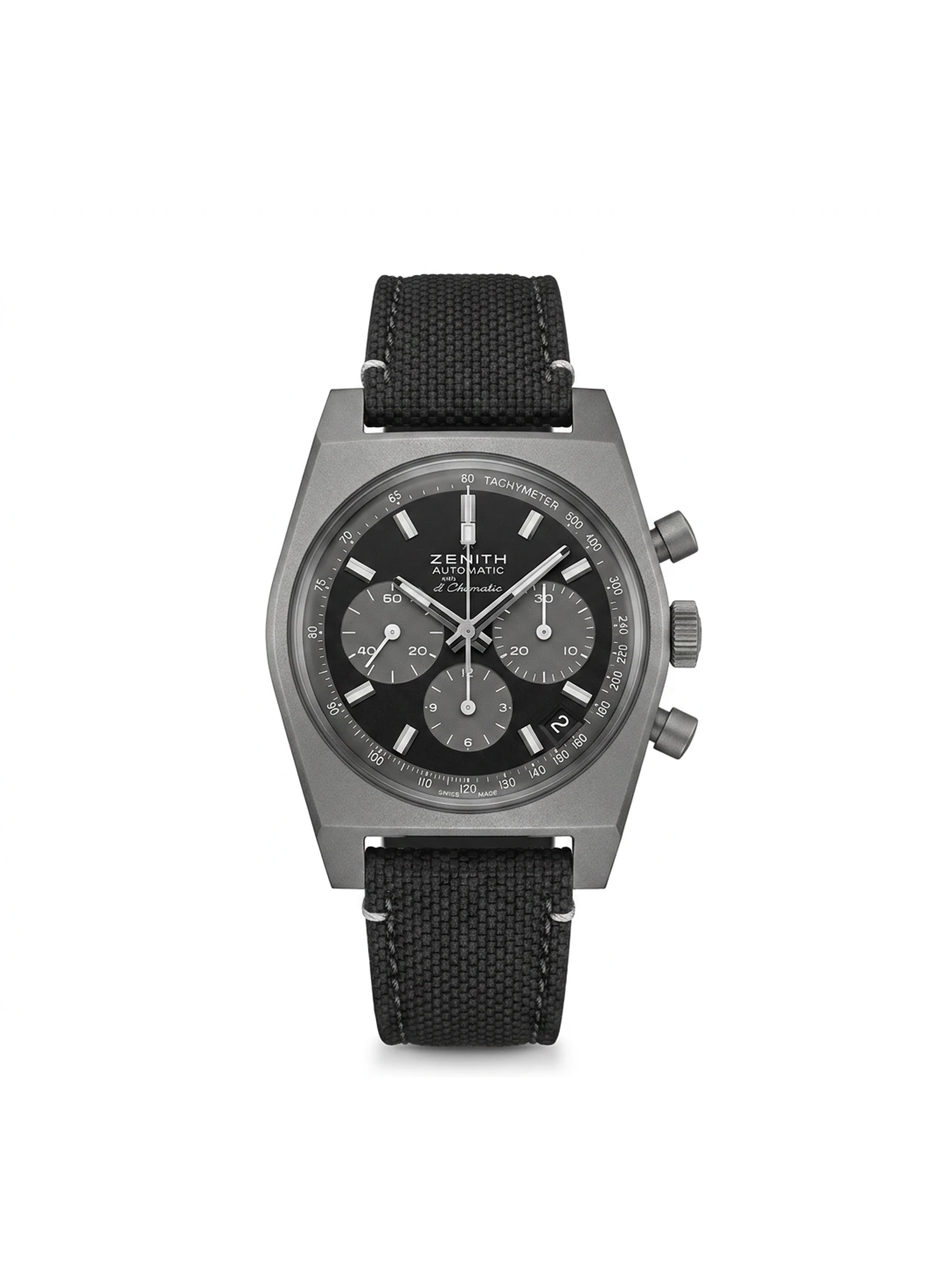
The Revival branch made Zenith's archival confidence unusually literal. A384 and A385 revivals leaned into faithful proportions and period case language, while the Shadow showed how the same historical grammar could become darker and more contemporary.
The current Chronomaster Original and Sport turn the El Primero's high-frequency premise into a clear user experience. With El Primero 3600, the central chronograph hand can display tenths of a second, making the old 5 Hz argument legible on the dial.
Many watch families begin with a shape. Chronomaster begins with a calibre. El Primero mattered because it was automatic, integrated, high-frequency, and built around the idea that a chronograph could measure tenths of a second mechanically.
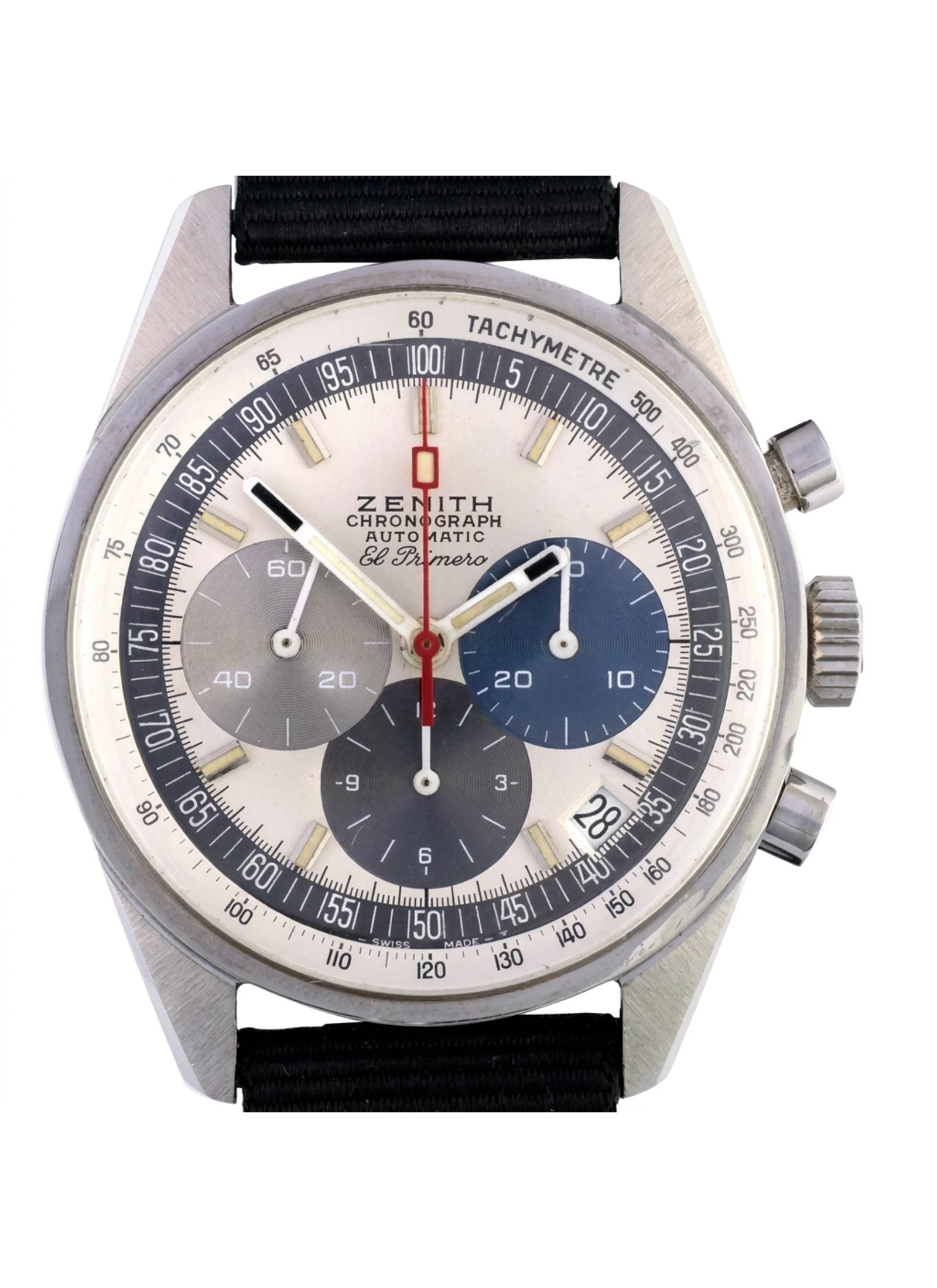
The A384, A385, and A386 gave that movement three strong opening voices. The A386's tri-colour registers became the lasting icon, but the angular A384 and brown-toned A385 are just as important to understanding why Zenith's chronograph history never looks like one single template.
A cleared catalog visual of the A386 connects the story to the tri-colour register language that still shapes Chronomaster.
The El Primero story has one of the rare collector myths that is also operationally important. During the quartz-crisis years, Charles Vermot preserved the tooling and production records that made later revival possible. Without that act, the modern Chronomaster story is much thinner.
That is why the manufacture matters here. Zenith's Le Locle site is not just corporate scenery. It is where the movement was built, nearly lost, hidden, and later revived.
The Zenith site des Billodes in Le Locle gives the El Primero survival story a real place: the manufacture where the tooling and knowledge were preserved. Office du patrimoine et de l'archeologie / Wikimedia Commons - CC BY-SA 4.0
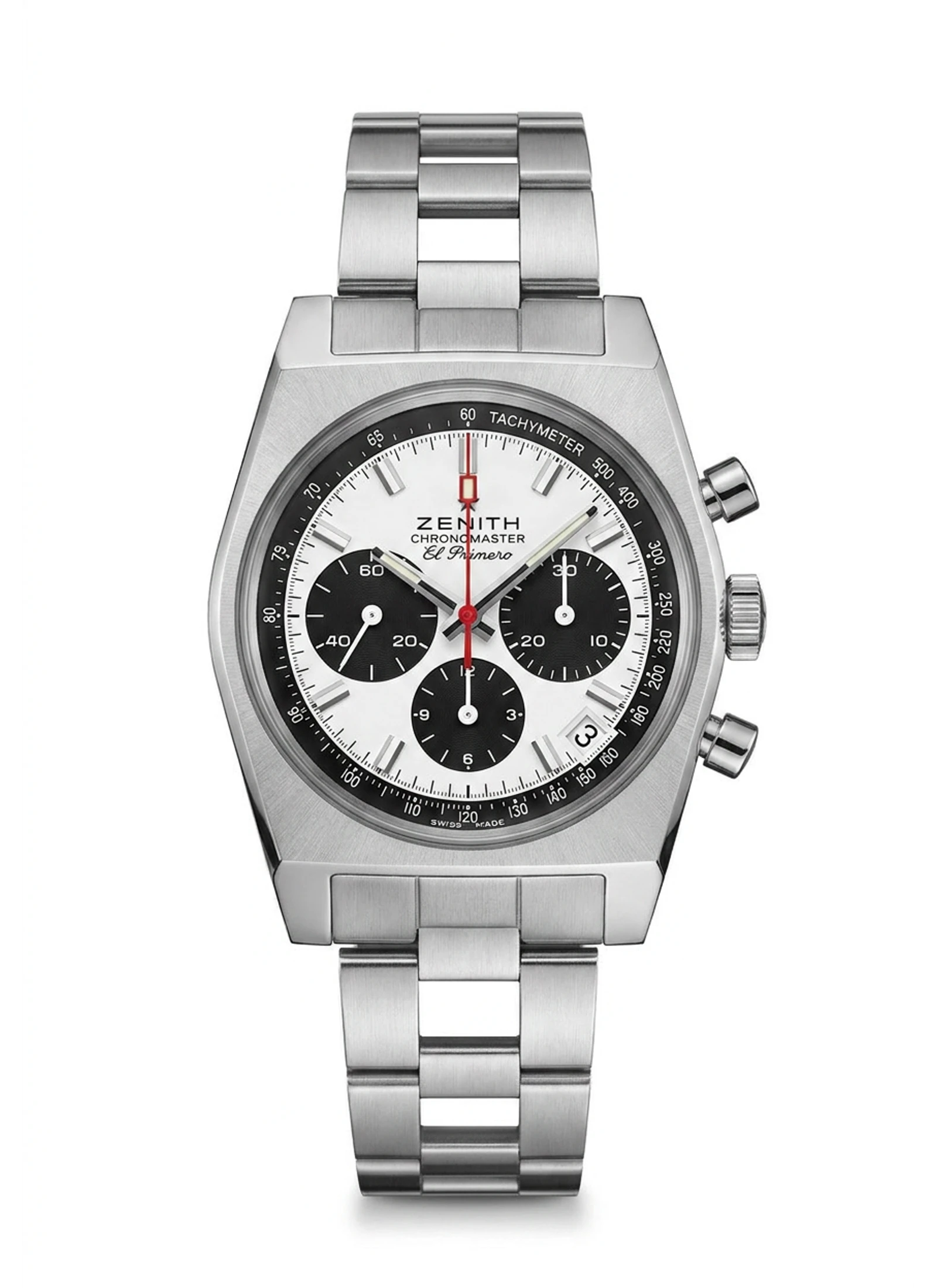
Zenith's Revival program works because the old designs were specific enough to reproduce. The A384 and A385 are not generic vintage chronographs; their tonneau cases, ladder-bracelet language, panda or gradient dials, and El Primero proportions give the modern watches something exact to quote.
The danger with revival watches is that they can become costume. The better Chronomaster Revivals avoid that by being disciplined: close to the source material, but built with modern reliability and finishing.
A cleared catalog visual of the A384 Revival shows how literally Zenith can quote the first El Primero steel chronographs.
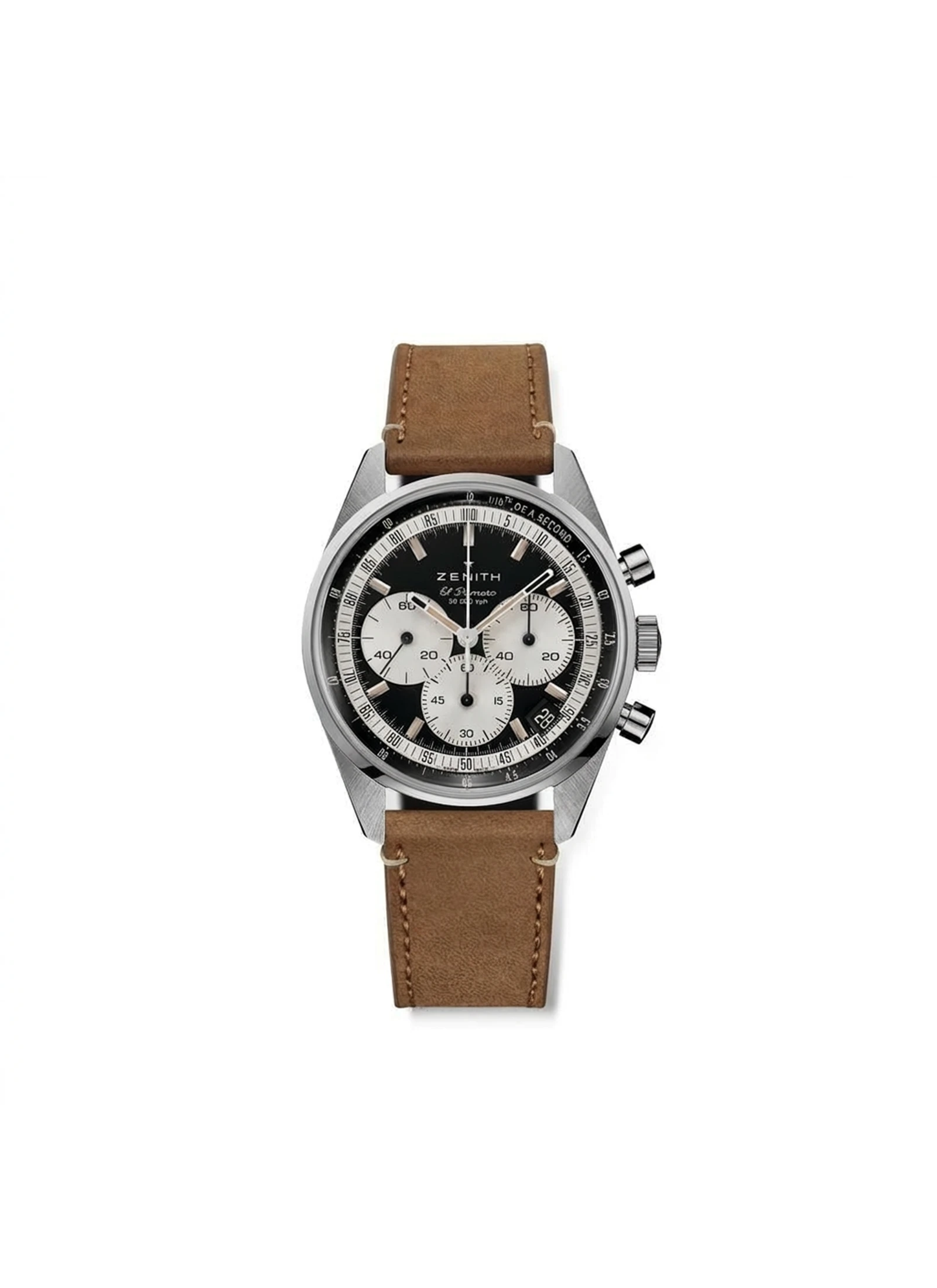
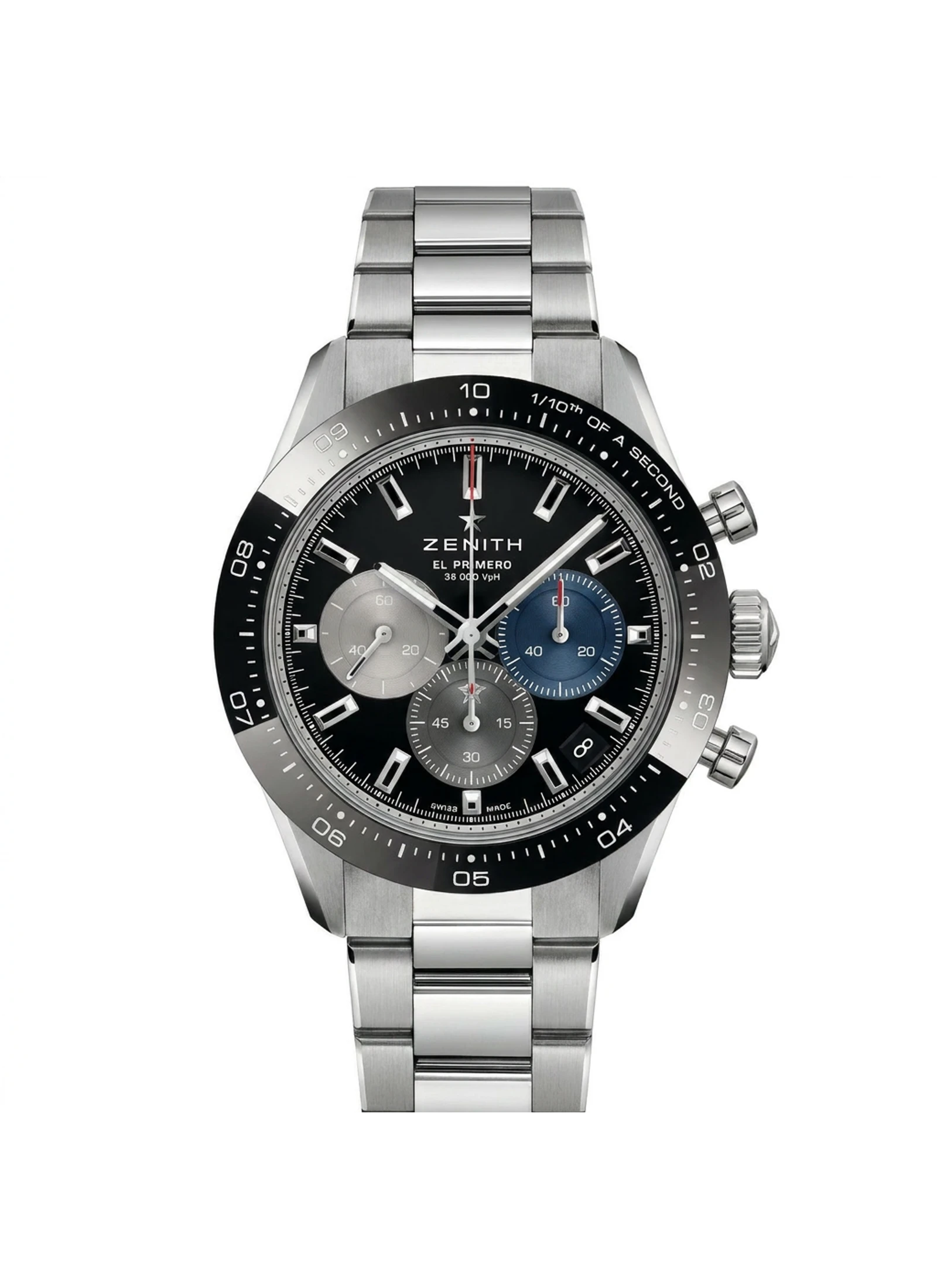
Chronomaster Original is the direct A386 descendant: compact, historically proportioned, and openly tied to the 1969 tri-colour idea. Chronomaster Sport is the broader modern interpretation, larger and more assertive, with a ceramic bezel and a clearer sports-watch posture.
Both depend on the same modern premise. El Primero 3600 makes the high-frequency movement visible by sending the central chronograph hand around the dial in ten seconds, so the 1/10th-second claim is no longer just something hidden in the movement.
A cleared catalog visual of the Chronomaster Sport shows how the El Primero 3600 premise moves into a larger ceramic-bezel sports chronograph.
Chronomaster matters because it lets Zenith tell one of the strongest movement stories in modern watchmaking without turning the watch into a museum label. The current line can be archival, openworked, sporty, or experimental, but the central argument stays the same: high frequency made visible.
That gives Zenith something many brands want and few have: a technical story that collectors can see instantly. The registers, the central hand, the A386 echoes, and the El Primero name all point back to the same idea.
A cleared catalog visual of the Chronomaster Revival Shadow shows the same historic vocabulary translated into darker contemporary form.