Vacheron Constantin Overseas: The Integrated Sports Watch That Chose Travel
A connected history of the Overseas, from the 1977 222 and Jorg Hysek's integrated-bracelet design to the 1996 Overseas, chronograph and dual-time expansion, the 2016 interchangeable-strap reboot, high complications, and the current 4520V generation.
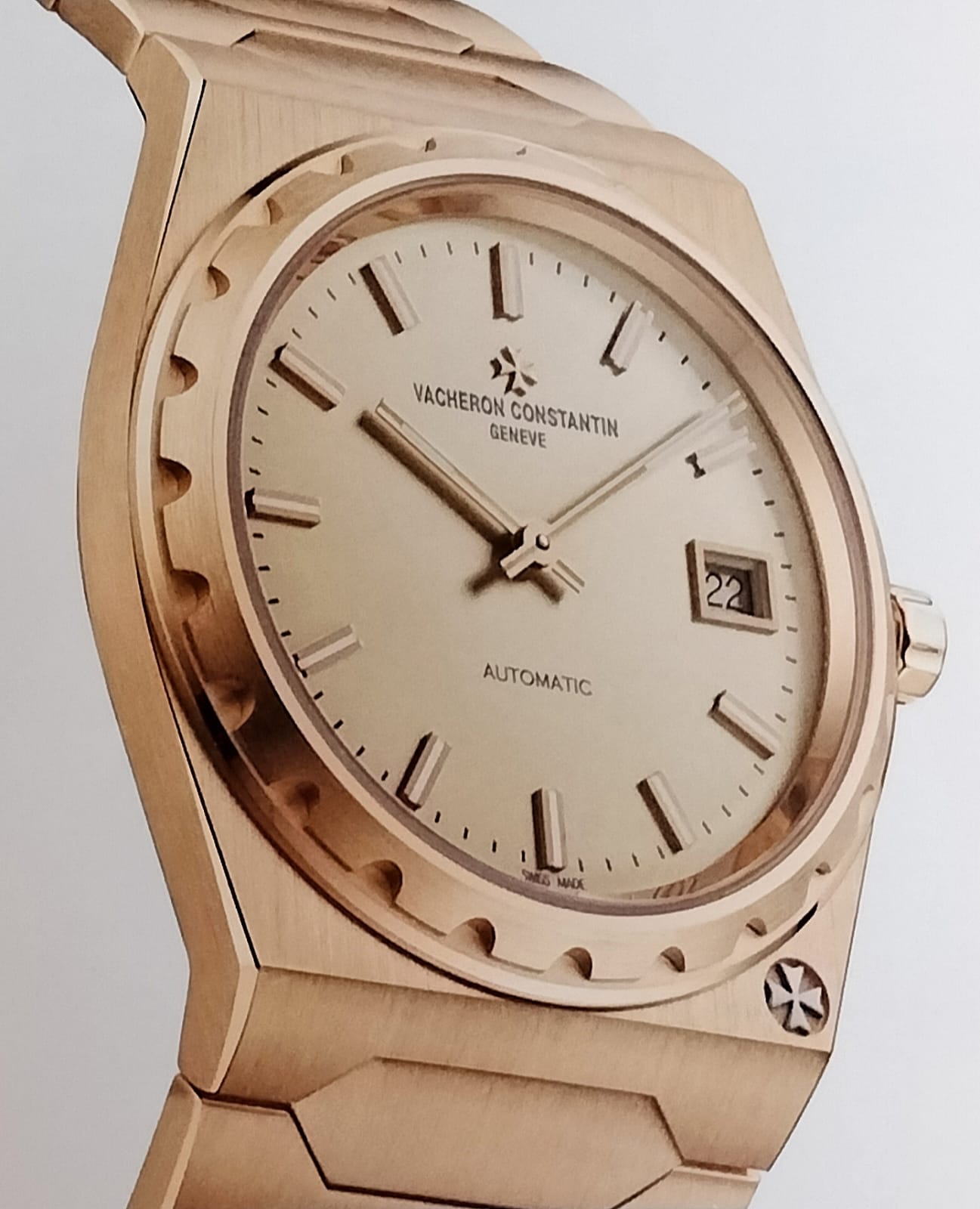
The Overseas story starts before the Overseas name. The 222 marked Vacheron Constantin's 222nd anniversary with an integrated bracelet, slim case, notched bezel, and a tiny Maltese cross at five o'clock. It gave Vacheron its own answer to the 1970s luxury sports-watch question.
The first Overseas turned the 222's integrated-sports idea into a named collection. The case became rounder and more protective, the bracelet gained a stronger Maltese-cross signature, and the watch was framed around travel, daily wear, and anti-magnetic robustness.
The Overseas grew more assertive as chronographs entered the family. The 49140 brought a sportier complication language, while the 47040 generation strengthened the three-hand branch with more modern proportions and bracelet presence.
By the mid-2000s, the Overseas had a clearer travel identity. Chronograph references became more muscular, and Dual Time models made the collection's global-language promise literal, adding a second-time-zone branch to the everyday sports watch.
The 2016 generation made the Overseas feel fully contemporary. The quick-change bracelet and strap system turned one watch into several wearing modes, while Geneva Seal movements, wind-rose rotors, and blue dials made the line a serious modern rival in integrated sports watches.
Vacheron also used the Overseas as a high-horology platform. Perpetual calendar ultra-thin, ultra-thin time-only, and tourbillon references showed that the collection could carry Vacheron's mechanical prestige without giving up its bracelet-and-strap versatility.
The 4520V generation refines the successful 4500V formula rather than replacing the Overseas idea. The current line keeps the 41 mm self-winding core, adds a 34.5 mm blue-dial steel option in the 4600V, and maintains current chronograph and dual-time companions in the 5520V and 7920V branches.
The 222 was not a Genta watch, but it lived in the same weather
The 222 is often discussed beside the Royal Oak and Nautilus because it belongs to the same 1970s luxury-sports moment: high-end houses using steel, bracelets, and case architecture to make sportiness feel elite.
But the 222 is its own thing. Jorg Hysek's design is softer and more concealed than the Royal Oak, less porthole-obvious than the Nautilus, and marked by the small Maltese cross set into the case. It gave Vacheron a sports-watch idea that could later become Overseas.
When Vacheron Constantin introduced the Overseas in 1996, the story shifted from pure integrated-bracelet sports design to travel. The name mattered. It made distance, movement, and global ease part of the collection's identity.
The first references also made the watch more obviously robust: water resistance, anti-magnetic protection, and a bracelet whose links echoed the Maltese cross. The result was less radical than the 222 but more commercially legible.
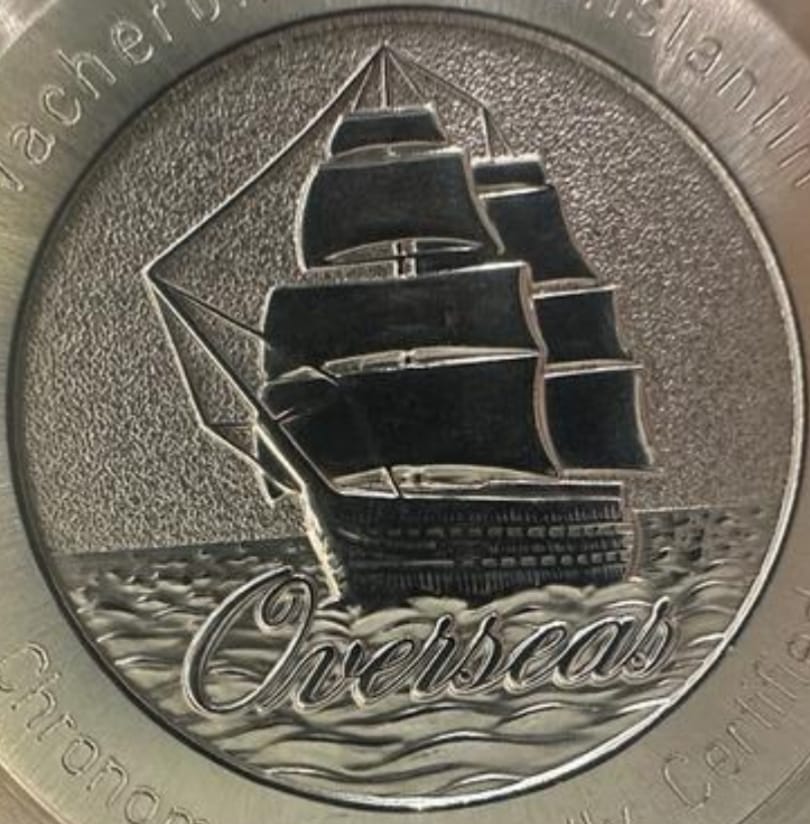
A first-generation Overseas caseback image reinforces the family name's travel turn: the watch is an integrated sports design, but its identity is pointed outward. EMore98 / Wikimedia Commons - CC BY-SA 4.0
Chronograph references changed the Overseas' personality. They made the watch busier, more obviously sporty, and more competitive with the broader luxury-sports chronograph market.
The 49140 and later 49150 branches are not just complications; they are the point where the Overseas stops feeling like a niche descendant of the 222 and starts acting like a full collection architecture.
A watch called Overseas almost has to become a travel watch. The Dual Time branch made that promise literal, pairing the integrated-bracelet case with a practical second-time-zone display.
That mattered because Vacheron was not chasing instrument-watch roughness. The Overseas stayed polished and Geneva-adjacent, but Dual Time gave the collection a complication that matched its name.
The 2016 generation solved the everyday-wear problem
The 2016 Overseas reboot is where the modern family truly clicks. The quick-change system lets the same watch move between bracelet, leather, and rubber without tools, which makes the collection feel less like a fixed object and more like a travel kit.
The 4500V, 5500V, 7900V, and World Time references made the idea broad: simple automatic, chronograph, dual time, and world time all sharing the same travel architecture.
Once the modern case and strap architecture worked, Vacheron could use the Overseas for more than daily sport luxury. Ultra-thin and complicated references brought the family closer to the maison's highest mechanical identity.
The perpetual calendar ultra-thin and tourbillon pieces are important because they refuse the old split between sporty case and refined complication. The Overseas could be casual and serious at the same time.
The 4520V shows how subtle Overseas changes can matter
The current self-winding Overseas does not need to reinvent the collection. Its job is refinement: bracelet feel, proportions, dial execution, strap integration, and continuity with the 4500V generation collectors already understand.
That is where the Overseas now sits in the broader culture. It is the quieter member of the integrated-sports conversation, less shouted about than some rivals, but increasingly compelling because it combines travel practicality, Vacheron finishing, and a strong design lineage back to the 222.