Tudor Black Bay: The Heritage Platform That Rebuilt Tudor
A connected history of the Tudor Black Bay, from the 1950s Submariner archive and Marine Nationale snowflake hands to the 2012 burgundy Heritage Black Bay, in-house movements, Black Bay Fifty-Eight, GMT and Chrono branches, ceramic and precious-metal experiments, and the modern METAS-certified generation.
The Black Bay did not revive one vintage Tudor. It compressed a whole Submariner language: the first Oyster Prince Submariner reference 7922 from 1954, the 200-metre Big Crown 7924 from 1958, and the 1969 snowflake-hands generation that became tied to Tudor's professional dive identity.
2012-2013
The burgundy Black Bay makes Tudor visible again
The Heritage Black Bay 79220R arrived in 2012 as a deliberately composite revival: burgundy bezel, gilt warmth, big crown, domed crystal, and snowflake hands. Its 2013 GPHG Revival Prize confirmed that Tudor had found a modern identity rather than simply borrowing Rolex oxygen.
Burgundy, blue, and black-bezel ETA Black Bays gave collectors a neat first chapter. The watches kept the Tudor rose and curved self-winding text before the manufacture era changed the dial language, which is why these early references became their own mini-canon.
The shield and MT5602 turn revival into a platform
In 2016 the Black Bay moved to Tudor's manufacture movement era with the COSC-certified MT5602 and roughly 70 hours of power reserve. The rose gave way to the shield, and the watch stopped feeling like a one-off heritage hit; it became the base architecture for a family.
Bronze and steel show how far the case can stretch
The Black Bay Bronze showed that the platform could carry material personality without losing the core dial and bezel codes. Larger, warmer, and patina-prone, it moved the Black Bay from vintage diver revival into a broader design system.
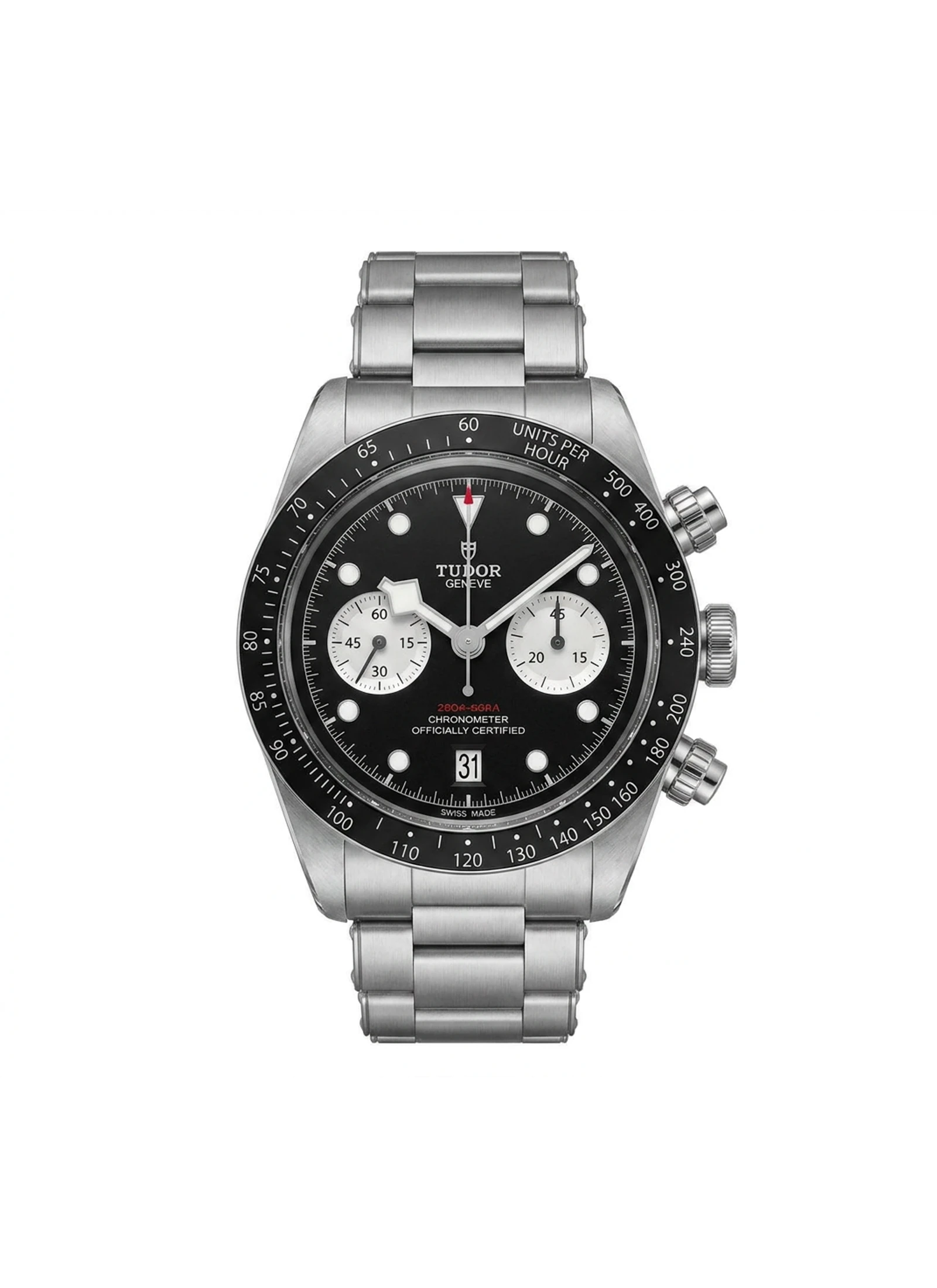
The Black Bay Chrono and GMT branches turned the diver language toward asphalt and travel. The Chrono used Tudor's MT5813 chronograph calibre, while the GMT translated the Pepsi idea into Tudor's own burgundy-and-blue travel watch vocabulary.
The Black Bay Fifty-Eight changed the family's center of gravity. At 39 mm and powered by the slimmer MT5402, it made the Black Bay feel more directly connected to mid-century Tudor dive watches and opened the door to navy, silver, bronze, and precious-metal expressions.
Tool-watch branches become sharper and more specific
Black Bay Ceramic brought METAS language into the family, Black Bay Pro made the 39 mm fixed-bezel GMT branch more purposeful, and Black Bay 54 pulled the silhouette back toward the 37 mm scale of Tudor's earliest divers. By this point, Black Bay was no longer one watch; it was Tudor's operating system.
The modern burgundy Black Bay brought the original color story into a METAS Master Chronometer, T-Fit, and five-link-bracelet era. The family returned to the color that made it famous, but now with Tudor presenting it as a technical benchmark rather than just a charismatic revival.
Black Bay is an archive mix, not a straight reissue
The Black Bay works because it refuses to be a museum copy. Its case, crown, dial texture, bezel color, hands, and markers come from different parts of Tudor's diver history, then get recomposed into a watch that feels old without being pinned to one old reference.
That distinction matters. Tudor had the 1954 Submariner 7922, the 1958 Big Crown 7924, crown-guard experiments, Marine Nationale service, and the 1969 snowflake era available as source material. Black Bay turned all of that into one legible product language.
A French naval-diver image gives the Black Bay's archive chapter a working-service backdrop, instead of treating Tudor dive heritage as pure vintage styling. U.S. Navy photo by Mass Communication Specialist 3rd Class Andrea Rumple/Released / Wikimedia Commons - Public domain
Breakthrough
The burgundy bezel gave Tudor a new center
When the Heritage Black Bay 79220R appeared in 2012, Tudor was not just launching another retro diver. The burgundy bezel made the watch immediately recognizable, and the warm gilt dial kept it from feeling like a lower-cost Rolex Submariner substitute.
The GPHG Revival Prize in 2013 gave the move institutional validation. Just as important, enthusiast attention gave Tudor something harder to buy: a watch people discussed on its own terms.
The first Black Bay references have become collectible partly because they sit before Tudor's manufacture-movement transformation. The rose logo and curved self-winding text make them feel like the opening act before the brand's modern confidence hardens.
The sequence is easy to understand: burgundy in 2012, blue in 2014, black in 2015. That simplicity gives the ETA trilogy unusual storytelling power.
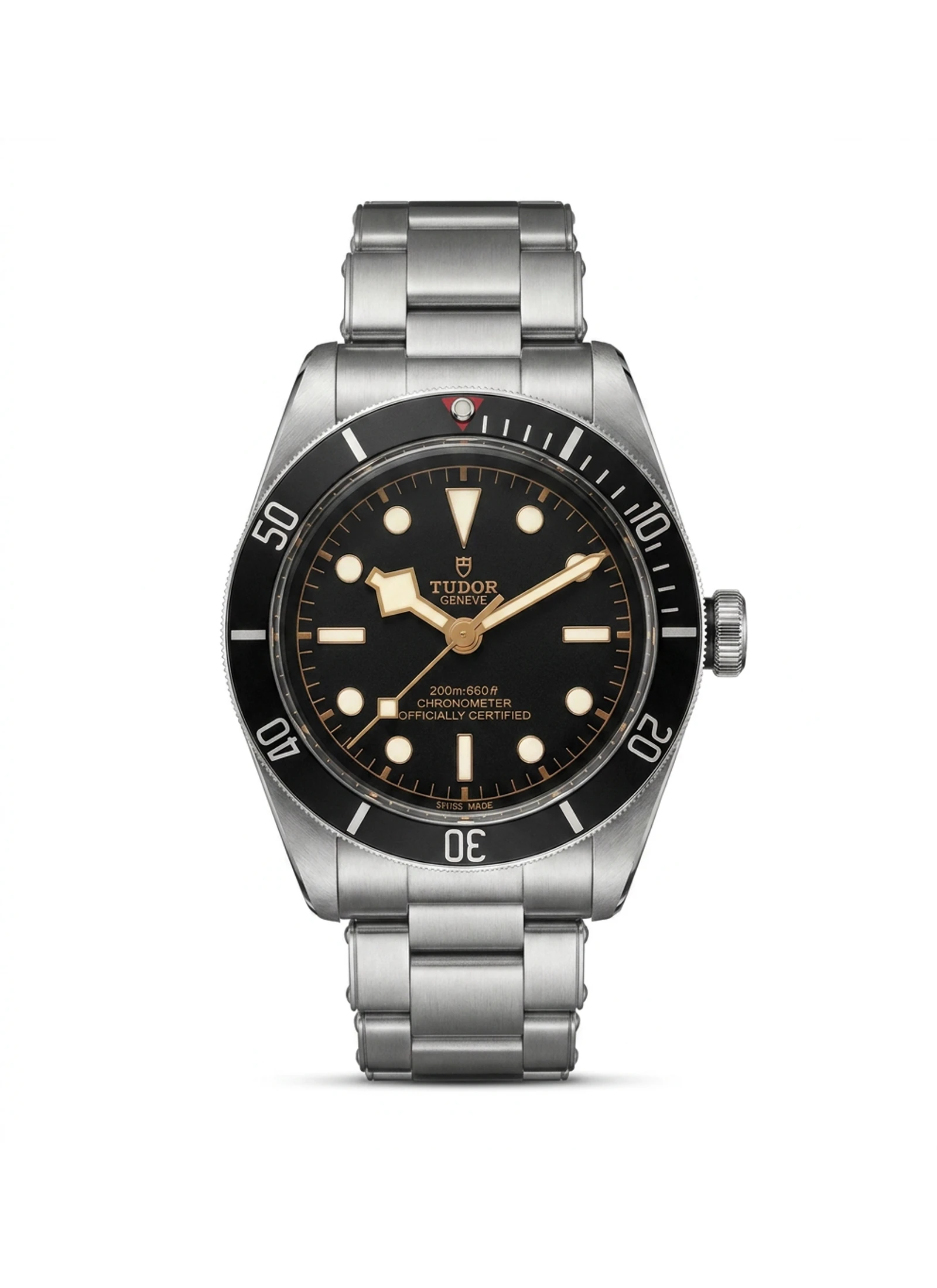
A cleared catalog visual of Black Bay anchors this chapter to a specific watch reference.
The manufacture movement changed the dial and the meaning
With the 2016 generation, Tudor gave the Black Bay a manufacture calibre and a stronger technical claim. The MT5602 brought COSC certification and a long weekend-proof power reserve, while the shield logo replaced the rose.
That was more than a movement swap. It marked the moment Black Bay stopped being a clever heritage watch and became the frame Tudor could build around.
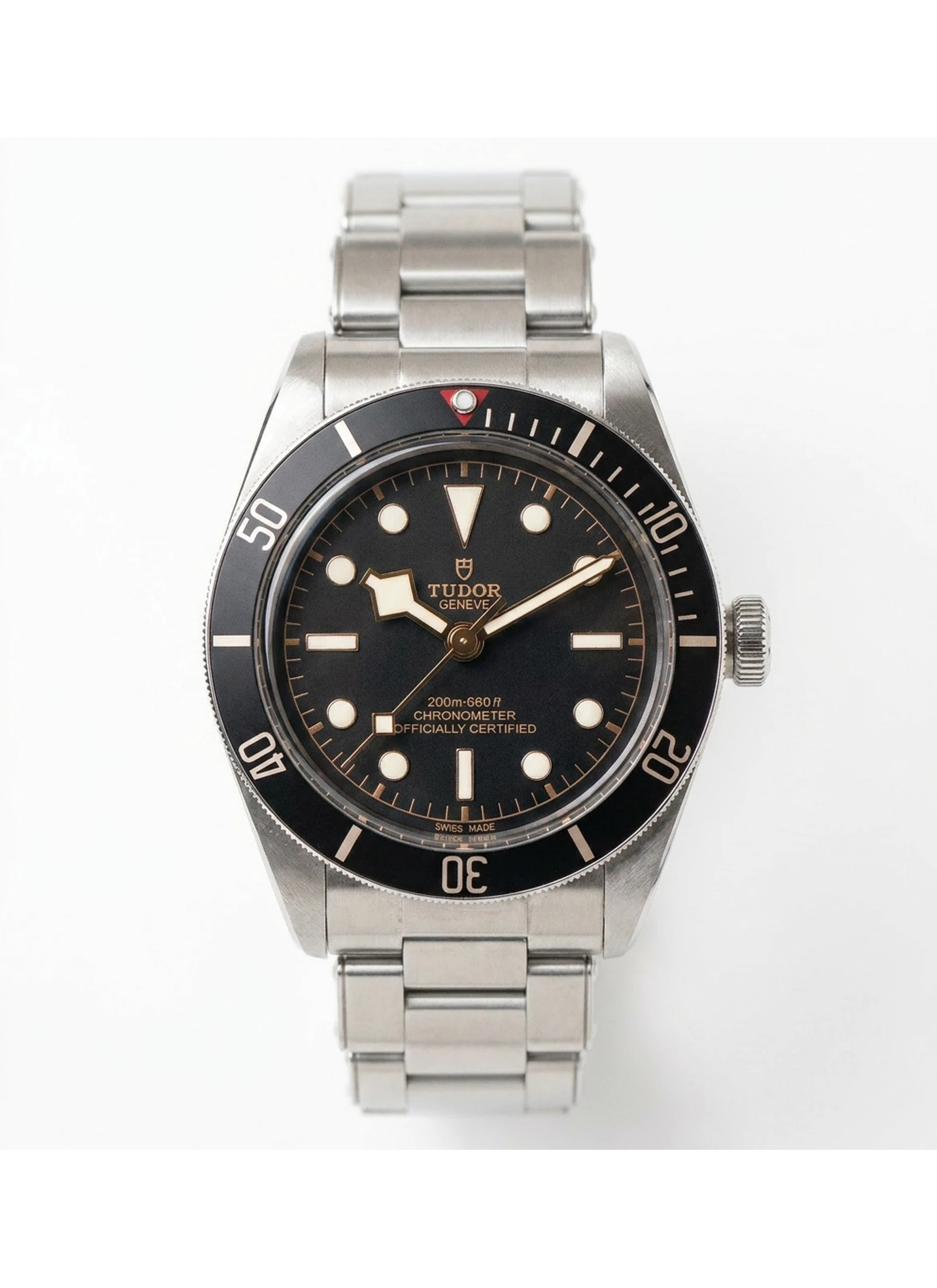
A cleared catalog visual of Black Bay anchors this chapter to a specific watch reference.
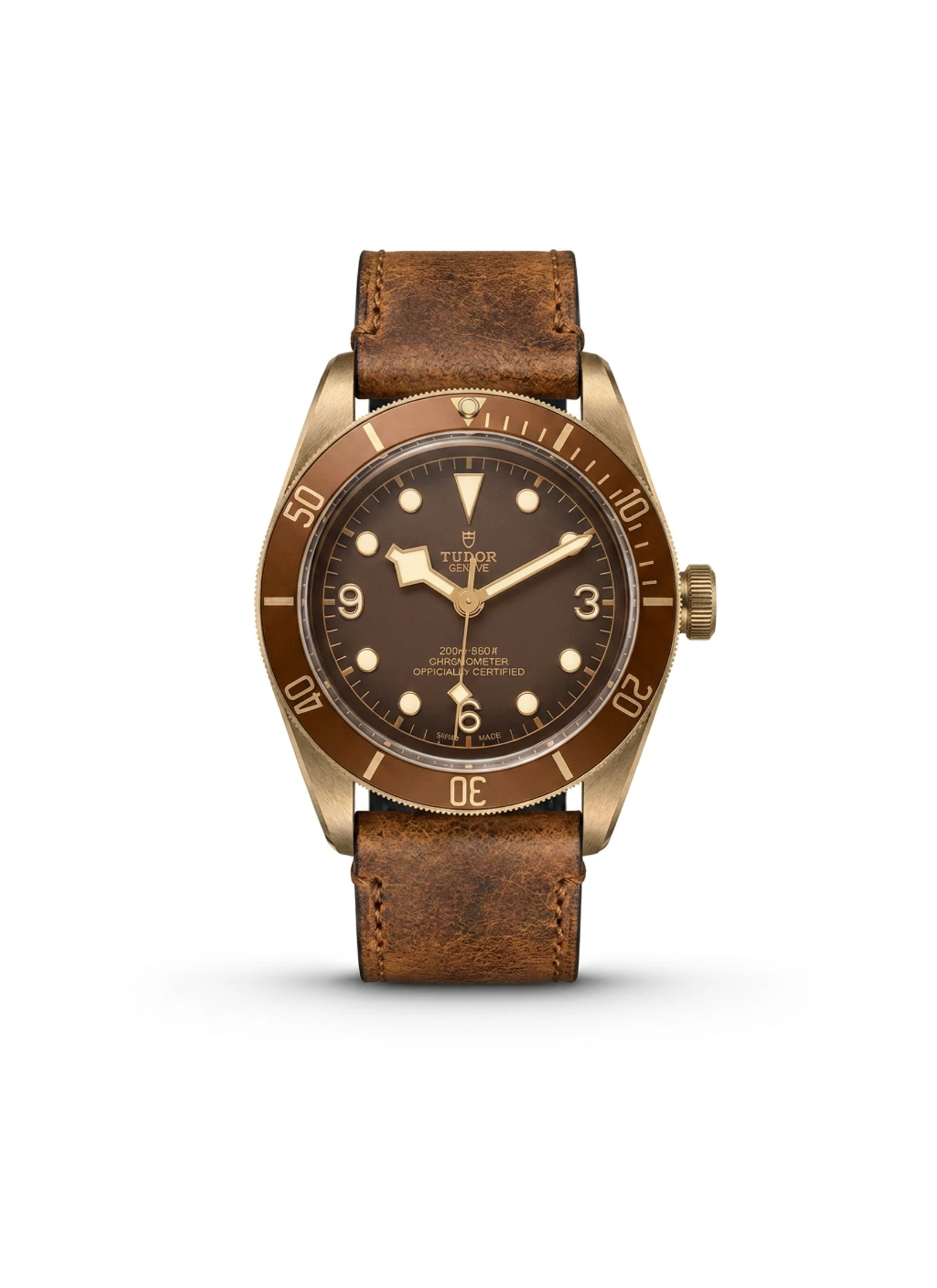
The Black Bay Bronze enlarged the watch and changed its emotional register. Bronze gave the family patina, warmth, and a more adventure-coded personality while still preserving the bezel, big crown, snowflake hands, and clean diver layout.
It showed that the family was flexible enough to absorb material experiments without becoming unrecognizable.
A cleared catalog visual of Black Bay Bronze anchors this chapter to a specific watch reference.
The Black Bay Chrono gave Tudor a racing-adjacent branch without abandoning the diver case logic. The GMT did something similar for travel, taking the bicolor-bezel idea into a Tudor palette and putting it behind the MT5652 travel-time calibre.
These watches are why Black Bay is best understood as a platform. The diver grammar can hold chronographs, dates, GMT hands, two-tone cases, and different kinds of bezels while still reading as Black Bay.
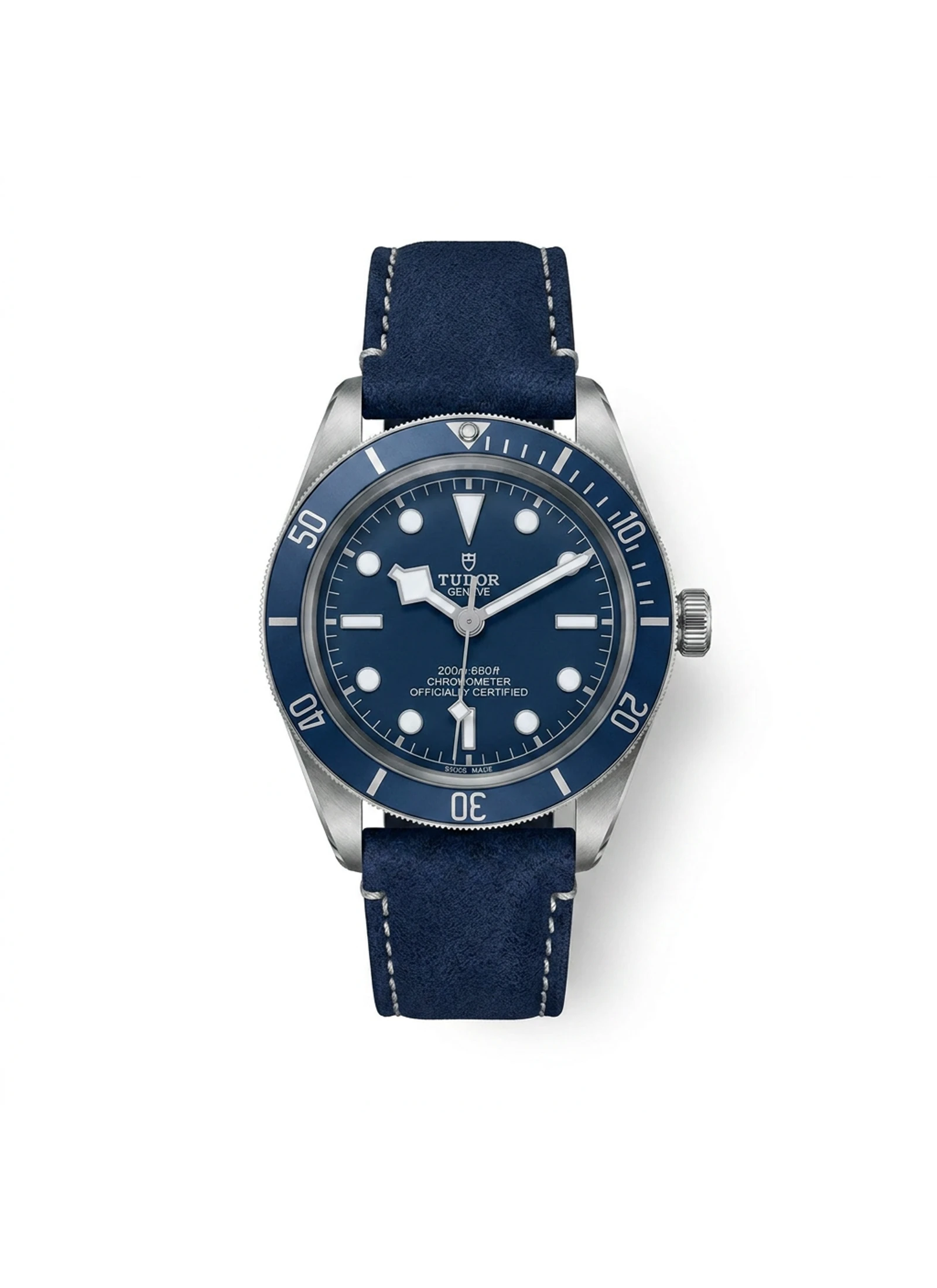
A cleared catalog visual of Black Bay Chrono anchors this chapter to a specific watch reference.
The Black Bay Fifty-Eight was the family correction many collectors had been waiting for: 39 mm, thinner movement, vintage-feeling stance, and the name tied directly to Tudor's 1958 200-metre Big Crown Submariner.
It did not replace the 41 mm Black Bay. It clarified the platform. One branch could be assertive and modern; another could feel closer to the compact proportions that made vintage dive watches so wearable.
The early 2020s branches made Black Bay more granular. Ceramic gave Tudor its first Black Bay-era METAS talking point, Pro gave the family a fixed-bezel 39 mm GMT tool watch, and the Black Bay 54 pulled the diver even closer to the 37 mm earliest-Tudor-diver idea.
The database shows that this is messy in a useful way: Black Bay Pro lives near the GMT branch, while Black Bay 54 sits inside the broader Black Bay family. That mess is exactly what a family story can make navigable.
The 2023 mainline Black Bay returns to burgundy, but it is not nostalgia alone. The MT5602-U, METAS Master Chronometer certification, improved bracelet options, and T-Fit clasp make the familiar color story feel more technically adult.
That is the family in miniature: the watch that made Tudor visible again is now the watch Tudor uses to show how far its manufacture confidence has come.