TAG Heuer Carrera: The Racing Chronograph That Chose Clarity
A connected history of the Carrera, from Jack Heuer, the Carrera Panamericana, and the 1963 Heuer 2447 to Dato experiments, Chronomatic automatics, Ferrari-era gold, the 1996 re-editions, Calibre 16 and 1887, Heuer 01, Heuer 02, and the modern Glassbox return.
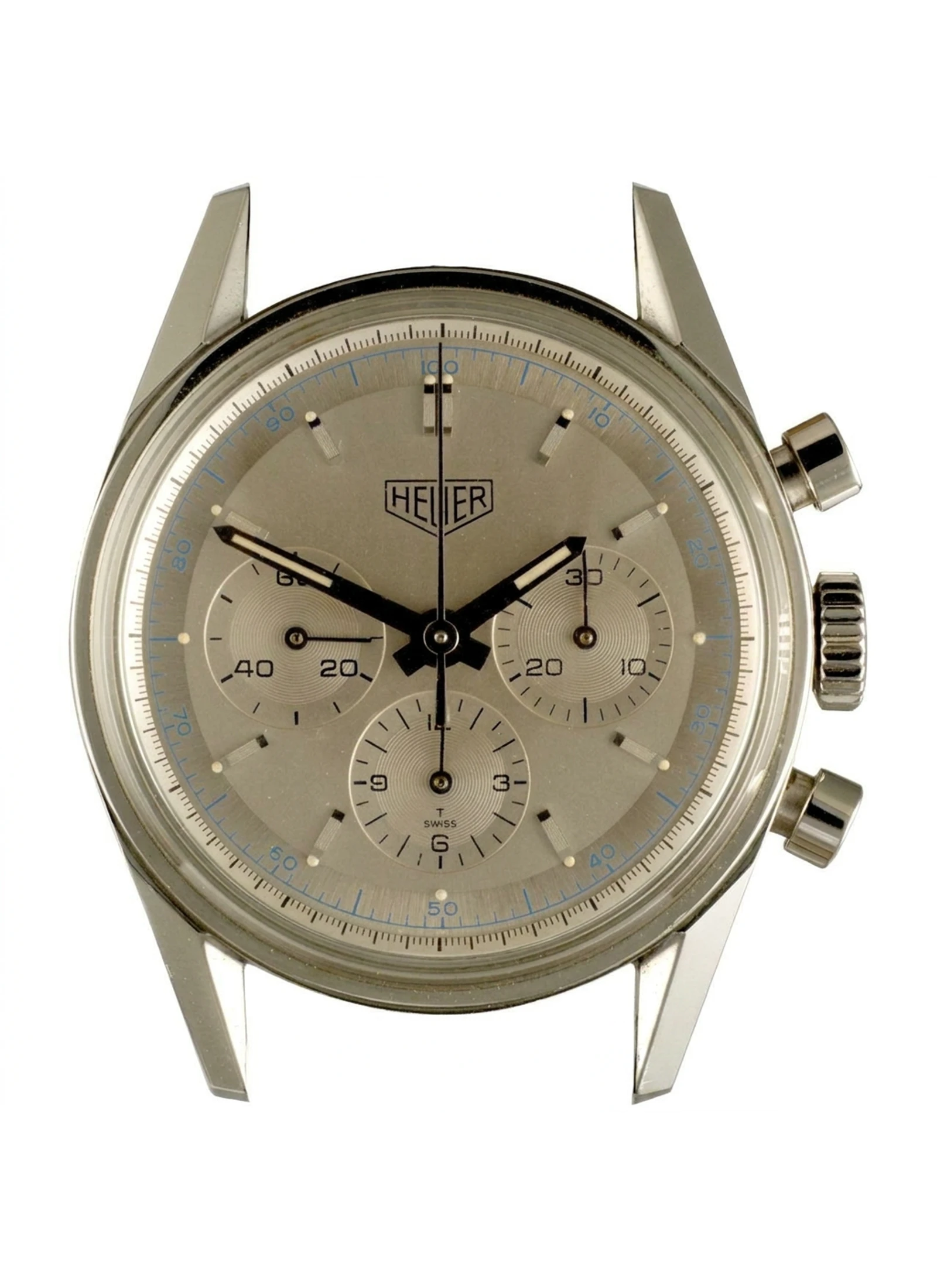
Jack Heuer heard the Carrera Panamericana name at Sebring and understood its power: speed, danger, and a clean Spanish word that also meant career or course. In 1963, the first Carrera chronographs turned that name into a legible racing instrument.
2447N3647S
1963-1970
The clean dial becomes a laboratory
The earliest Carreras used the case and dial as a system: angled tension ring, sunken registers, oversized pushers, and little unnecessary print. Three-register, two-register, decimal, tachymeter, pulsation, and Dato versions showed how much could change without disturbing the core idea.
2447N3647S3147N
1969-1978
Automatic chronographs and Ferrari gold
The Carrera changed shape when automatic chronographs arrived. The 1153 brought Chronomatic architecture and a cushion case; the gold 1158CHN tied the watch to Jack Heuer's Ferrari-era relationships; the 110.253 pushed the line into broader 1970s forms.
1153N1158CHN110.253
1996-2004
The 1990s re-edition brings it back
After the quartz and TAG transition years, the Carrera returned through 1990s re-editions. The CS311x watches made the old clean-dial Carrera legible to a new collector culture and helped turn Heuer heritage into a pillar of modern TAG Heuer.
The 2000s Carrera became a larger everyday chronograph platform. Calibre 17 kept a compact bicompax memory alive, while Calibre 16 made the Carrera a broad automatic chronograph line for the TAG Heuer era.
The Carrera then became a place for TAG Heuer to talk about movements and modernity. Calibre 1887 references brought a more manufacture-centered story, while the Heuer 01 era leaned into openworked dials, modular cases, and a more aggressive racing aesthetic.
With Heuer 02, the modern Carrera settled into a stronger technical base: column wheel, vertical clutch, long power reserve, and a cleaner family structure across 42 mm and sport chronograph references.
The Glassbox Carreras brought the story full circle for the 60th anniversary. A domed crystal, curved flange, 39 mm case, and TH20-00 movement let TAG Heuer quote the 2447 without simply copying it.
The Carrera is one of the cleanest racing-watch ideas because it does not begin with spectacle. Jack Heuer wanted a chronograph a driver or navigator could read quickly, so the first Carreras removed clutter rather than adding theater.
The trick was technical and visual at the same time. By moving scales to the angled tension ring and using sunken registers, the dial had depth without noise. The watch looked modern because it made information easier to see.
2447N3647S
Origin
The name did half the work
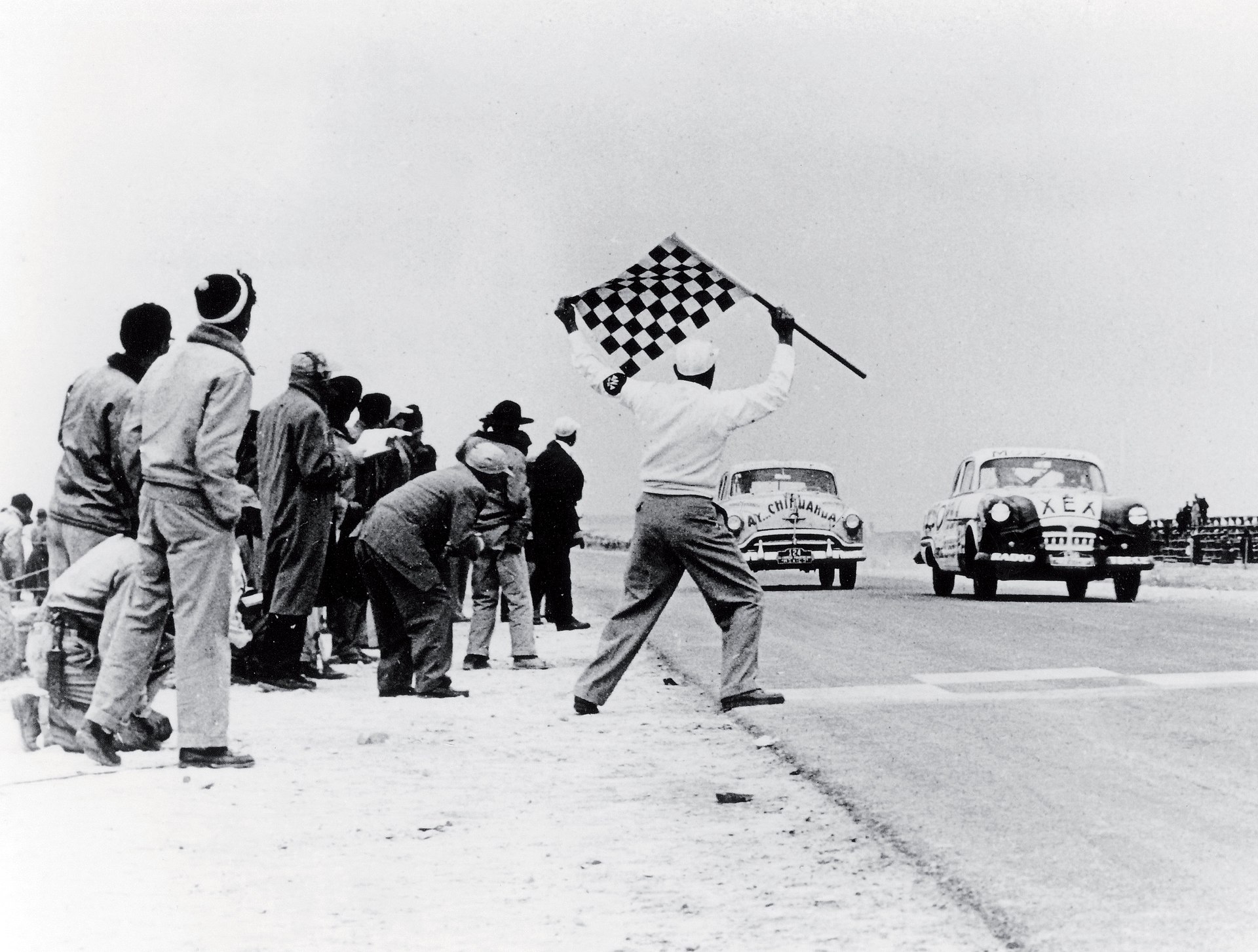
Carrera Panamericana was a dangerous Mexican road race, but the word Carrera also carried a broader sense of race, road, and career. Jack Heuer understood that it sounded fast without needing translation.
That made the watch feel international from the beginning. The first Carrera was not a commemorative novelty; it was a clean professional chronograph with a name that made its purpose obvious.
A period Carrera Panamericana finish-line image gives Jack Heuer's naming choice its motorsport charge: speed, risk, Mexico, and legibility under pressure. La Carrera Panamericana / Wikimedia Commons - CC BY-SA 4.0
2447N
Variation
Manual-wind Carrera was already a family
The early Carrera was not only the three-register 2447. The two-register 3647, the Dato 3147, and the many scale and dial variants show a design language flexible enough to absorb timing needs without losing discipline.
That is important for DialAtlas because the Carrera story should not collapse into one reference. The core is the interface: case, pushers, registers, tension ring, and the amount of empty dial space left for the eye to breathe.
2447N3647S3147N
Movement shift
Chronomatic changed the shape of the watch
The arrival of automatic chronographs changed more than the movement. The Carrera became thicker, broader, and more visibly 1970s, with cushion and barrel cases replacing the razor-clean round case of the early 1960s.
That change can look like a break, but it is also a proof of life. The 1153N and 110.253 show the Carrera adapting to new mechanics and new taste, while the 1158CHN adds a glamorous Ferrari-era layer to a watch that began as pure instrumentation.
1153N1158CHN110.253
Revival
The re-editions made heritage a strategy
The 1996 Carrera re-editions arrived before vintage-inspired watches became the industry's default move. They were modest, clean, and recognizably tied to the 1960s Heuer chronographs.
Those CS311x references helped TAG Heuer turn Heuer history into modern brand equity. The Carrera was no longer just an old model name; it became the bridge between Jack Heuer's archive and TAG Heuer's future.
Calibre 16 and Calibre 17 Carreras made the line commercially broad. They were sportier and more contemporary than the re-editions, but they kept enough Carrera DNA to remain part of the same racing-chronograph conversation.
The 2000s also explain why the Carrera database is big and messy. Once the family becomes a platform, it generates three-handers, GMTs, ladies' references, sport chronographs, limited editions, straps, bracelets, and many near-neighbor codes.
1887, Heuer 01, and Heuer 02 made movement part of the story
The Carrera became TAG Heuer's most important chronograph stage for modern movement messaging. Calibre 1887 gave the line a manufacture-adjacent talking point, while Heuer 01 turned the dial into an exposed technical display.
Heuer 02 then steadied the platform. The modern Carrera could be sporty, skeletonized, classic, or Glassbox, but the movement story gave TAG Heuer a consistent modern engine underneath the variations.
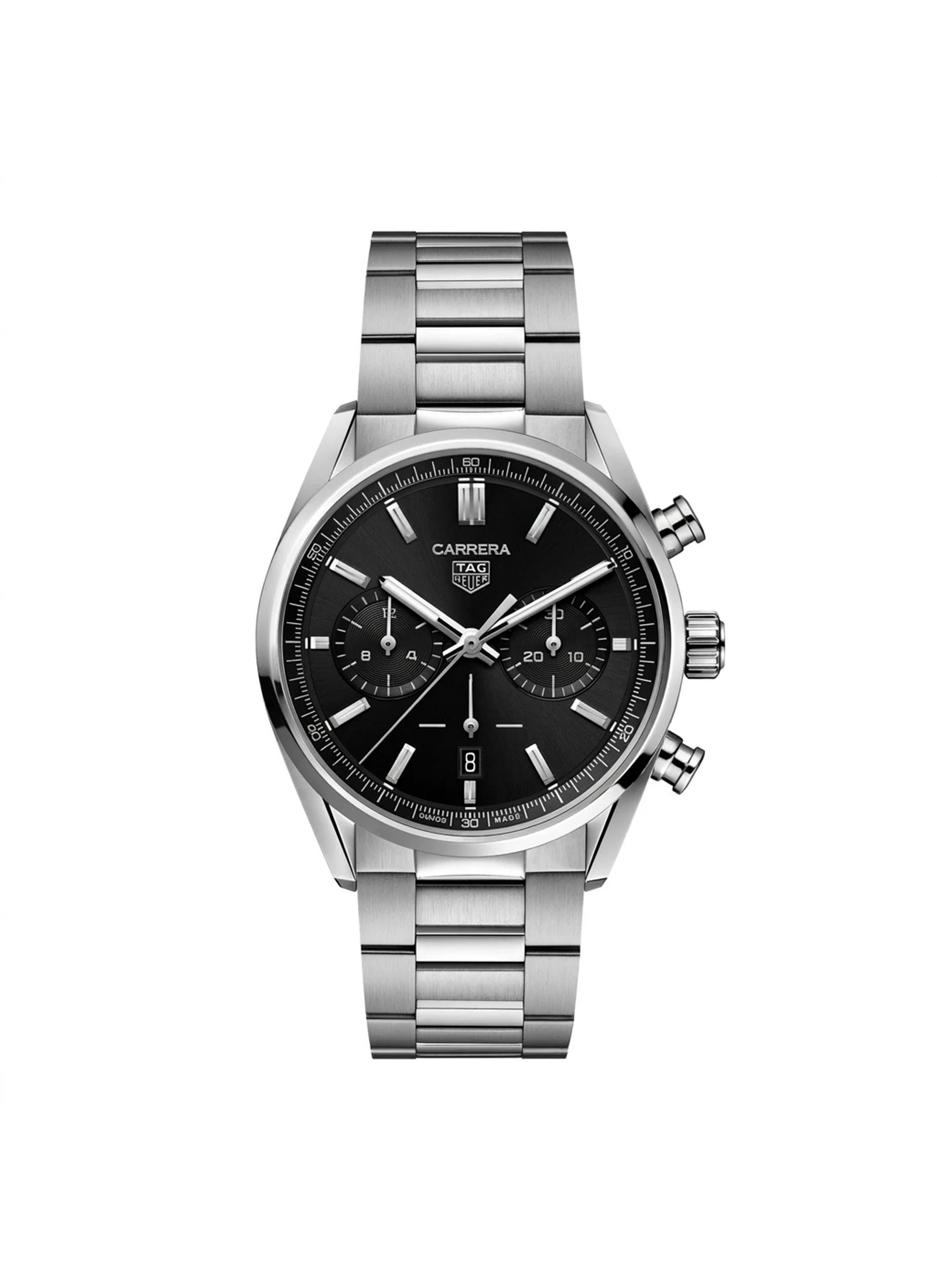
A cleared catalog visual of TAG Heuer Carrera Chronograph anchors this chapter to a specific watch reference.
The 2023 Glassbox Carreras are not successful because they look old. They work because they remember the original Carrera problem: make timing information clean, deep, and easy to read at speed.
The domed crystal and curved flange create a modern version of the old tension-ring idea. The watch feels nostalgic, but the better word is continuous. Carrera keeps coming back to clarity.
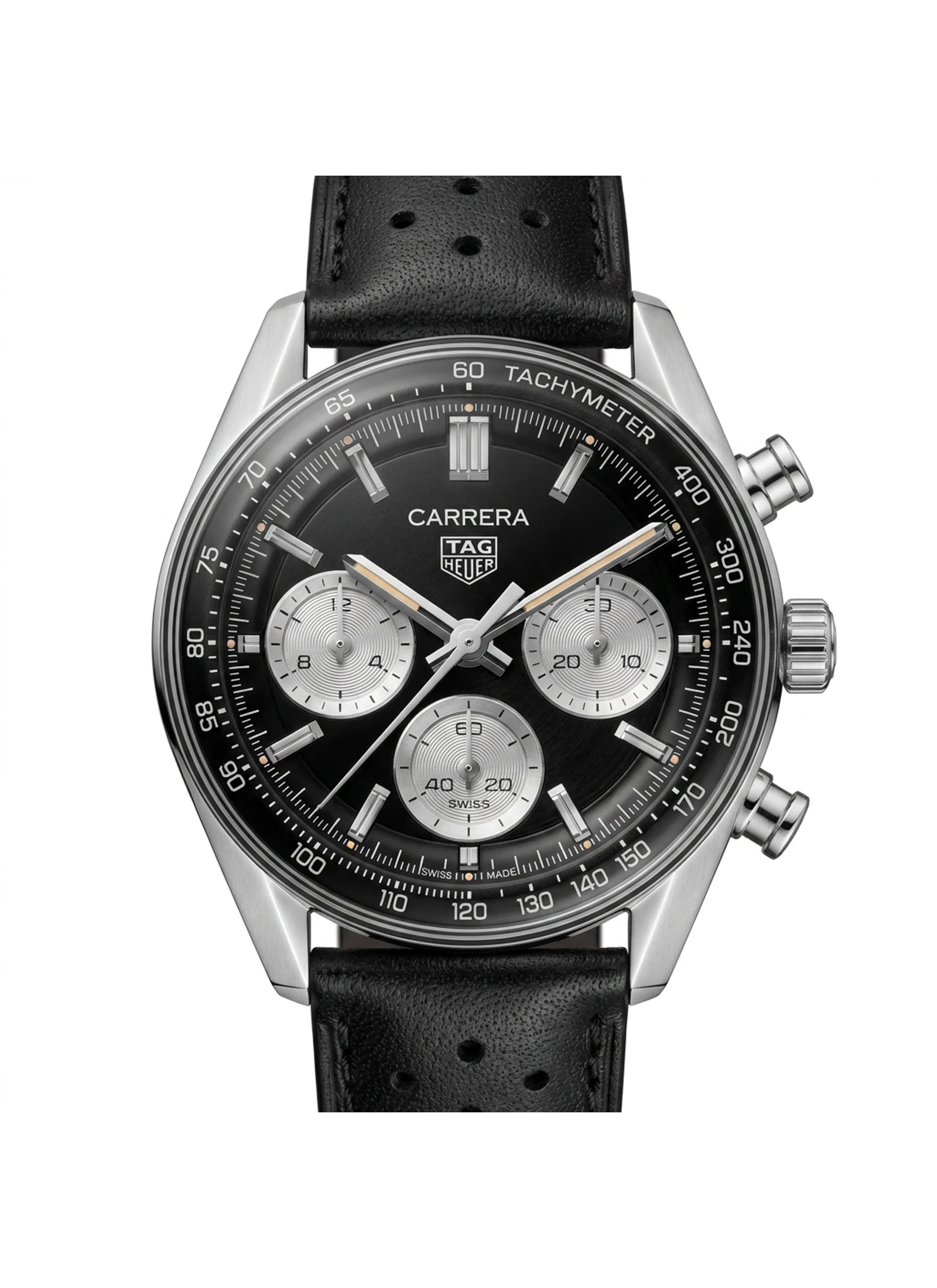
A cleared catalog visual of TAG Heuer Carrera Chronograph anchors this chapter to a specific watch reference.