Rolex Yacht-Master: The Luxury Tool Watch That Went Racing
A connected history of the Rolex Yacht-Master and Yacht-Master II, from the full-gold 16628 and Rolesium 16622 to Oysterflex, 42 mm RLX titanium, and the reworked 2026 Yacht-Master II regatta chronograph.
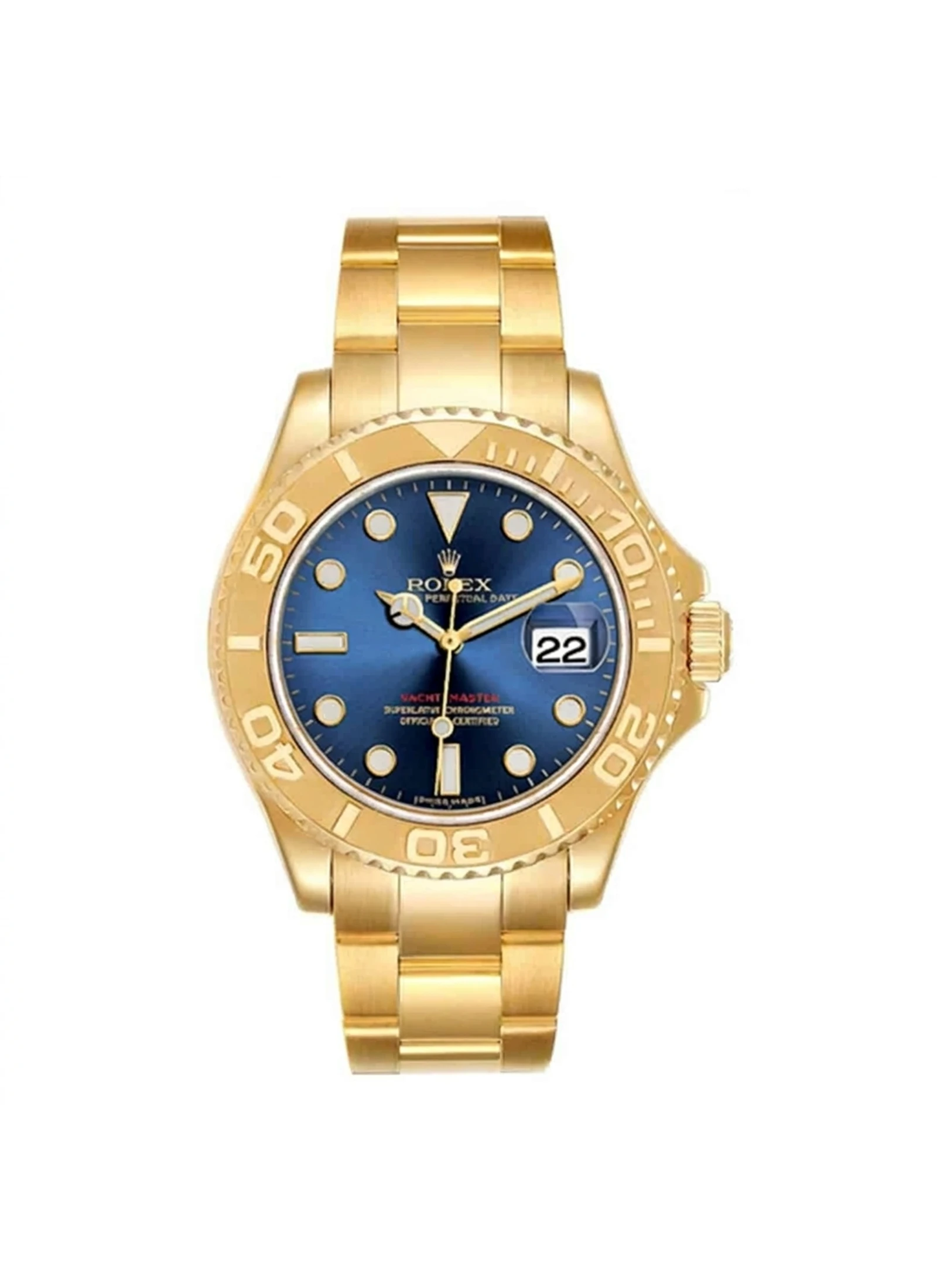
The Yacht-Master entered the catalog as a precious-metal take on Rolex sport-watch language. The full-yellow-gold 16628 gave the line its first shape: rotating timing bezel, date, Oyster case, and a purpose that leaned more deck-of-a-yacht than dive-boat instrument.
Rolex quickly broadened the Yacht-Master idea into smaller sizes, making the family less like a single professional reference and more like a luxury-sport range. That mattered: from the beginning, the Yacht-Master was about a lifestyle vocabulary as much as a single technical task.
The 16622 made the Yacht-Master far easier to recognize. Rolex's Rolesium formula paired steel with platinum bezel elements, giving the watch a bright silver-on-silver look that separated it from both the Submariner and the Datejust.
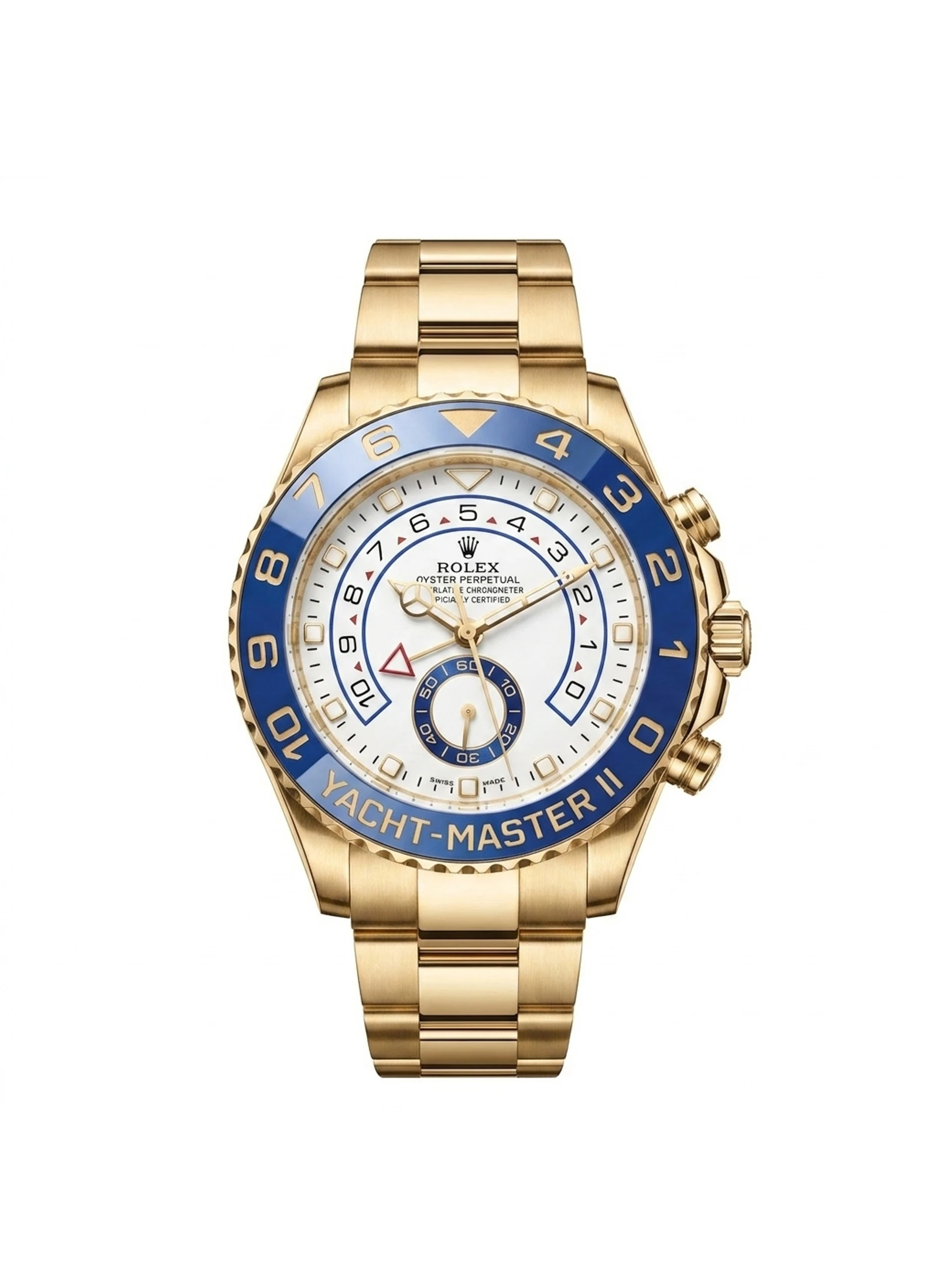
The Yacht-Master II turned the name into an unusually specific instrument. Its programmable countdown was built for the start sequence of a regatta, with the first generation using the Ring Command bezel as part of the control system.
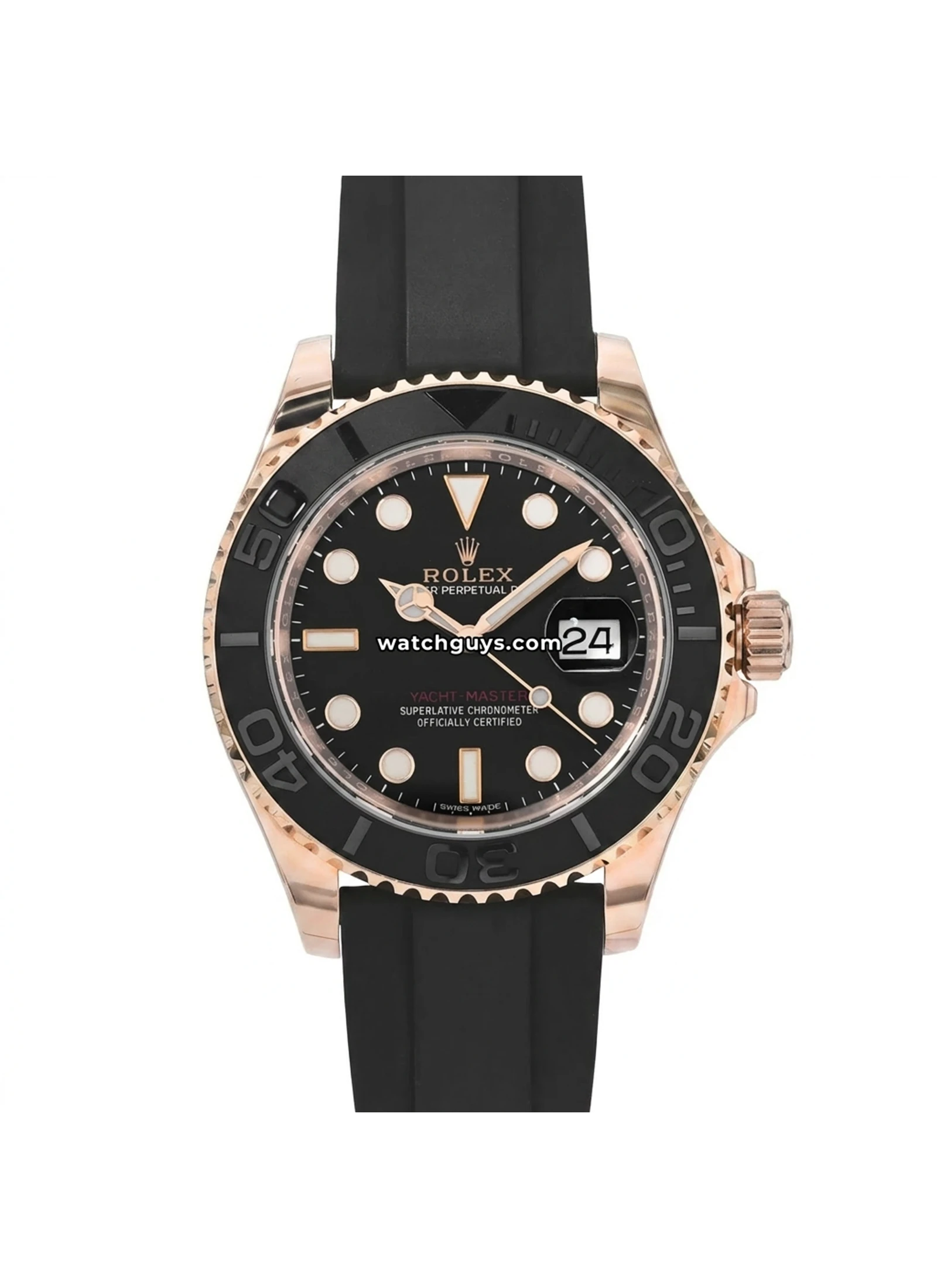
The Everose-gold Oysterflex Yacht-Master made the family feel newly modern: matte black bezel, precious metal, and a bracelet that behaved visually like rubber while being engineered as a metal-blade Rolex bracelet. The calibre 3235 generation then refreshed the 40 mm core.
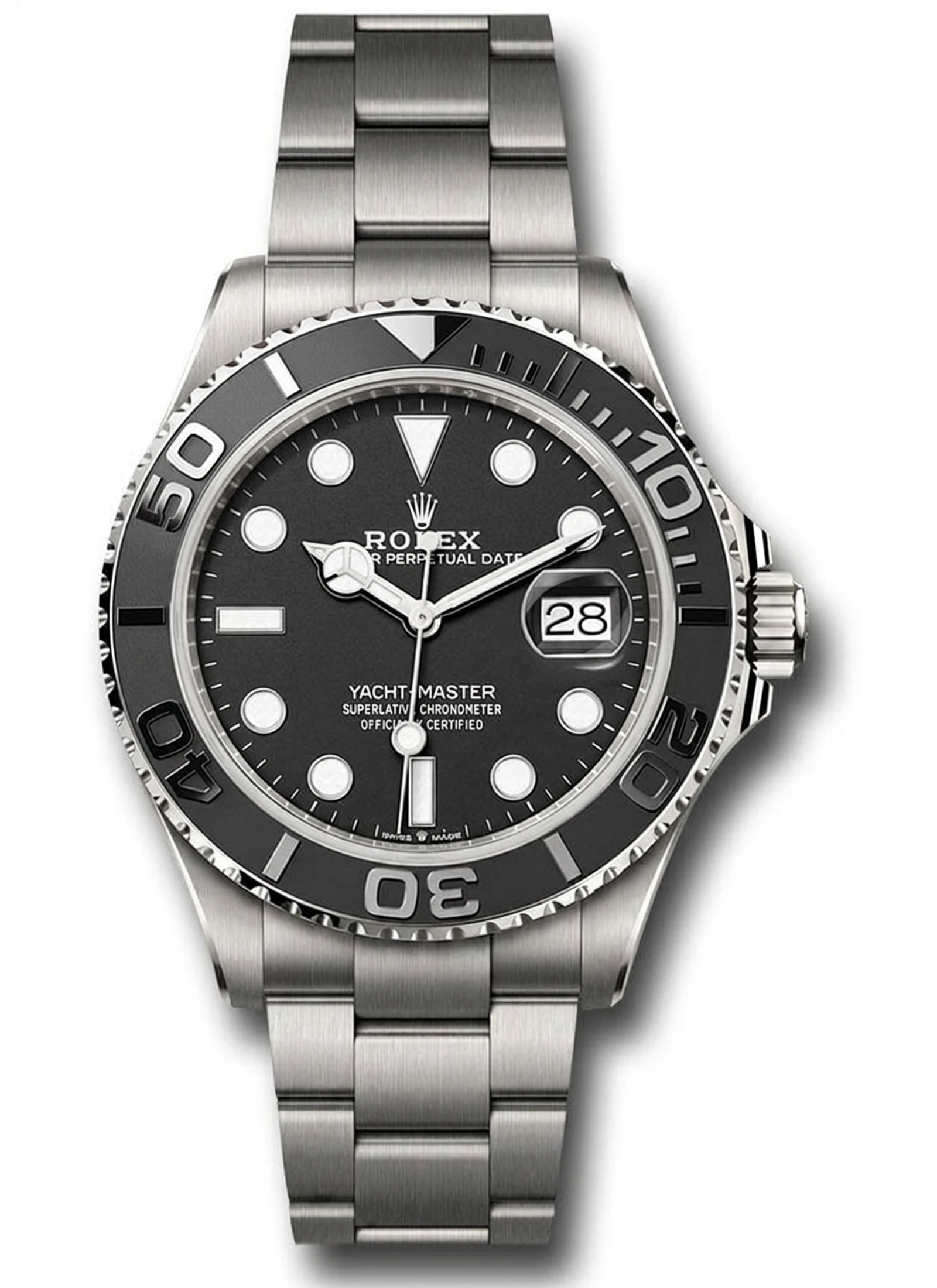
The 42 mm Yacht-Master opened a larger branch: first in white gold on Oysterflex, then yellow gold, and finally RLX titanium on an Oyster bracelet. The 226627 is the clearest technical pivot, turning the Yacht-Master into one of Rolex's most direct titanium statements.
After the first Yacht-Master II generation left the catalog, Rolex brought the regatta chronograph back for 2026. The second generation keeps the 44 mm case and countdown purpose, but uses calibre 4162 and a pusher-led interface rather than the old Ring Command programming sequence.
The easiest mistake is to define the Yacht-Master by what it is not: not quite a diver, not quite a dress watch, not quite a pure Professional tool. That ambiguity is actually the point. Rolex built a nautical sports watch where precious metal, polish, and comfort were allowed to be central rather than apologetic.
The 16628 makes that clear. It borrows enough Rolex sport-watch grammar to feel capable, but full yellow gold changes the emotional register. This is a watch about timing, water, and movement, but also about leisure.
A cleared catalog visual of the yellow-gold 16628 shows how the Yacht-Master began with sport-watch shape and luxury-watch material.
Rolesium is one of those Rolex terms that sounds like marketing until you see what it does. On the Yacht-Master, the steel case and bracelet meet platinum bezel elements, creating a cool metallic surface that reads as richer than steel without becoming full precious-metal spectacle.
That made the 16622 the model's breakout identity. The watch became distinct from the Submariner's black ceramic utility and from the Datejust's dressier codes. It was not less purposeful; it was purpose translated into shine.
A cleared catalog visual of the 16622 gives the story its steel-and-platinum visual signature.
The 2015 Everose-gold Oysterflex Yacht-Master was a reset because it changed the outline on the wrist. A matte black Cerachrom bezel and black Oysterflex bracelet made precious metal feel sportier, leaner, and less formal.
That formula has become central to the modern family. The current 37, 40, and 42 mm range lets the Yacht-Master move between Rolesium, Rolesor, full gold, Oysterflex, and titanium without losing the same basic deck-watch posture.
A cleared catalog visual of the 116655 shows the Everose gold and Oysterflex formula that modernized the Yacht-Master silhouette.
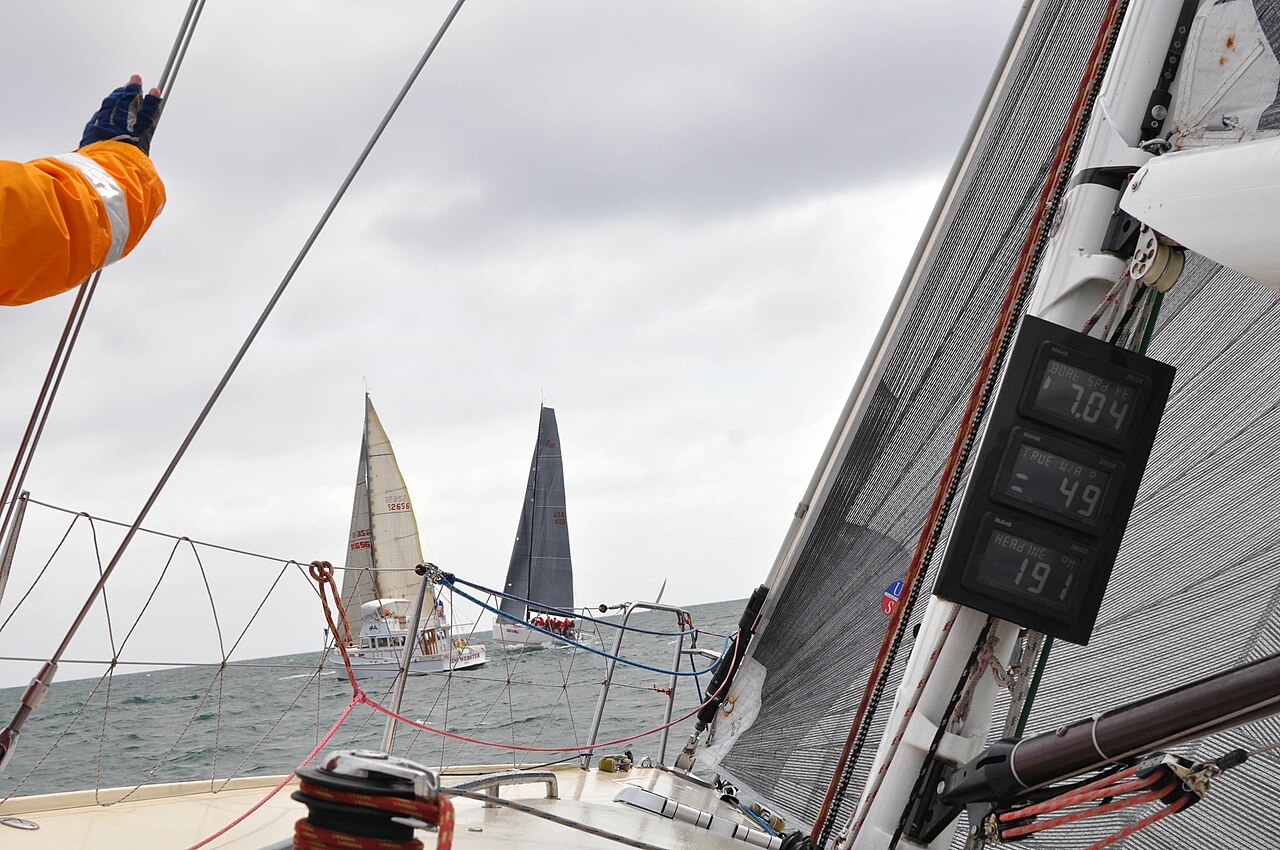
The regular Yacht-Master suggests the world of sailing; the Yacht-Master II actually chases a sailing problem. A regatta start depends on timing the countdown to the line, so Rolex built the first generation around a programmable mechanical countdown.
That made the Yacht-Master II one of the strangest modern Rolexes: large, bright, technically elaborate, and highly specific. It is easy to treat it as eccentric, but the eccentricity comes from trying to solve a very narrow problem mechanically.
Yacht racing gives the Yacht-Master II its narrow brief: timing the countdown to a regatta start. Don Ramey Logan / Wikimedia Commons - CC BY-SA 3.0
The newest branches are more technical than they look
The RLX titanium 226627 matters because it pulls the Yacht-Master toward lightness and abrasion-ready utility without abandoning the polished nautical identity. Rolex describes RLX titanium as a grade 5 alloy chosen for lightness, strength, and corrosion resistance, which makes it a meaningful material shift rather than just a color change.
The 2026 Yacht-Master II return is the other modern pivot. The second generation keeps the regatta countdown idea but simplifies operation through pushers and calibre 4162. The family now has two poles: a luxury timing bezel watch, and a specialist countdown chronograph.
A cleared catalog visual of the 126680 shows the 2026 Yacht-Master II return in Oystersteel.