Rolex Submariner: The Dive Watch That Became the Template
A connected history of the Submariner, from early waterproof tool watch to no-date purist icon, Submariner Date mainstay, COMEX and MilSub lore, green-bezel collector language, and the current 41 mm generation.
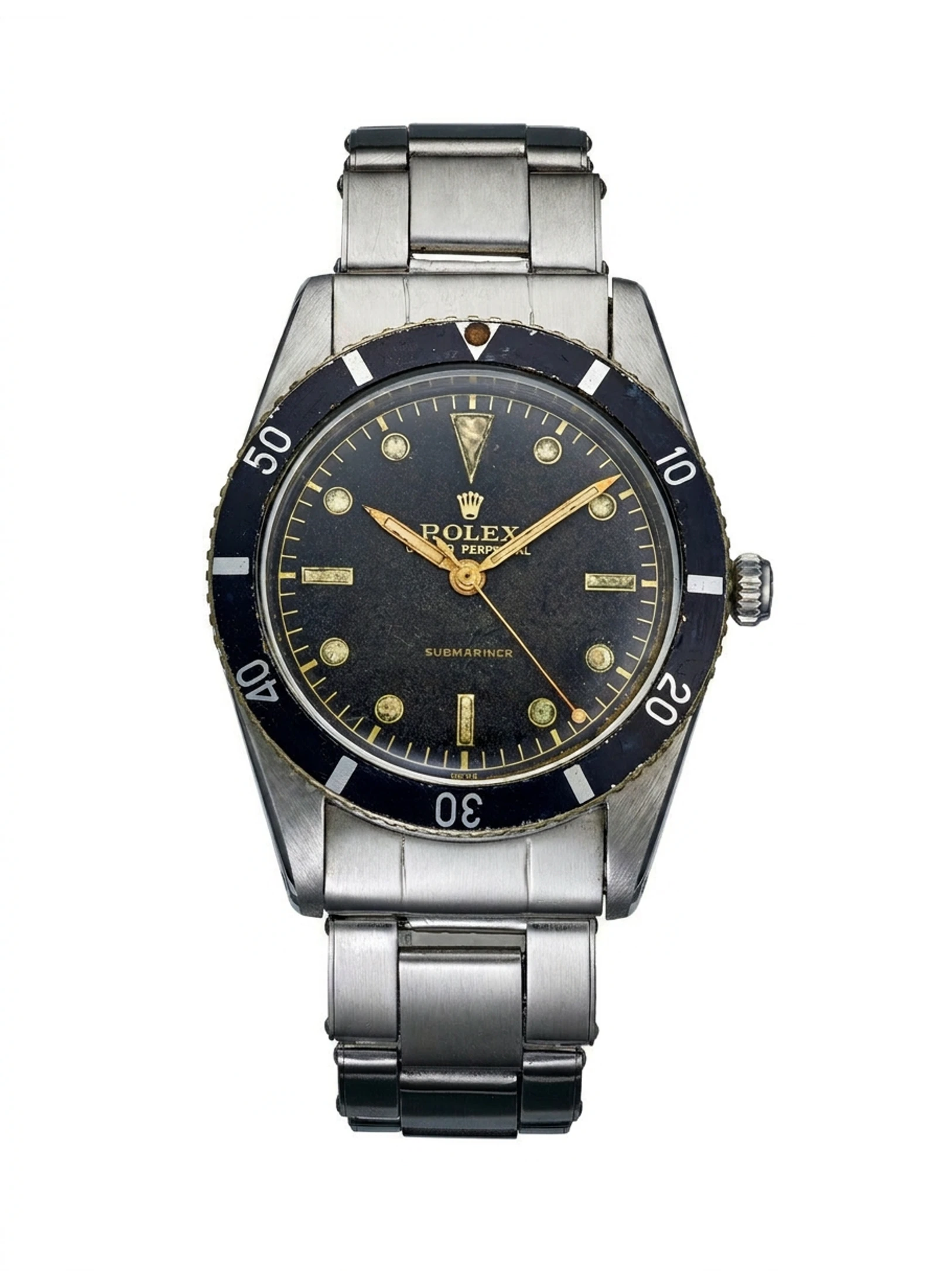
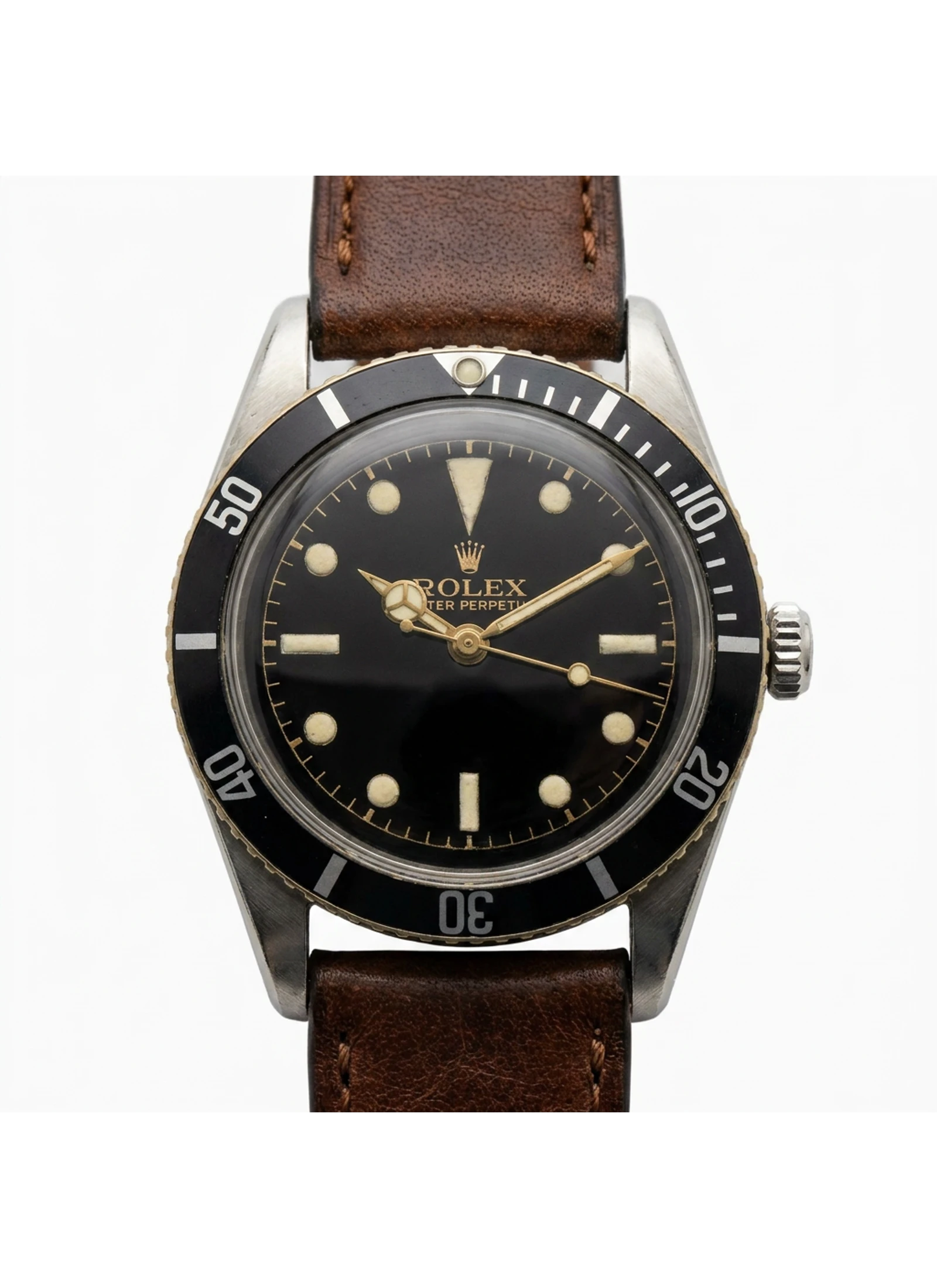
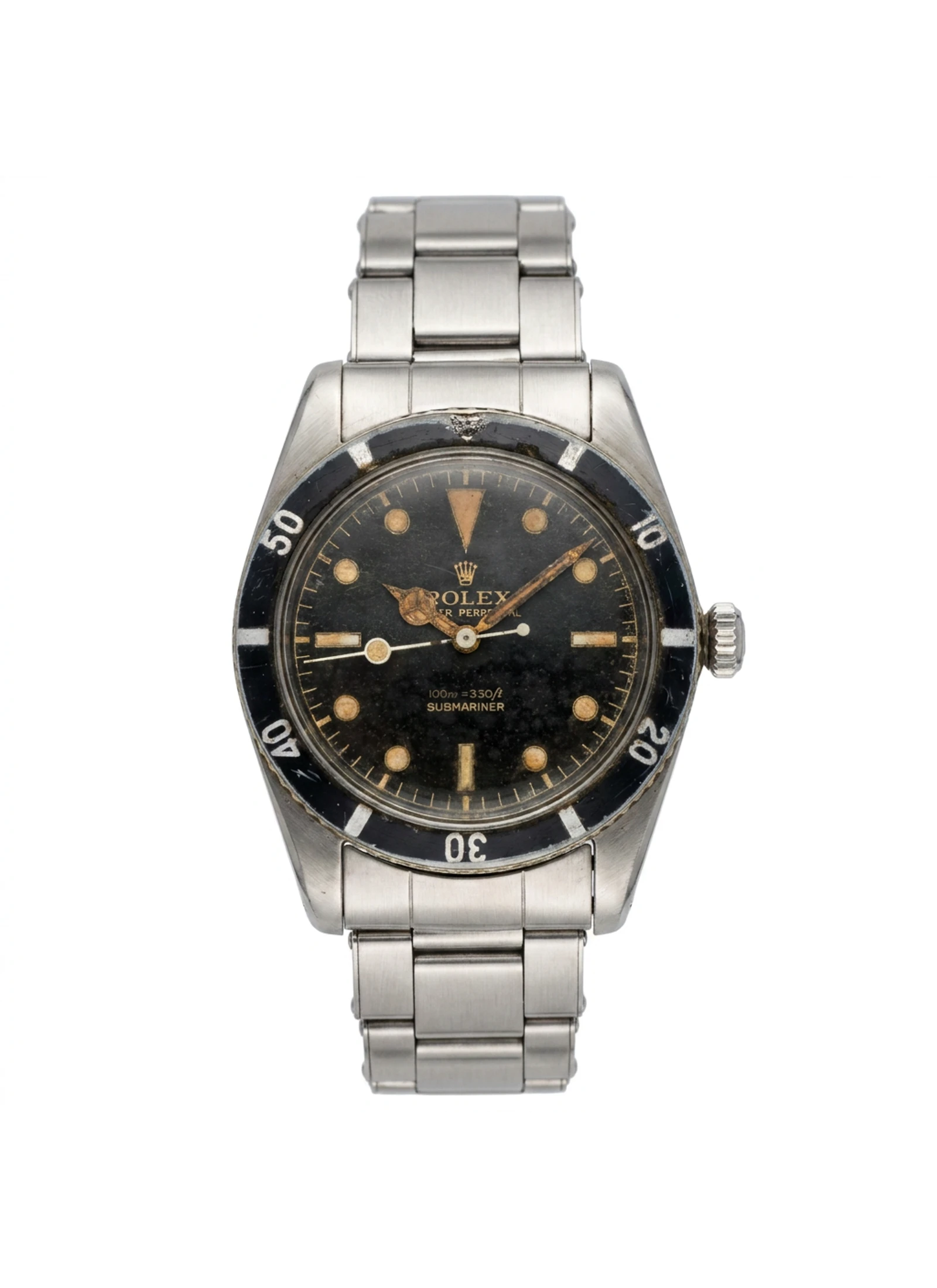
The earliest Submariners established the language of the modern dive watch: black dial, rotating timing bezel, luminous markers, Oyster waterproof case, and a depth rating that made the watch credible underwater. This era also created the first collector split between Small Crown and Big Crown references.
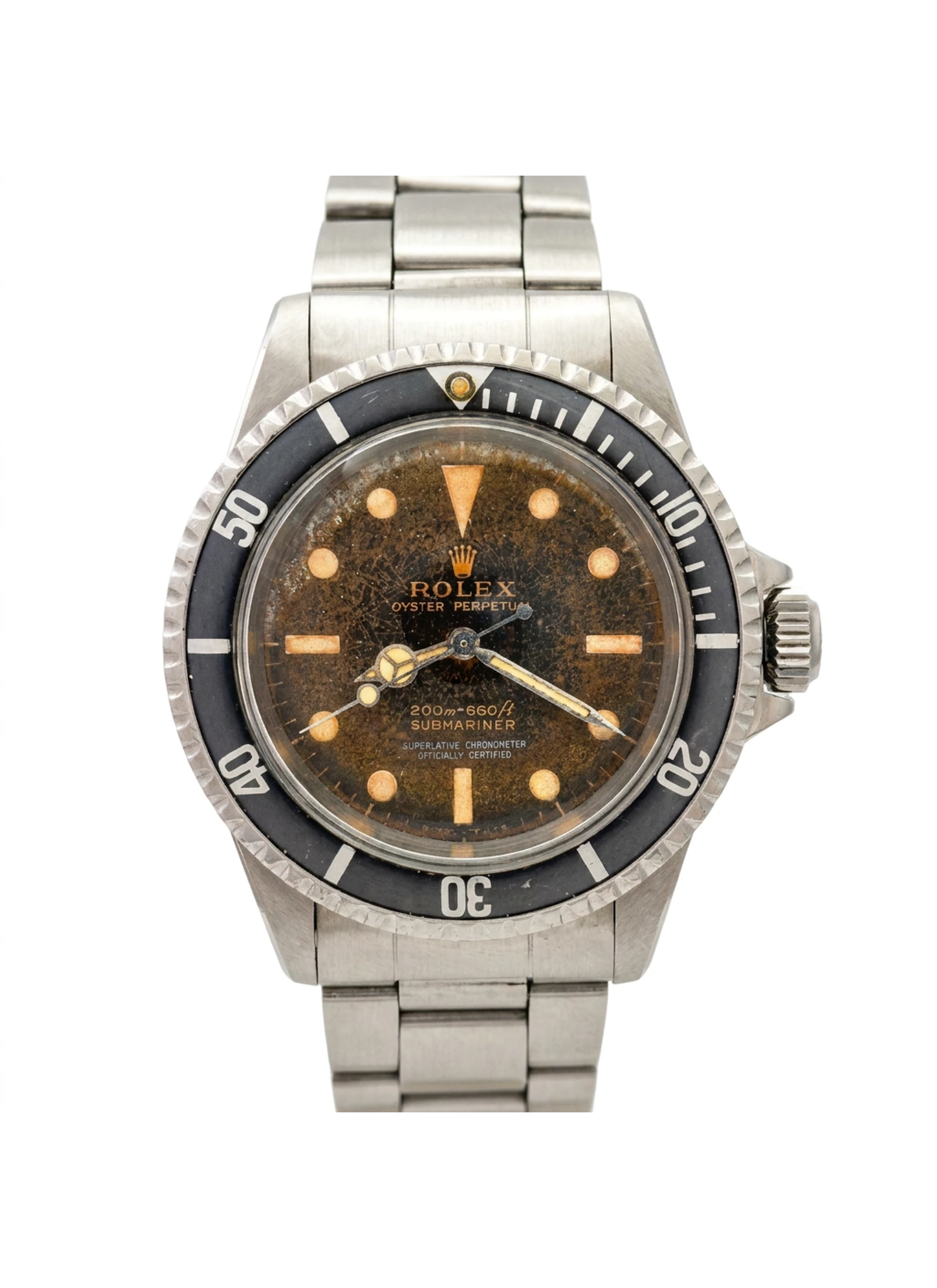
With the 5512 and 5513, the Submariner became more recognizably modern: crown guards, 40 mm proportions, and a cleaner tool-watch silhouette. The no-date line also gathered professional lore through COMEX and military-issued MilSub references.
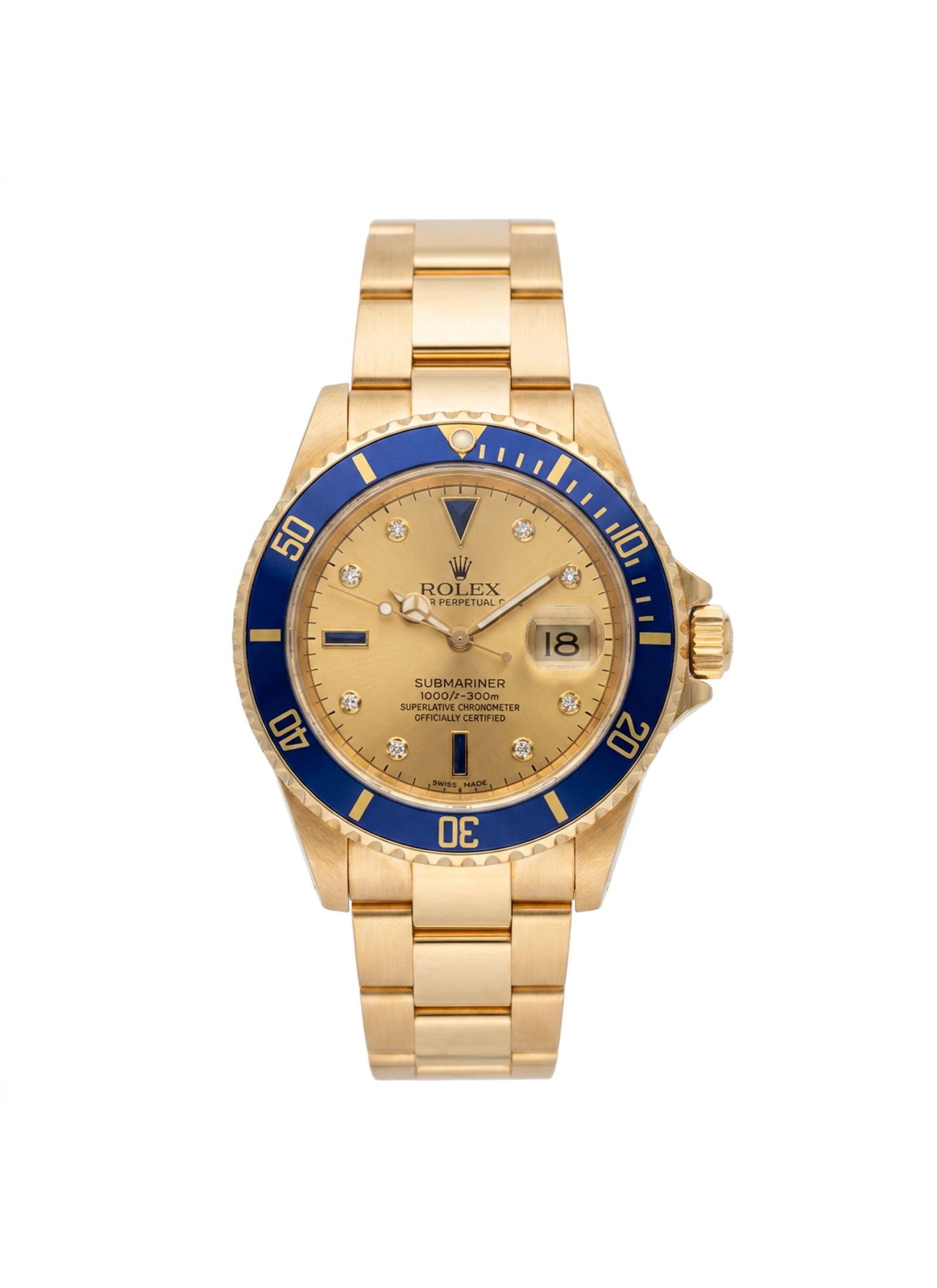
The 1680 added a date and Cyclops lens, creating a second Submariner branch. Early Red Submariner dials became a collector vocabulary of their own, while gold and two-tone Date models pushed the Submariner from pure instrument toward luxury sports watch.
The five-digit generation made the Submariner feel like the default luxury tool watch. The 16610 became a long-running Date benchmark, while the 14060 and 14060M carried the cleaner no-date lineage. In 2003, the 16610LV Kermit turned the anniversary green bezel into modern collector language.
Six-digit Submariners brought Cerachrom ceramic bezels, broader lugs, improved clasps, and a heavier wrist presence. The era also created several modern nicknames: Hulk for the green-dial 116610LV, Smurf for the white-gold blue 116619LB, and Bluesy for blue Rolesor and gold Date models.
The 2020 generation moved the Submariner to 41 mm, refined the case profile, and introduced the 3230 and 3235 movements. The result is evolutionary rather than disruptive: more reserve, current Rolex engineering, and the same basic dive-watch grammar set in the 1950s.
A waterproof instrument for the age of underwater exploration
The Submariner arrived at the moment recreational and professional diving were becoming visible modern frontiers. Rolex already had decades of waterproofing work behind it through the Oyster case, but the Submariner made the promise legible: a black dial, a rotating timing bezel, luminous markers, and a watch that could be read under pressure.
Rolex dates the launch to 1953 and describes the watch as its first divers' wristwatch waterproof to 100 metres. The public Basel presentation and the early 6204, 6205, and 6200 references are where history becomes messier and more interesting. Collectors still argue about which exact reference deserves primacy, but all three helped form the myth.
A cleared catalog visual of Submariner 6205 anchors this chapter to a specific watch reference.The twin-hose aqualung image puts the Submariner's rotating bezel and waterproof case inside the early recreational-diving world that made dive timing legible. Anthony Appleyard at English Wikipedia / Wikimedia Commons - Public domain
Big Crown, Small Crown, Bond: the early watches become a language
Early Submariners are not just old versions of the same watch. They are a vocabulary. Small Crown references such as 6536 and 5508 wear differently from Big Crown references like 6538 and 5510. Dial layouts, depth text, crown size, and bezel inserts all matter.
The 6538 carries the strongest popular-culture charge because of its James Bond association, but the broader story is more than cinema. It is the period when the Submariner's practical details became collector signals.
A cleared catalog visual of Submariner 6536 anchors this chapter to a specific watch reference.
The late-1950s shift into crown guards and 40 mm proportions gave the Submariner the silhouette most people now recognize. The 5512 and 5513 are foundational because they run long enough to contain many dial and production changes while staying visually coherent.
This is also where professional narratives deepen. COMEX and military Submariners sit at the edge of public catalog and tool-watch history, turning small details into high-stakes provenance.
A cleared catalog visual of Submariner 5512 anchors this chapter to a specific watch reference.
The Date changes the Submariner without replacing the no-date line
The 1680 did not simply add a complication. It created a second Submariner branch. With the date and Cyclops lens, the Submariner became more useful as a daily watch, and early red text made the first Date generation instantly recognizable to collectors.
Gold and two-tone Date references pushed the model into luxury sports territory. That tension between instrument and status object is now part of the Submariner's identity rather than a contradiction.
A cleared catalog visual of Submariner Date 1680 anchors this chapter to a specific watch reference.
Kermit, Hulk, Starbucks: modern changes become collector shorthand
The modern Submariner story is full of tiny changes that became easy names. The 16610LV Kermit made the green bezel collectible. The 116610LV Hulk went further with a green dial. The 126610LV pulled the green bezel back onto a black dial and quickly picked up Starbucks or Cermit nicknames.
Rolex's changes are usually incremental, but the Submariner proves how small material, color, case, and movement shifts can reshape collector demand.
The current generation keeps the grammar and updates the engineering
The 124060 and 12661x references keep the classic Submariner grammar: Oyster case, rotating 60-minute bezel, black or colored dial variants, and 300 metres of water resistance. What changed is the architecture around it: 41 mm cases, modern bracelets and clasps, and 70-hour calibre 3230 or 3235 movements.
That is why the Submariner remains such a useful family for DialAtlas. It shows how a watch can evolve for seven decades while still being instantly readable as itself.