Rolex Milgauss: The Scientist's Rolex With the Lightning Hand
A connected history of the Rolex Milgauss, from its anti-magnetic CERN-era purpose and early 6541 to the restrained 1019, the long absence, the playful 116400 revival, the green-crystal GV, and its 2023 discontinuation.
The Milgauss exists because magnetism is hostile to mechanical watches. Rolex developed the model for scientists, engineers, and technicians working around strong magnetic fields, with CERN scientists confirming the watch's resistance to magnetic disturbance.
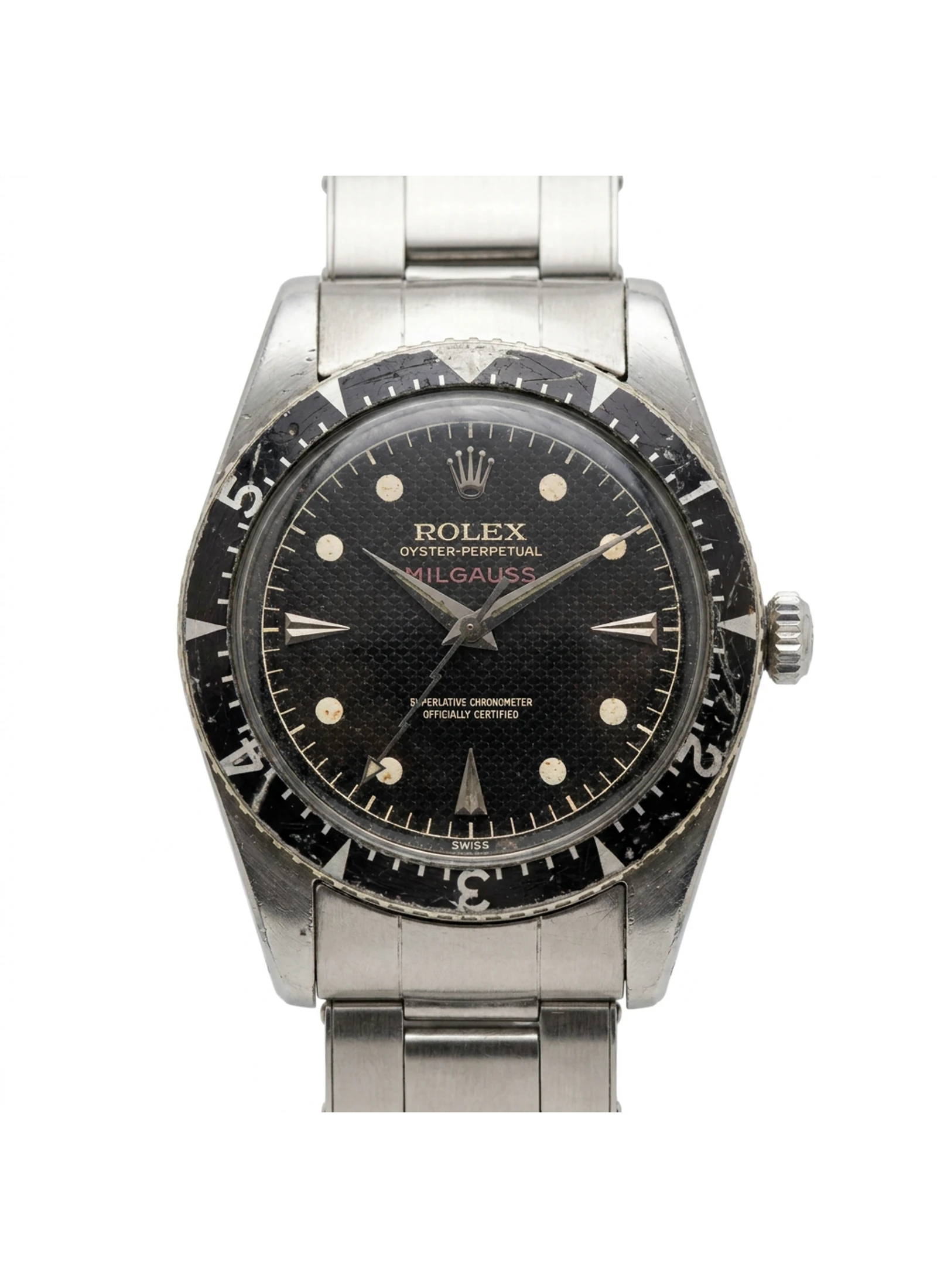
The early Milgauss looked bolder than the later lab-coat reputation suggests. Reference 6541 paired the scientific brief with a rotating bezel, strong dial texture, and the lightning-bolt seconds hand that would become the model's most memorable visual signature.
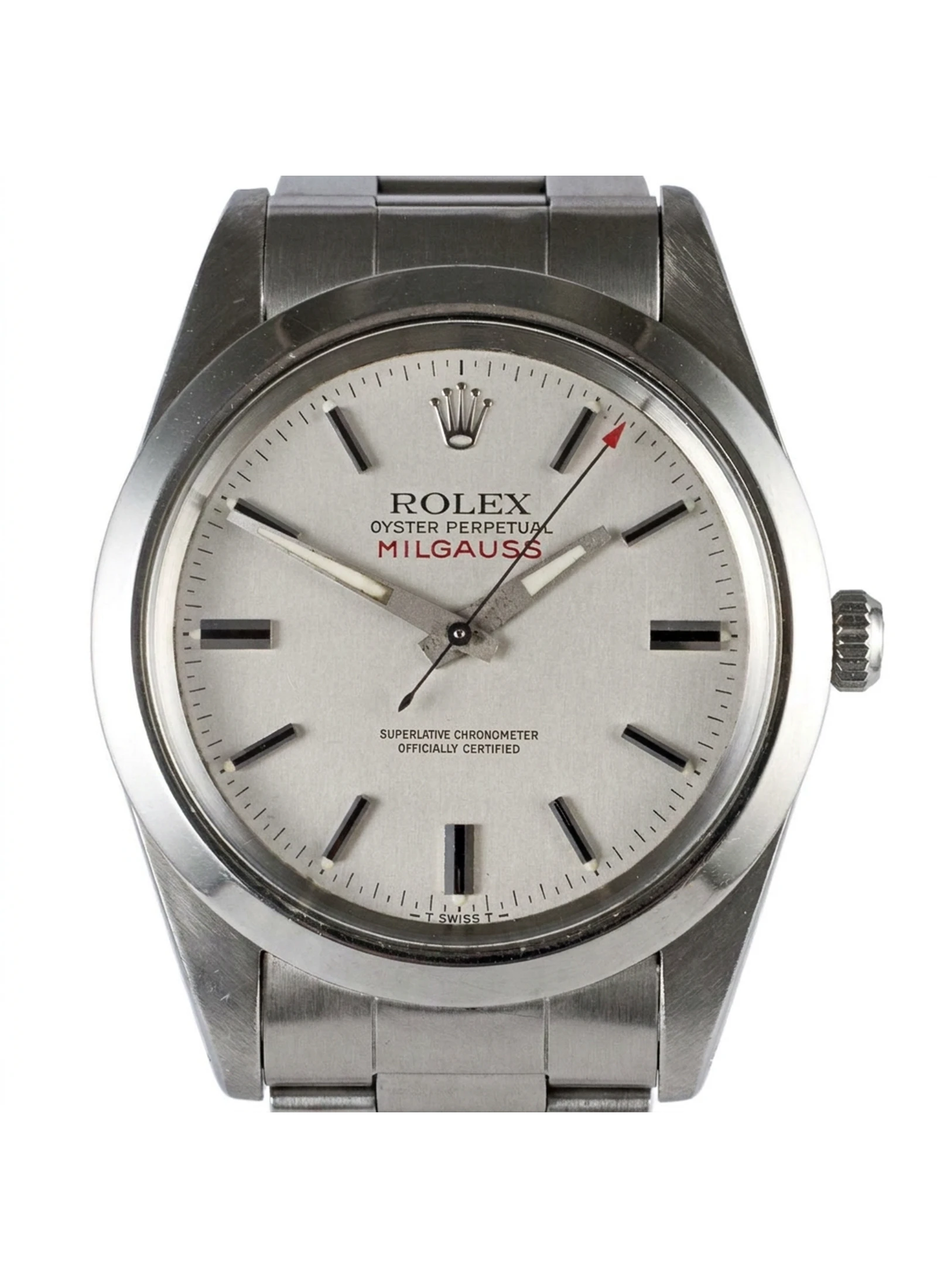
Reference 1019 made the Milgauss calmer. Gone was the rotating-bezel drama; in its place came a cleaner case, straight hands, red text, and a watch that looked more like a scientific instrument than a sport watch.
The first Milgauss era ended with the 1019. For years the line sat outside Rolex's louder Professional icons, which is part of why the model later became interesting to collectors: it was the unusual Rolex built around an invisible technical problem.
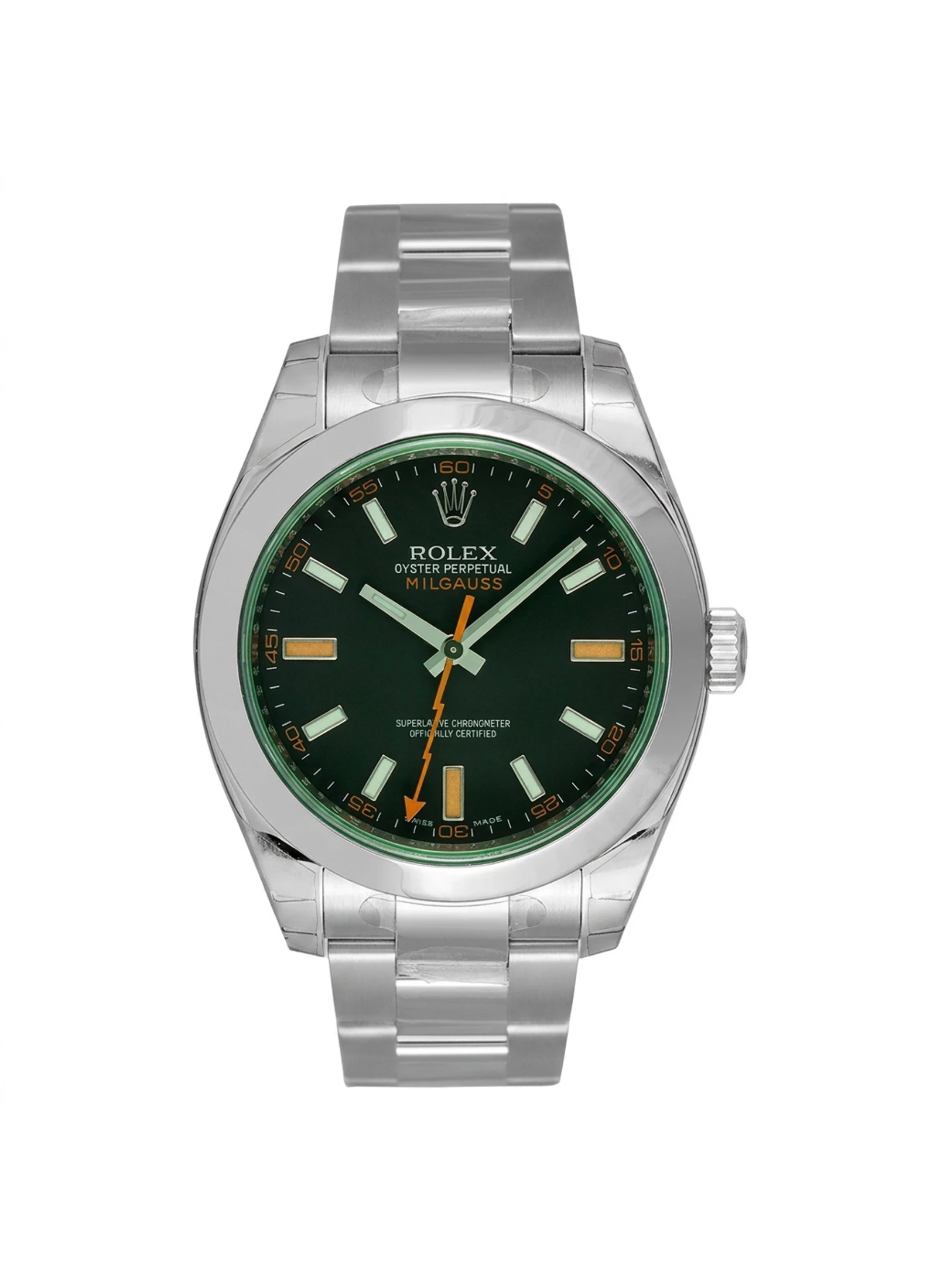
The 2007 revival brought the Milgauss back with more personality. Reference 116400 returned the lightning-bolt seconds hand, added bright orange accents, and made the anti-magnetic Rolex feel deliberately eccentric rather than merely technical.
The 116400GV pushed the model's personality further with its green-tinted sapphire crystal. It did not make the watch more anti-magnetic; it made the Milgauss visually unmistakable, turning a technical niche into a design quirk.
Rolex discontinued the Milgauss again in 2023. That ending sharpened the model's identity: the Milgauss is no longer the current scientist's Rolex, but it remains one of the clearest examples of Rolex building a watch around a very specific technical environment.
The Milgauss is strange because its core function is not something you see on the dial. Magnetic fields can disturb mechanical timekeeping, and the Milgauss was Rolex's answer for people working around that problem.
Rolex.org's CERN account gives the model its cleanest origin: Rolex asked CERN scientists to subject the watch to strong magnetic disturbances, and the scientists confirmed its resistance. The name says the same thing in compressed form: mille plus gauss, a thousand gauss.
The CERN accelerator complex is the right contextual backdrop for a Rolex built around magnetic resistance rather than a visible complication. Maximilien Brice / CERN / Wikimedia Commons - CC BY-SA 3.0
Reference 6541 is not the quiet scientist's watch many people imagine. Its rotating bezel, textured dial, and lightning-bolt hand give it more personality than most technical Rolex models of the period.
That tension makes the Milgauss compelling: a highly specific lab problem wrapped in a watch that looks almost experimental itself. Even before the green crystal era, the Milgauss was the odd one.
A cleared catalog visual of the 6541 shows the textured dial, rotating-bezel feel, and early Milgauss personality.
The 1019 looks almost like a correction. It removes the rotating bezel and lightning hand, leaving a simpler Oyster case, straight hands, and red Milgauss text. It is less instantly charismatic than the 6541, but more convincing as a lab instrument.
That restraint is why the 1019 has become so interesting later. It is rare, quiet, and visibly different from the Submariner, GMT-Master, and Daytona mythology that usually dominates vintage Rolex conversation.
A cleared catalog visual of the 1019 shows the calmer, straighter Milgauss language that followed the early 6541.
When the first run ended, the Milgauss did not become a continuous pillar like the Submariner or Datejust. It disappeared, which made its purpose feel even more specialized.
That absence matters because the 2007 revival did not bring back a sober laboratory watch. It brought back the lightning hand, orange accents, and a willingness to let the Milgauss be visibly eccentric.
The 116400GV is the Milgauss learning to advertise its own oddness. The green-tinted sapphire crystal does not explain magnetism; it gives the model an unmistakable signature in a catalog where many Professional watches are defined by functional bezels.
That is why the GV matters even though the anti-magnetic brief is the same story underneath. It turns the Milgauss from a scientist's tool into a Rolex for someone who wants the technical footnote and the visual wink.
A cleared catalog visual of the revived Milgauss captures the orange accents and lightning hand that made the modern line so distinctive.
The Milgauss is the specialist that became a character
The 2023 discontinuation makes the Milgauss easier to understand. It was never a universal Rolex. It was a specialist: a watch built around magnetic resistance, then remembered for lightning hands, green glass, and a slightly rebellious place in the lineup.
That is exactly why it deserves a story. Without context, the Milgauss can look like a short list of odd references. With context, it becomes one of Rolex's clearest examples of purpose turning into personality.