Rolex GMT-Master: The Jet-Age Watch That Learned to Travel
A connected history of the GMT-Master and GMT-Master II, from Pan Am, the 6542, and the red-blue pilot's bezel to the long-running 1675, the first independent-hour GMT-Master II, Cerachrom, Batman, Pepsi, Root Beer, Sprite, and the current 3285 generation.
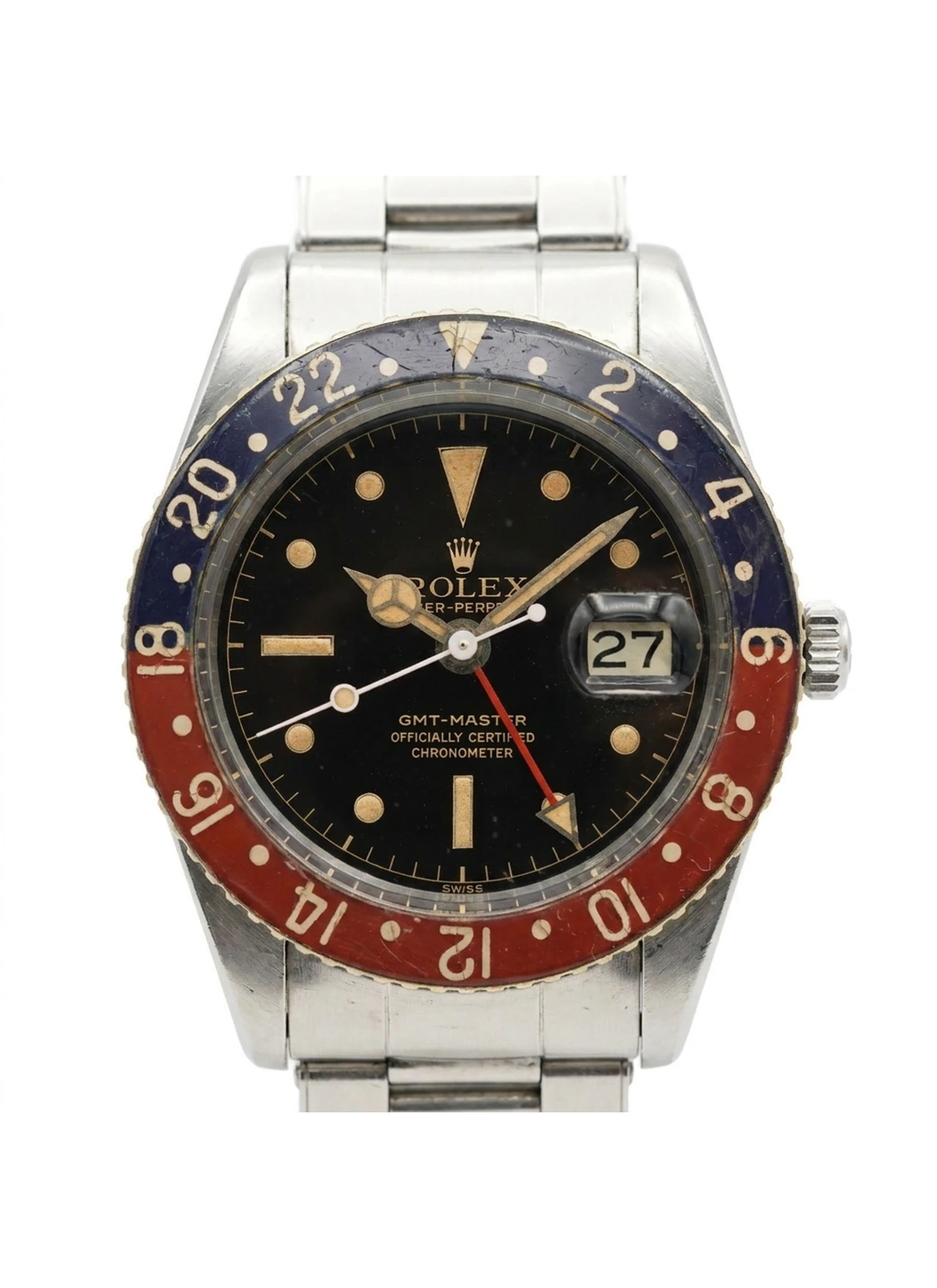
The GMT-Master began as a watch for pilots and long-haul travel. With a fourth 24-hour hand and a rotating 24-hour bezel, the 6542 made time-zone crossing visible on the wrist, pairing Rolex's Oyster case with the glamour and pressure of the Jet Age.
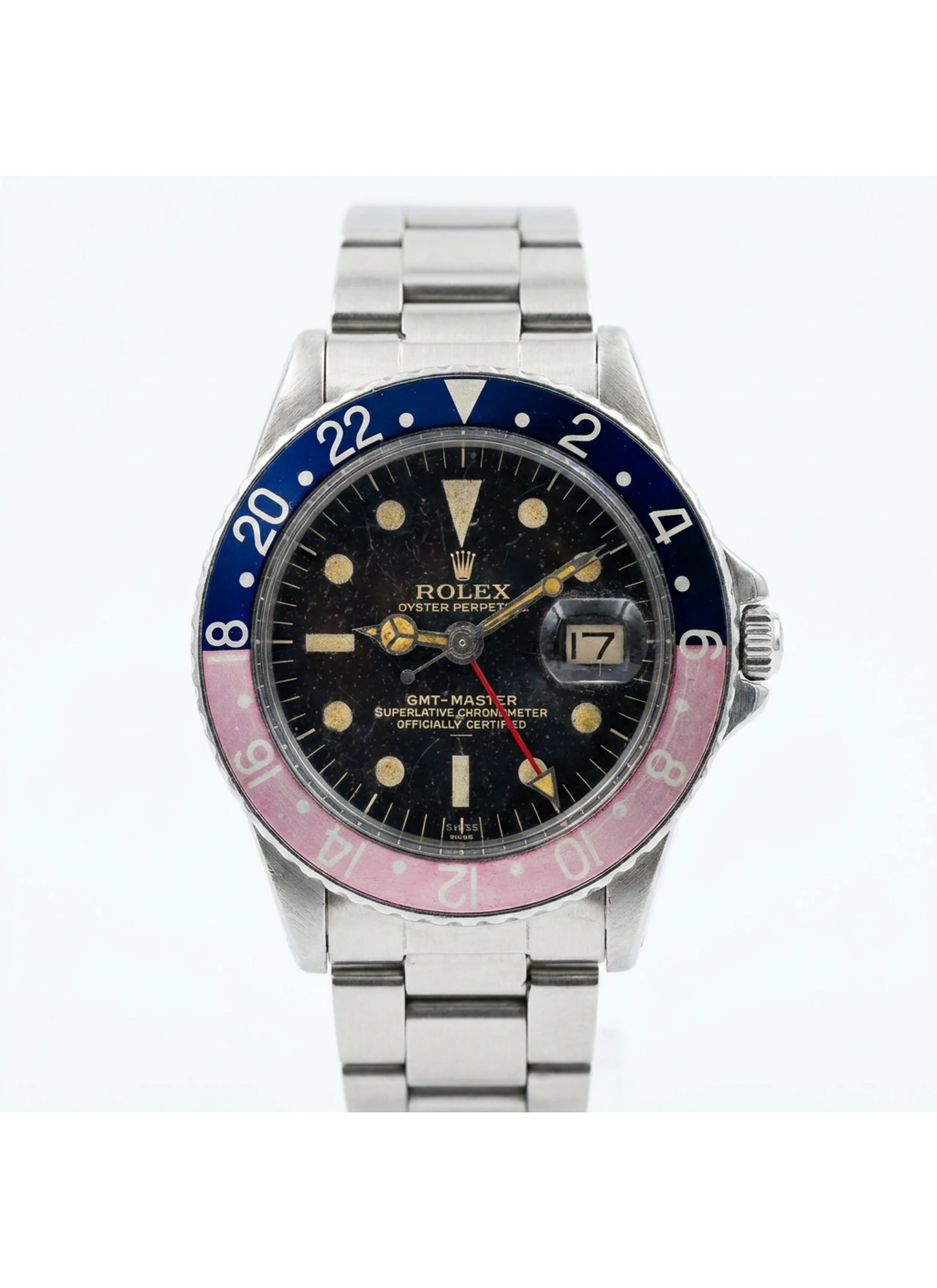
The 1675 added crown guards and settled the GMT-Master into the shape collectors still recognize. Its long production run created a deep vocabulary of gilt dials, matte dials, bezel inserts, bracelets, and small variations that still define vintage GMT collecting.
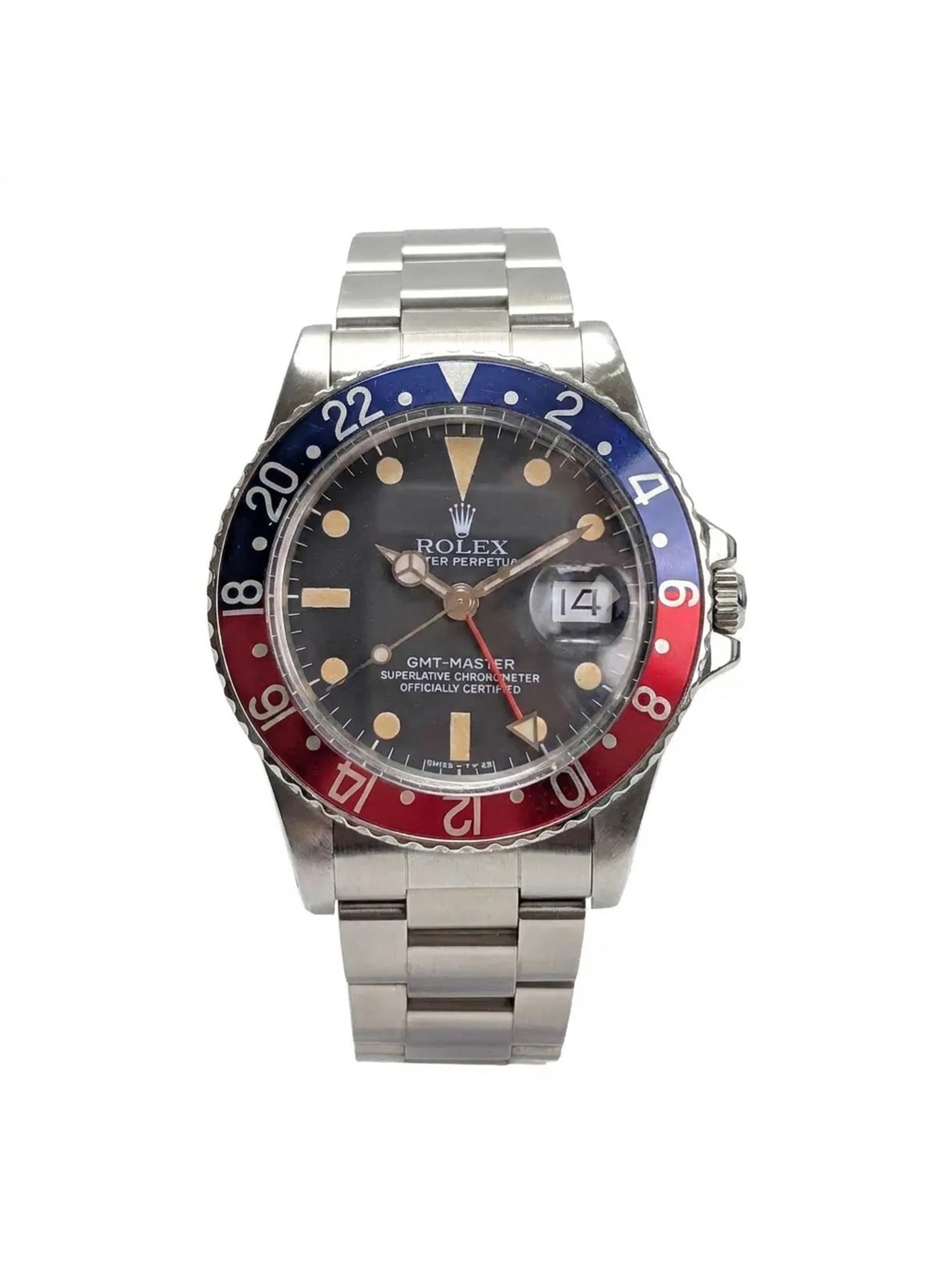
The final original GMT-Master generation brought practical refinement without becoming GMT-Master II. The 16750 added a quickset date, two-tone and gold references leaned into travel luxury, and the 16700 carried the fixed-GMT idea until 1999.
The GMT-Master II changed the mechanics. The 16760 introduced an independently adjustable local hour hand, turning the watch into a more practical travel instrument. The slimmer 16710 then made that system the long-running modern template.
For the GMT-Master's 50th-anniversary era, Rolex used the line to debut a more substantial case, Maxi dial, improved bracelet feel, calibre 3186, and Cerachrom ceramic bezel. The first steel 116710LN made the modern black-bezel GMT-Master II feel crisp, polished, and contemporary.
The Batman proved Rolex could make a two-colour ceramic GMT bezel, and the white-gold Pepsi brought red-blue Cerachrom back. In 2018 and 2019, steel Pepsi and Batman references with calibre 3285 and Jubilee bracelets turned the GMT-Master II into one of the defining modern wait-list watches.
The current GMT-Master II line turns one travel-watch idea into a spectrum: steel Pepsi and Batman, Everose Root Beer, white-gold blue dials, left-crown Sprite, and grey-black GRNR references. The tool has become a color-coded collector language.
The GMT-Master is one of the clearest examples of Rolex turning a modern professional problem into a lasting design language. Airline crews were crossing time zones faster and more often, and the watch gave them a way to track home time and local time at once.
The 6542 did that with a fourth hand geared to 24 hours and a rotating 24-hour bezel. The red-blue split made day and night instantly legible, but it also created something less technical and more powerful: the visual idea of a travel watch.
A Pan Am Boeing 707 makes the GMT-Master's origin practical: pilots, routes, and time zones needed a watch that could keep home time visible. Mike Freer / Wikimedia Commons - GFDL 1.2
The GMT-Master's magic is that the bezel is both instrument and symbol. On paper it is a 24-hour scale. On the wrist it becomes a rotating day-night map, and in collector language it becomes Pepsi, Coke, Root Beer, Batman, Sprite, or GRNR.
The 1675 is where that language deepens. The watch runs long enough for details to become collectable: gilt versus matte dials, small hand and crown changes, bracelet options, faded inserts, and the warm aging of a watch built for movement.
A cleared catalog visual of GMT-Master 1675 anchors this chapter to a specific watch reference.
The original GMT kept improving even after the sequel arrived
It is easy to treat GMT-Master II as a clean replacement, but Rolex kept the original GMT-Master branch alive into the 1990s. The 16750 brought a quickset date while preserving the older fixed relationship between the 12-hour and 24-hour hands.
The 16700 became the final expression of that first idea. It existed beside the GMT-Master II as a simpler, more familiar travel watch, which makes the GMT family feel less like one straight line and more like overlapping generations.
A cleared catalog visual of GMT-Master 16750 anchors this chapter to a specific watch reference.
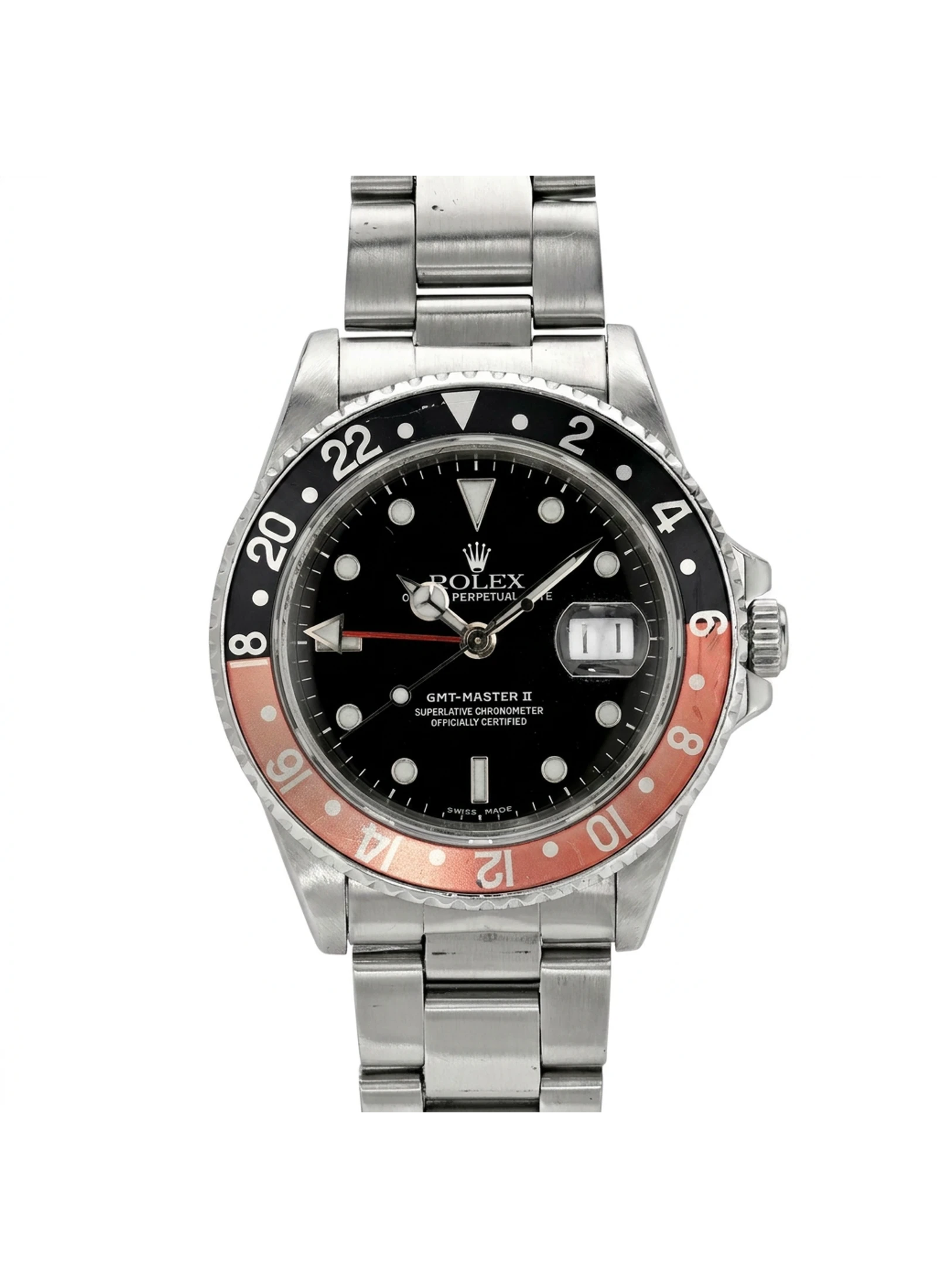
The first GMT-Master II, the 16760, changed the user experience by letting the conventional hour hand jump independently. That sounds small until you travel: local time can move forward or backward by the hour without stopping the watch or disturbing home time.
Collectors remember the 16760 for its thicker case and Coke bezel, but mechanically it is the turning point. The 16710 then made the idea slimmer, more versatile, and long-lived, with Pepsi, Coke, and black bezel options across nearly two decades.
A cleared catalog visual of GMT-Master II 16760 anchors this chapter to a specific watch reference.
The six-digit GMT-Master II was not just a bezel update. It brought a more muscular case, a Maxi dial, a better bracelet and clasp, calibre 3186, and the scratch-resistant Cerachrom insert that would become central to modern Rolex.
At first, steel buyers got the all-black 116710LN rather than Pepsi or Coke. That absence mattered. It made the red-blue bezel feel like a missing heirloom until Rolex solved two-colour ceramic production in stages.
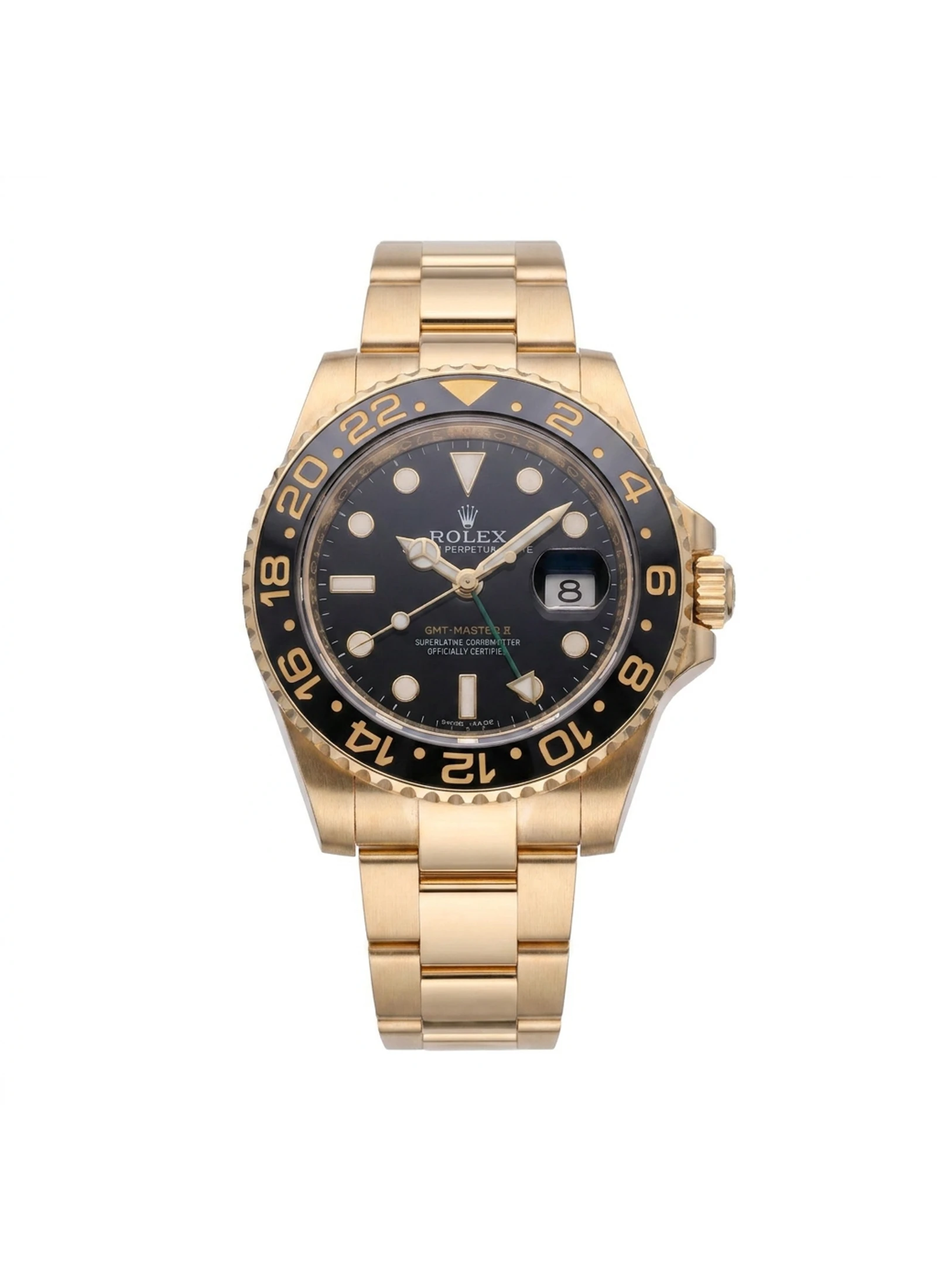
A cleared catalog visual of GMT-Master II 116718LN anchors this chapter to a specific watch reference.
The 116710BLNR Batman was a technical and cultural release at once: the first blue-black ceramic GMT bezel and a new color code with no vintage equivalent. The 116719BLRO followed by bringing Pepsi back in white gold.
Then the 126710BLRO put steel Pepsi on a Jubilee bracelet with calibre 3285. The watch felt old and new at the same time, which is exactly why it landed so hard. The 126710BLNR did the same for Batman, cementing modern GMT-Master II collecting around bezel color, bracelet pairing, and availability.
Today the GMT is a tool watch disguised as a color system
The current GMT-Master II collection is unusually expressive for Rolex. Root Beer in Everose, blue-dial white gold, left-crown Sprite, and grey-black GRNR all use the same underlying travel logic while changing the emotional register of the watch.
That is the family story in miniature. The GMT-Master started as a practical cockpit companion, but its lasting power comes from the way a technical system became a visual language collectors can read from across a room.