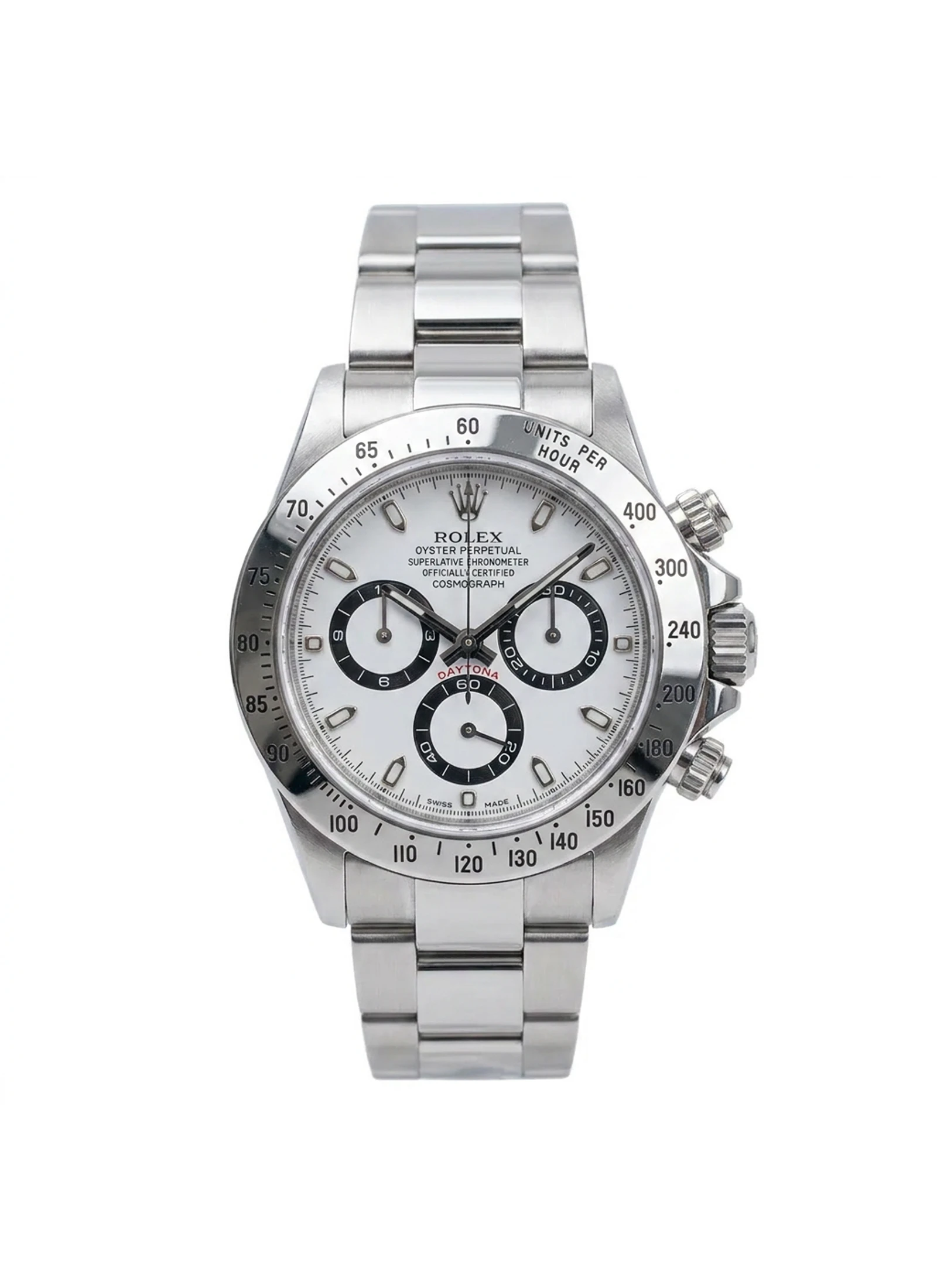
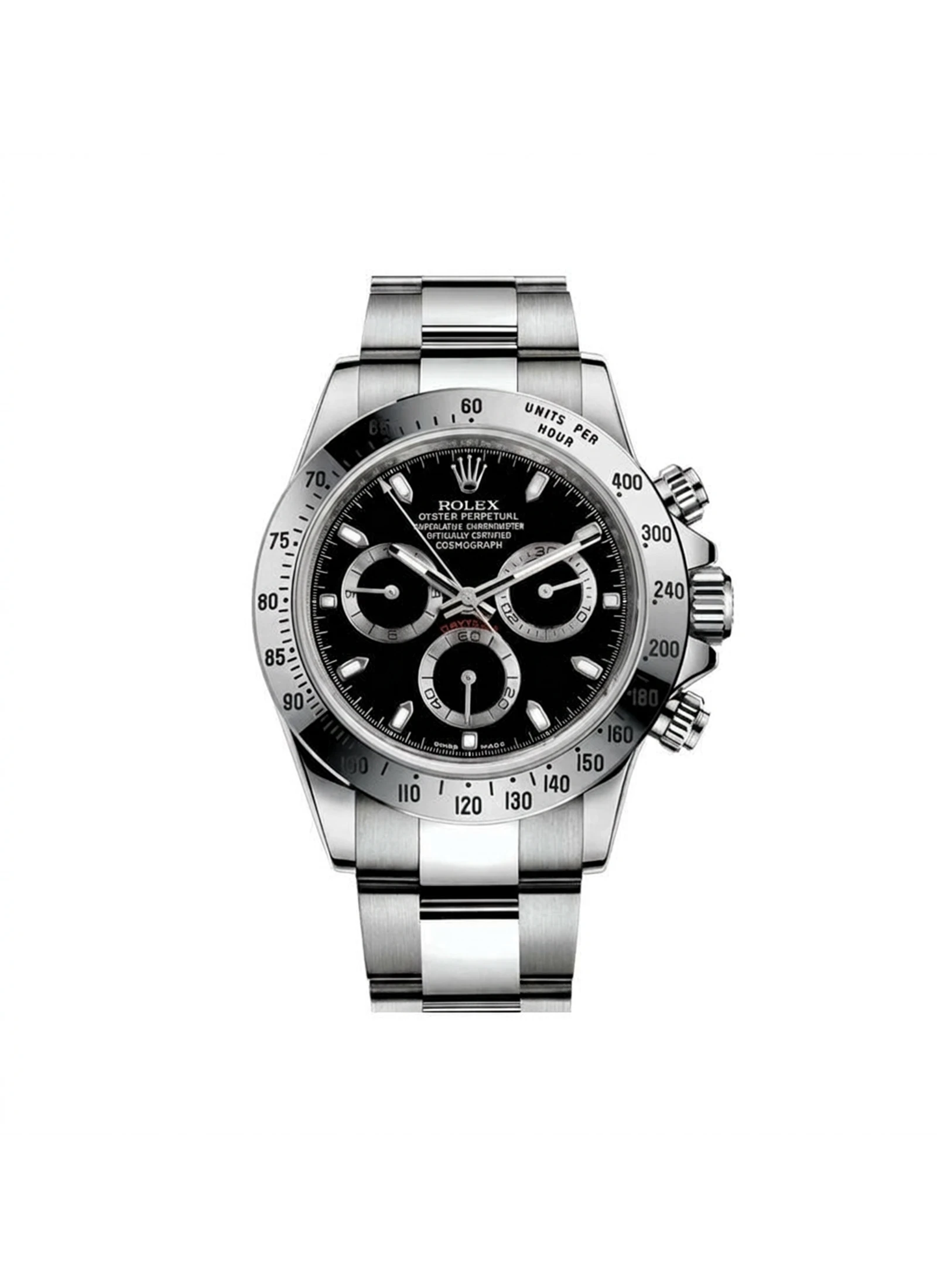
Before the Daytona name hardened into legend, Rolex made elegant manual-wind chronographs such as the 6238. The formula was close but not final: tachymeter scale on the dial, restrained monochrome character, and the same general tri-register logic that would soon become sportier.
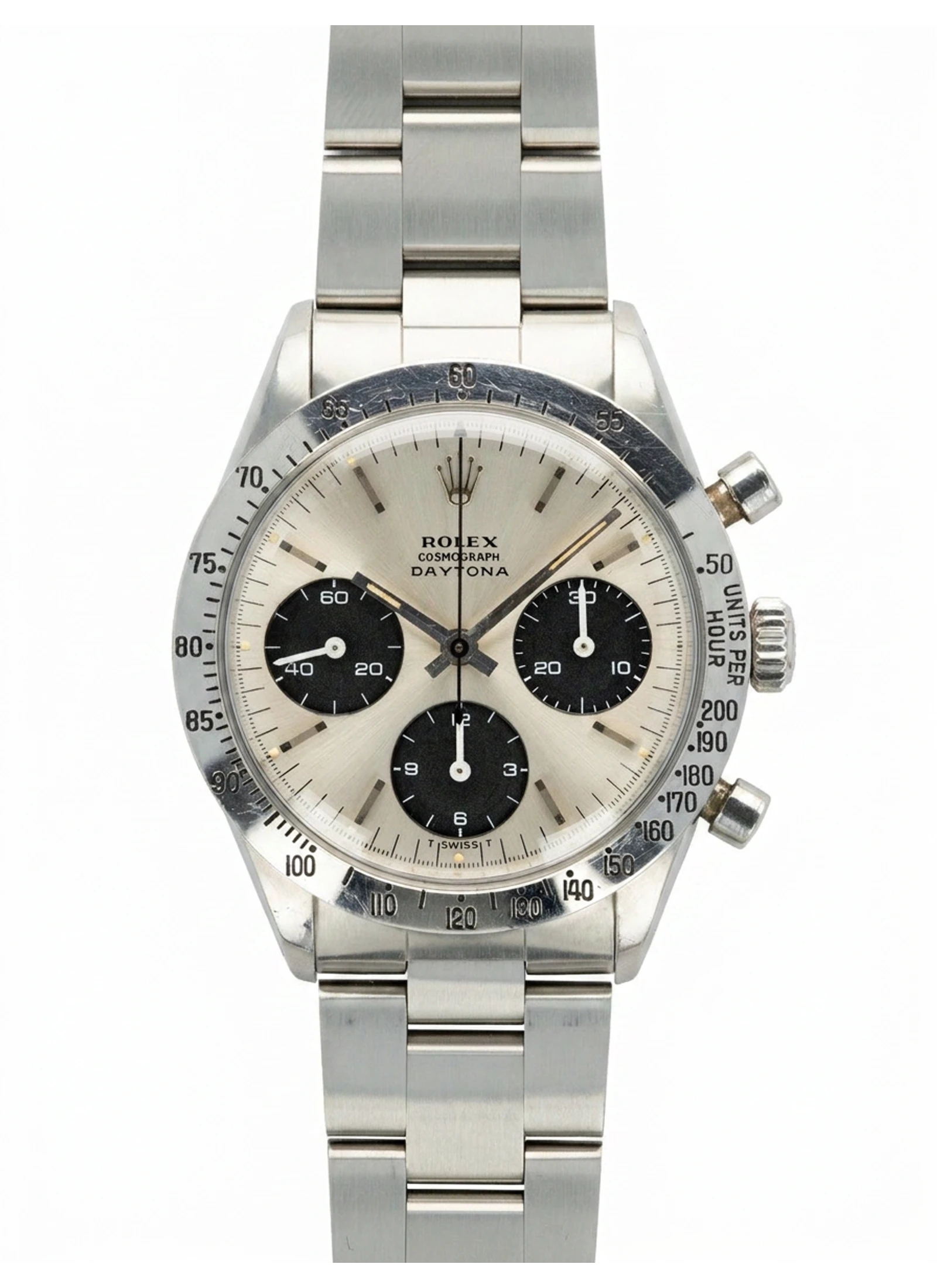
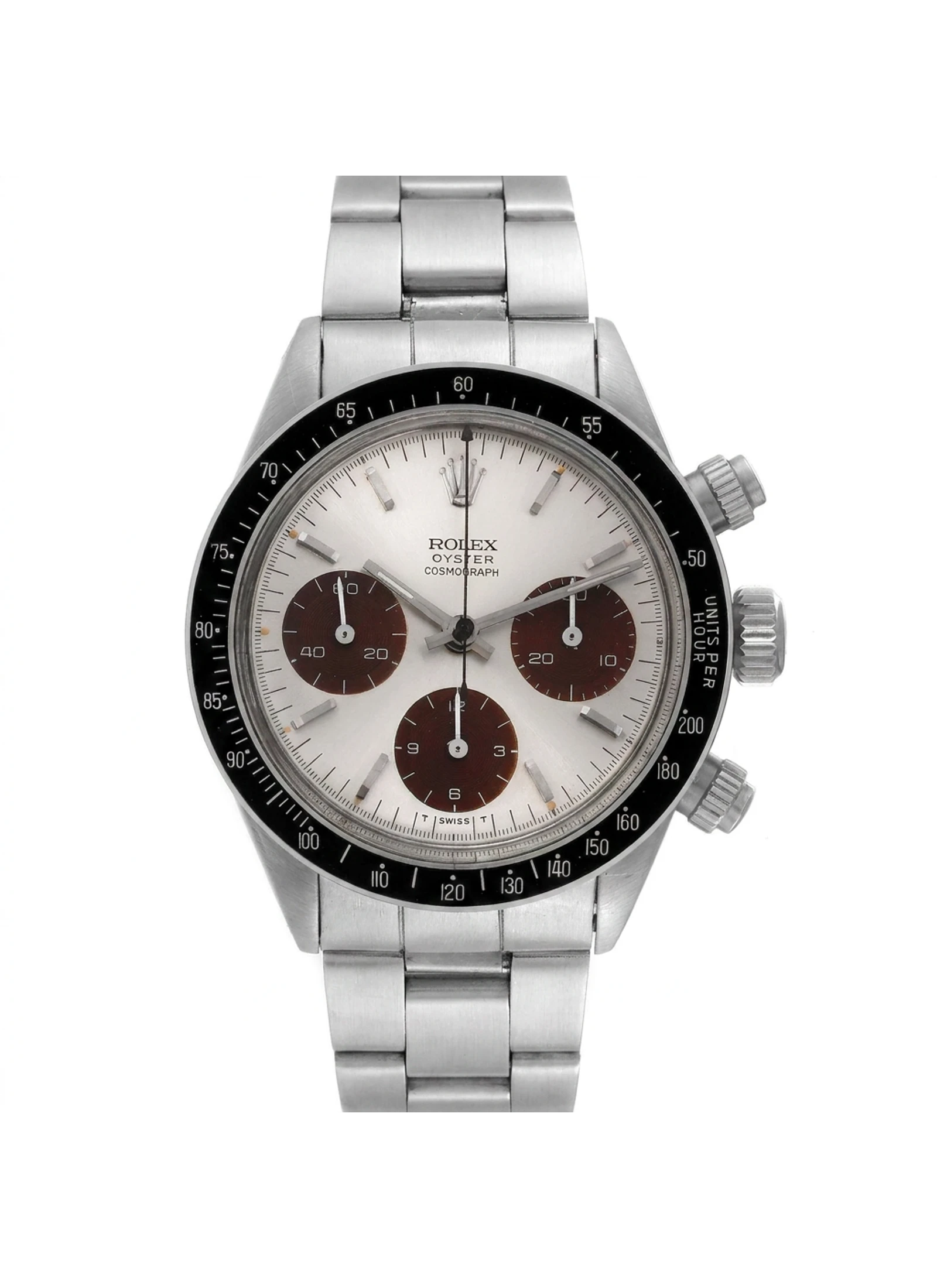
The 6239 moved the tachymeter to the bezel and gave Rolex its modern racing chronograph silhouette. Through the 6240, 6263, and 6265, screw-down pushers, Oyster wording, bakelite or steel bezels, Valjoux-based calibers, and dial variations created the collector vocabulary that still drives vintage Daytona study.
The 165xx generation made the Daytona automatic. Rolex reworked Zenith's El Primero architecture into calibre 4030, enlarged the case toward the modern 40 mm Daytona, added sapphire crystal, and created a transitional generation whose dial marks and Patrizzi aging now read like a field guide.
In 2000 the Daytona received Rolex calibre 4130, an in-house automatic chronograph movement. The 116520 steel Daytona became the clean modern template: steel bezel, polished center links, in-house movement, and a public reputation that had fully flipped from shelf-sitter to wait-list object.
Rolex introduced Cerachrom ceramic bezels to the Daytona line before the steel 116500LN made the look unavoidable in 2016. The contrasty black ceramic bezel tied the modern watch back to the darker bezel language of vintage bakelite references while improving scratch resistance.
For the Daytona's 60th anniversary cycle, Rolex refined the case and dial language again and introduced calibre 4131. The current steel 126500LN keeps the 40 mm Oystersteel formula, black Cerachrom tachymeter bezel, 100 m water resistance, and roughly 72-hour power reserve.
The Daytona starts as a motorsport instrument, not a trophy
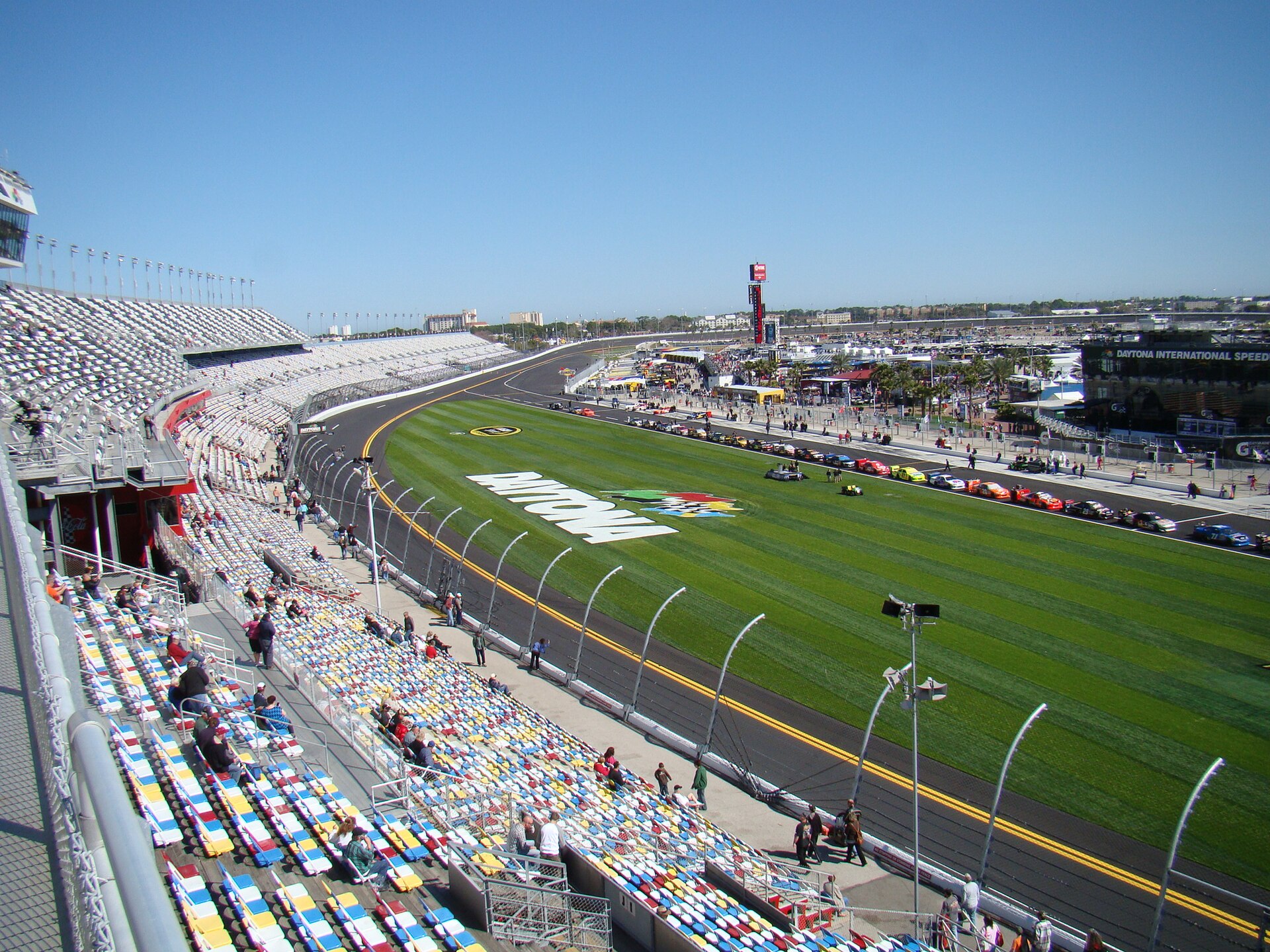
The Daytona story begins with speed records, endurance racing, and Rolex's talent for attaching watches to human achievement. By the early 1960s, the company had the ingredients for a purpose-built racing chronograph: elapsed-time registers, a tachymeter, and a link to Daytona Beach's racing culture.
The early Cosmograph was not immediately the object of worship it is now. That is part of the charm. The model's collector mythology grew out of details that were once practical or even commercially awkward: external tachymeter bezels, pump versus screw-down pushers, dial signatures, production overlaps, and watches that sometimes waited in cases before finding owners.
A cleared catalog visual of Daytona 6240 anchors this chapter to a specific watch reference.The speedway image brings the chronograph back to its naming context, before the Daytona became a collector trophy detached from lap timing. Jeff / Wikimedia Commons - CC BY-SA 2.0
The manual-wind years created the collector language
Four-digit Daytonas are where the model turns into a study of small things. A 6239 with pump pushers and steel bezel does not tell the same story as a 6263 with screw-down pushers and a black bezel. The watch remains recognizably Daytona, but every pusher, bezel, dial print, bracelet, and caliber becomes evidence.
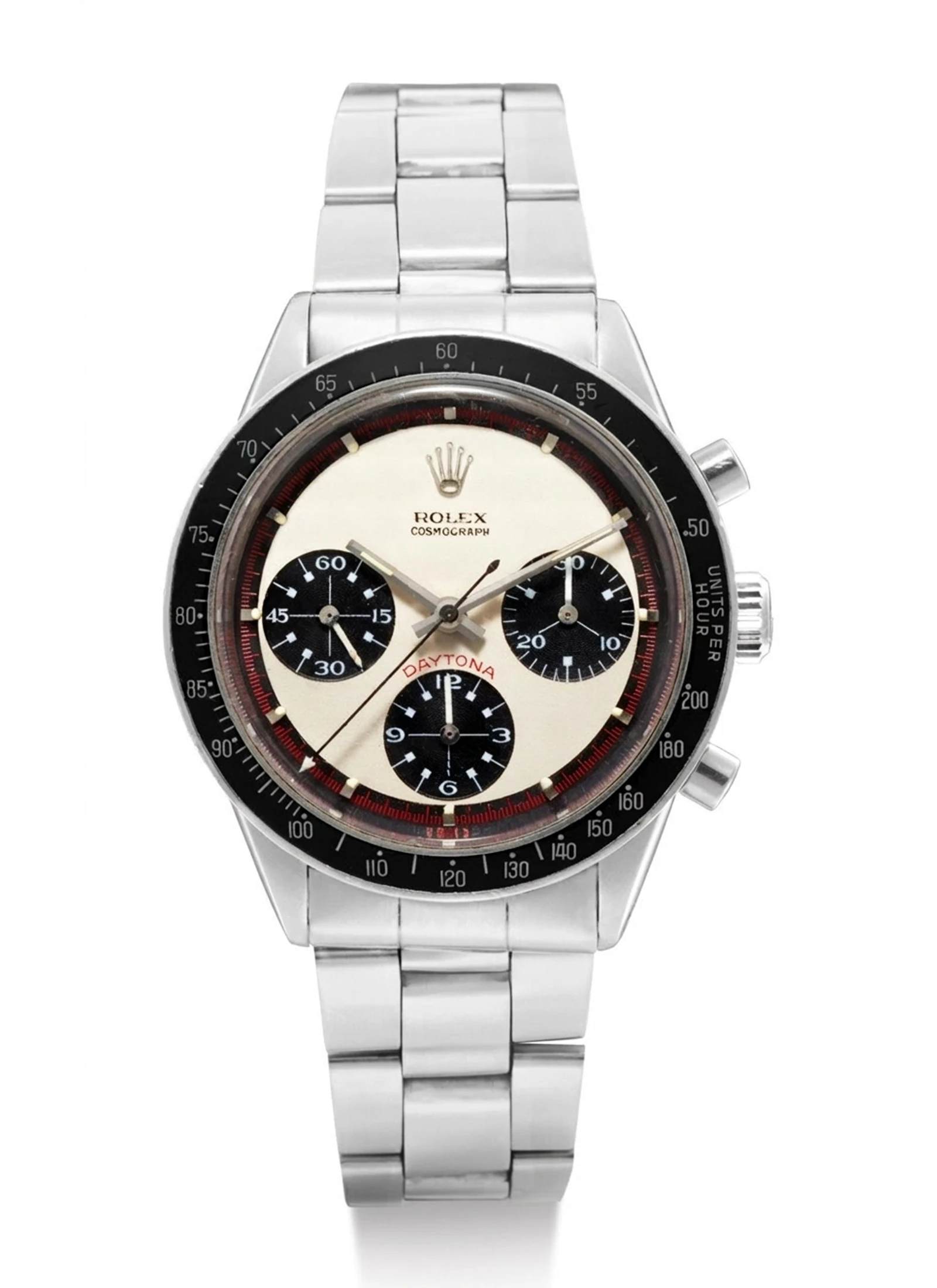
The Paul Newman dial is the most famous example. It was an exotic dial configuration rather than the default Daytona look, and its later association with Newman transformed an initially niche style into one of vintage watch collecting's strongest symbols.
A cleared catalog visual of Daytona 6241 anchors this chapter to a specific watch reference.
The Zenith era is the bridge between vintage and modern Daytona
In 1988, Rolex made the Daytona automatic with the 165xx generation. The change was larger than a movement swap: sapphire crystal, crown guards, 40 mm proportions, and a more contemporary case pushed the watch into the modern sports-watch world.
Because Rolex modified the Zenith El Primero base into calibre 4030, the 16520 has become a mechanical hinge in the Daytona family. Early dial details like the floating Cosmograph and inverted 6 keep it connected to vintage-style scholarship, while its case and reliability point forward.
A cleared catalog visual of Daytona 16520 anchors this chapter to a specific watch reference.
The in-house and ceramic generations turn the Daytona into a modern icon
Calibre 4130 arrived in 2000 and gave Rolex an entirely in-house automatic chronograph platform. The 116520 distilled the Daytona into a cleaner modern steel chronograph, while precious-metal and gem-set references expanded the family outward.
The ceramic-bezel era made the watch feel both new and old. The 116500LN's black Cerachrom bezel echoed earlier dark-bezel Daytonas, but with modern Rolex material engineering. In 2023 the 1265xx generation refined the case and dial and introduced calibre 4131, keeping the Daytona evolutionary rather than revolutionary.
A cleared catalog visual of Daytona 116520 anchors this chapter to a specific watch reference.