Rolex Day-Date: The Calendar Watch That Became the President
A connected history of the Day-Date, from the 1956 full-day calendar breakthrough and President bracelet to the four-digit 1803, quickset and sapphire eras, Oysterquartz, Masterpiece, Day-Date II, and the current 36 and 40 mm calibre 3255 collection.
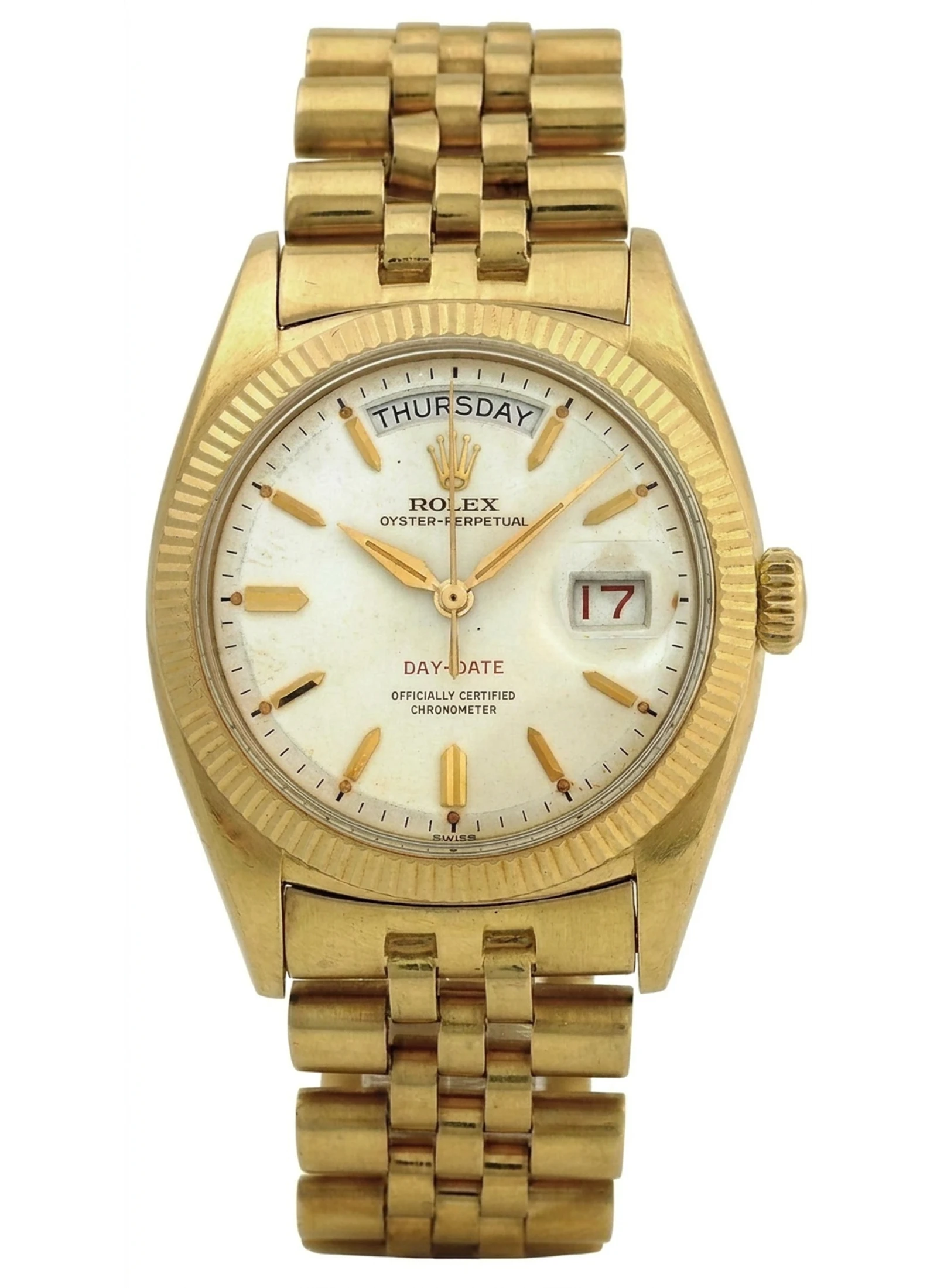
The Day-Date arrived in 1956 with a simple but theatrical idea: spell out the day of the week across the top of the dial and place the date at 3 o'clock. Reference 6511 established the format, while 6611 helped stabilize the early chronometer-certified generation.
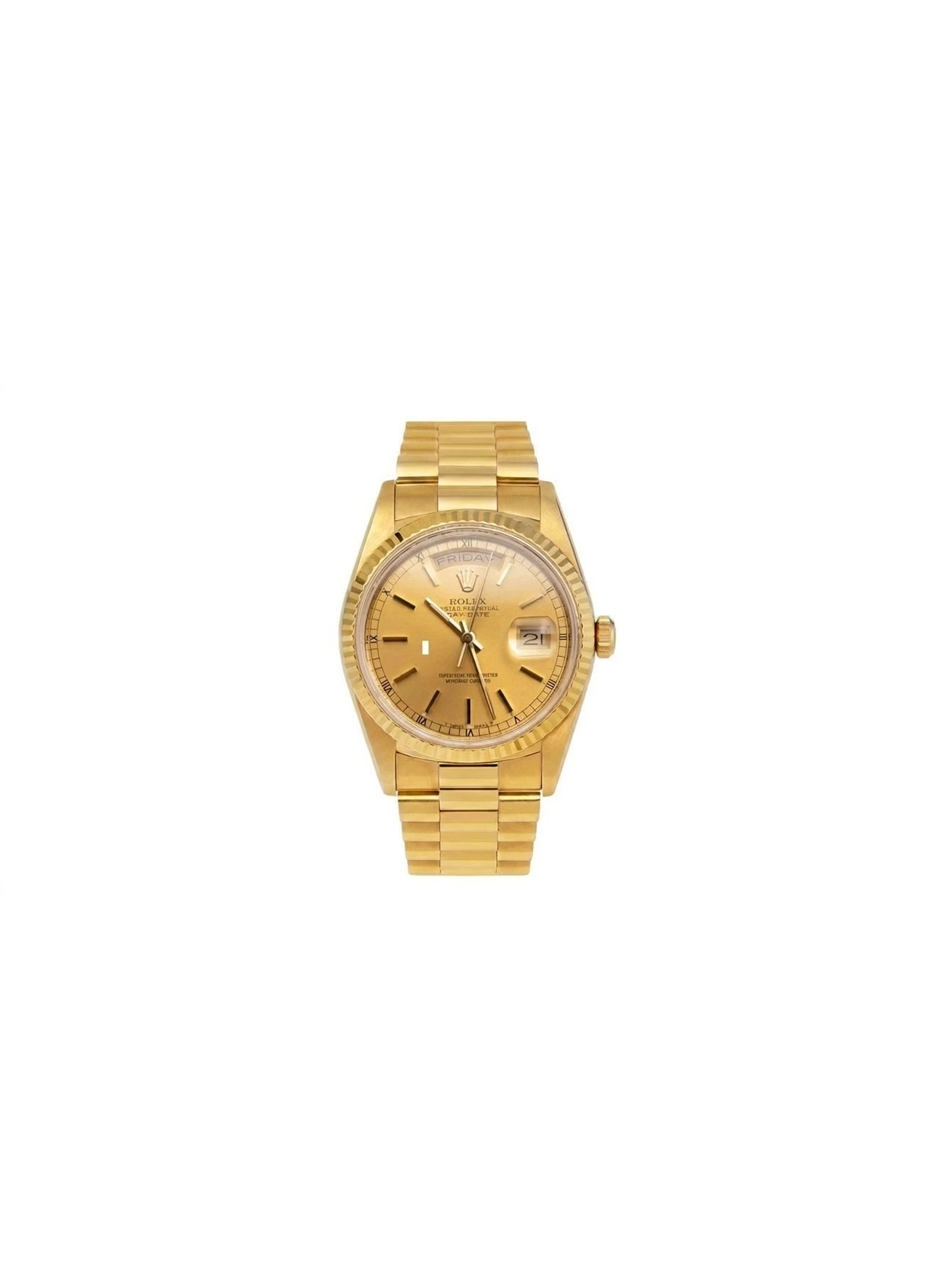
The 180x generation turned the Day-Date into the recognizable President watch: 36 mm Oyster case, precious metal, full weekday, date with Cyclops, and bracelet language that made the complication feel like a symbol of rank.
By the late 1970s, the Day-Date had become a dial and material playground. Wood, stone, lacquer, diamond, bark, and metal textures made the watch a language of taste, while references such as 18038 brought a more practical quickset date experience.
The Day-Date Oysterquartz translated the same social signal into a sharply angular case and integrated bracelet. It is the strange but revealing branch: even when the movement and silhouette changed, the full-day calendar and precious-metal authority still read as Day-Date.
The five-digit Day-Date kept the classic 36 mm posture but made the watch feel more modern. Sapphire crystals, double quickset convenience, and familiar yellow-gold, white-gold, and decorated-bezel options made the 182xx references a bridge between vintage romance and daily practicality.
Six digits turn the Day-Date into a luxury platform
The six-digit era made the Day-Date feel heavier, more polished, and more configurable. Platinum, Everose gold, leather-strap variants, and the larger Masterpiece branch show the family stretching from sober executive watch to high-jewelry platform.
Day-Date II moved the President formula to 41 mm. It was bold, expensive, and very much of its moment, but its short run also proved that scaling the Day-Date is more delicate than simply enlarging a status object.
Rolex refined the larger idea into Day-Date 40, then renewed the classic 36 mm line. The current collection uses calibre 3255, precious metals, and a broad dial vocabulary to keep the Day-Date both old-guard and contemporary.
The Datejust made the date useful. The Day-Date made the calendar feel ceremonial. By spelling out the weekday at 12 o'clock and magnifying the date at 3, Rolex turned ordinary civic time into a dial-length announcement.
That is why the first Day-Date matters even if the early reference history gets collector-messy. The idea is immediately legible: this is not a tool watch with a calendar tucked inside it, but a precious-metal watch organized around the authority of the full week.
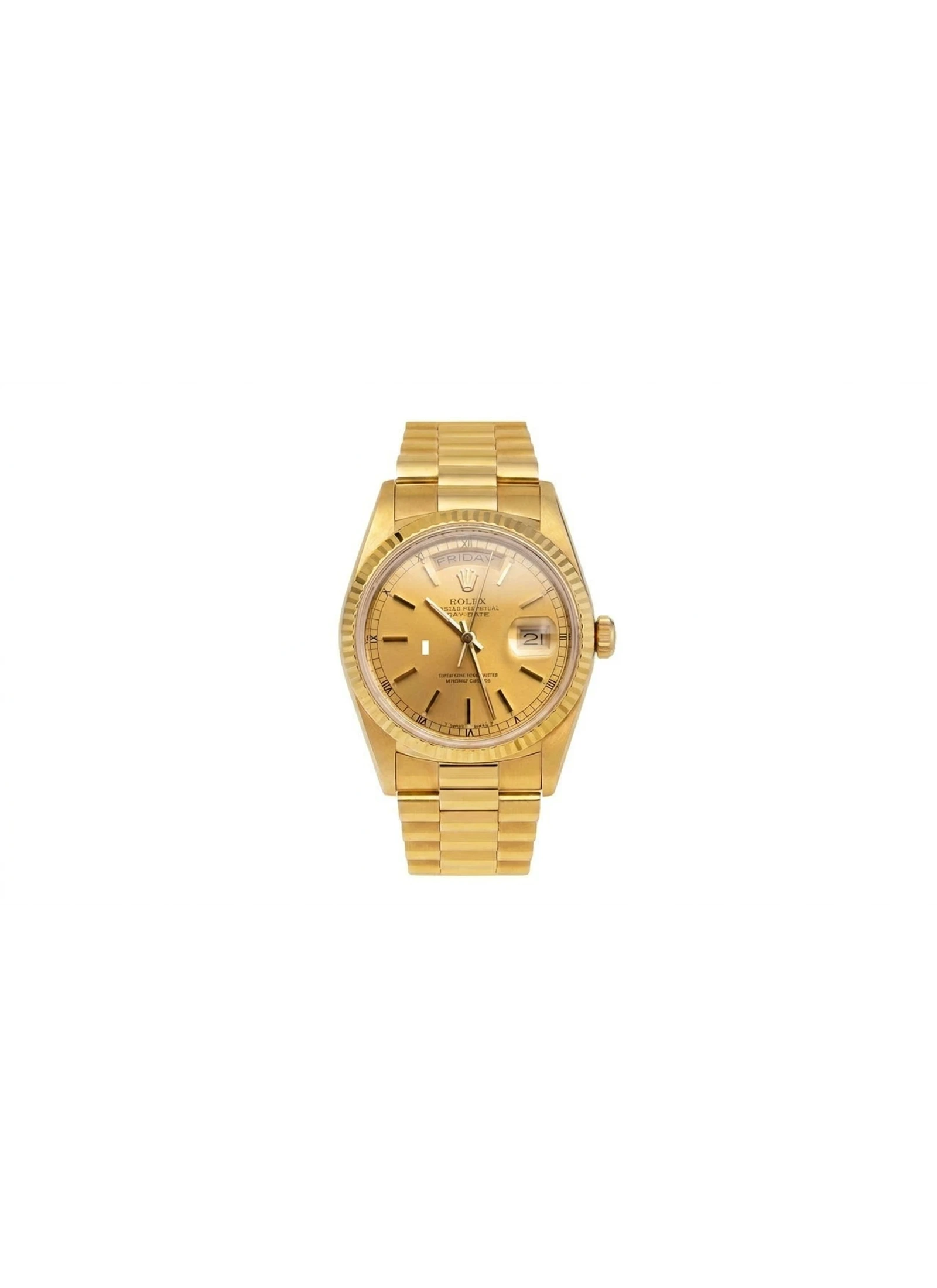
A cleared catalog visual of Day-Date 36 6611 anchors this chapter to a specific watch reference.
Rolex designed the President bracelet especially for the Day-Date at its 1956 launch. The name did not only describe a bracelet; over time it migrated onto the whole watch, helped by the model's visibility on political figures, executives, athletes, musicians, and collectors who wanted a watch that announced arrival.
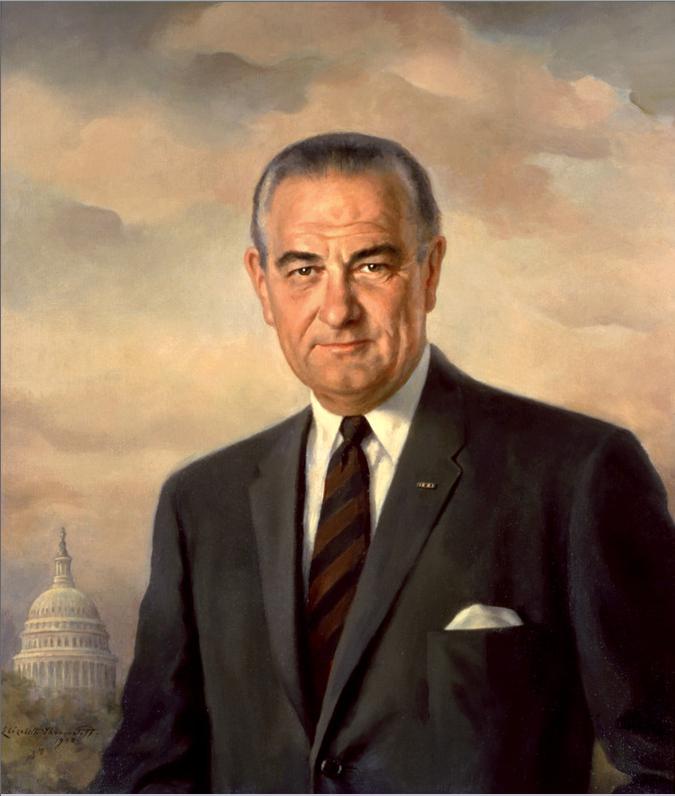
The Day-Date is often called the President because the watch became shorthand for institutional power. Lyndon B. Johnson is the cleanest American presidential association, but the broader point is cultural: the Day-Date turned a calendar complication into a public symbol.
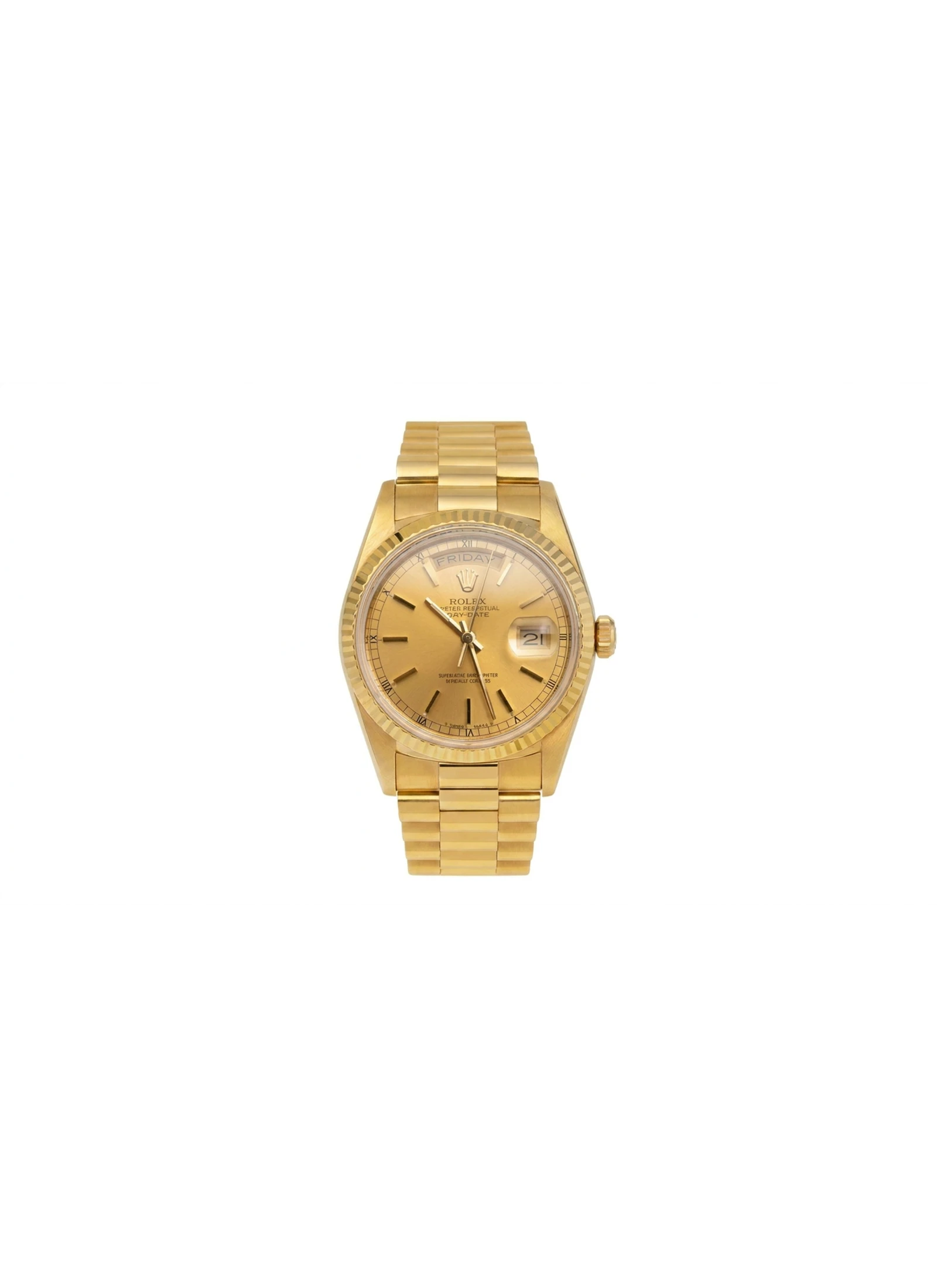
A cleared catalog visual of Day-Date 36 1803 anchors this chapter to a specific watch reference.Lyndon B. Johnson's public image gives the President-watch chapter its cultural setting: the Day-Date became shorthand for power as much as calendar utility. Elizabeth Shoumatoff / Wikimedia Commons - Public domain
The four-digit Day-Date is where the family becomes a design language. Reference 1803 is the central collector image, but smooth bezels, diamond bezels, bark finishes, and different precious metals show how the same architecture could become restrained, formal, flamboyant, or deeply personal.
This matters for DialAtlas because the Day-Date should not be reduced to a single gold President bracelet photograph. The family is a system: case, day wheel, date, bezel, bracelet, metal, and dial material all carry meaning.
Day-Date collecting is often a story of dials. Conservative champagne, silver, and black dials preserve the boardroom image, while lacquer Stella colors, wood, stone, vignette, diamond, and unusual text treatments turn the watch into a small autobiography.
That is the quiet reason the model keeps renewing itself. The case and calendar barely need to change for the social signal to change completely. A yellow-gold 1803, a white-gold 18039, and a bark-finished 18078 can all be Day-Date, but they do not say the same thing.
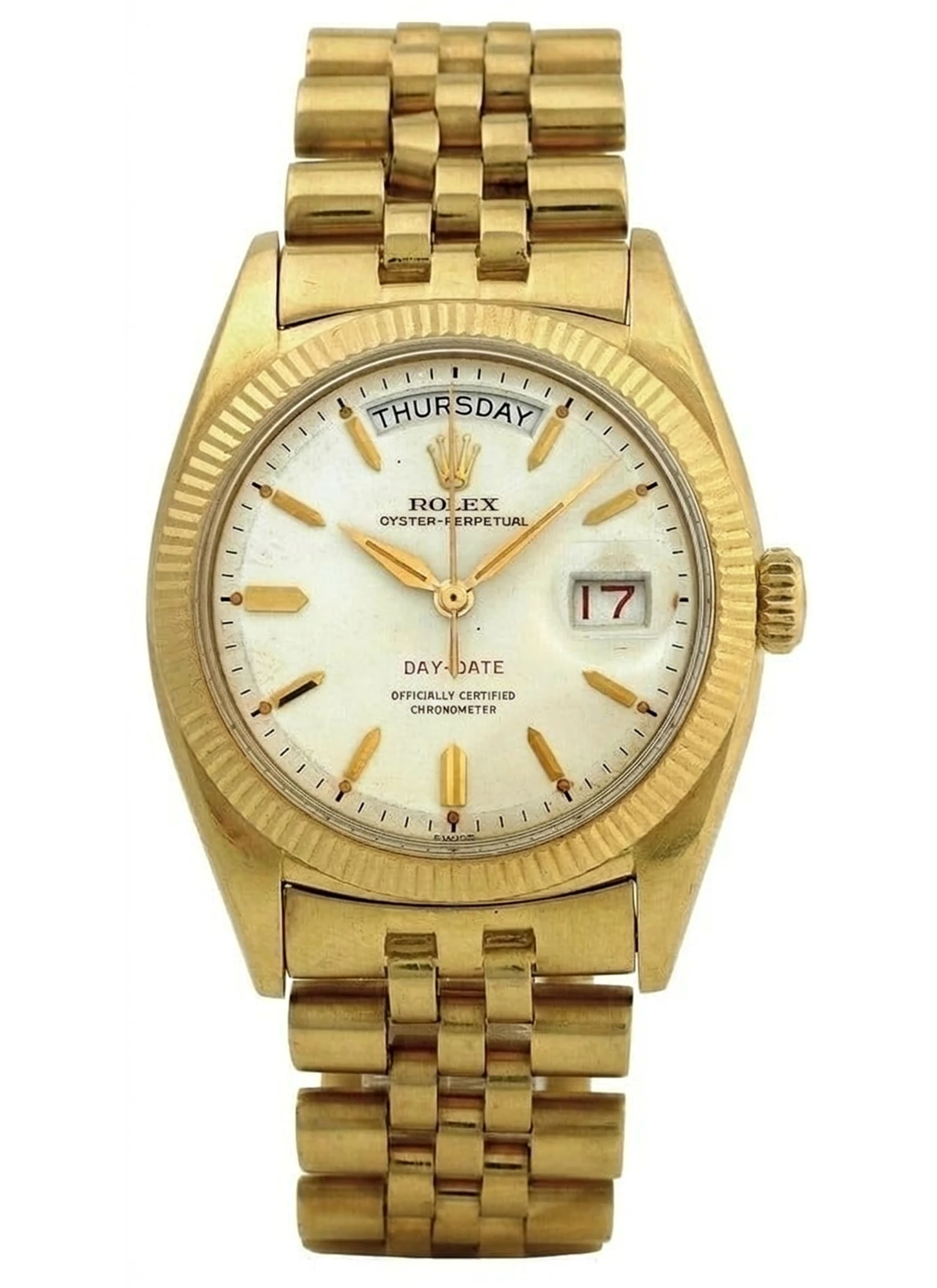
A cleared catalog visual of Day-Date 36 18039 anchors this chapter to a specific watch reference.
The Day-Date Oysterquartz can look like a parallel universe: angular case, integrated bracelet, and quartz movement instead of the rounded automatic President most people picture. Yet it keeps the essential Day-Date promise intact.
References 19018 and 19019 are useful because they separate the model's identity from nostalgia. The Day-Date is not only a case shape. It is the combination of precious metal, calendar clarity, Rolex build, and visible authority, even when expressed through a sharply 1970s architectural form.
A cleared catalog visual of Day-Date Oysterquartz 19018 anchors this chapter to a specific watch reference.
The Day-Date's romance can hide a practical truth: changing a full calendar can be annoying if the watch has been sitting. Quickset and then double quickset improvements made the Day-Date easier to rotate, own, and actually wear.
That is why references such as 18038, 18238, and 18239 are more than transitional catalog numbers. They explain how Rolex kept a formal, precious-metal watch compatible with modern ownership habits.
The six-digit generation made the Day-Date feel more substantial. Solid bracelets, smoother case finishing, broader polished surfaces, platinum and Everose options, and leather-strap references widened the model's emotional range.
The Masterpiece branch pushes that point hardest. It is not the canonical President, but it belongs beside the story because it shows Rolex treating the Day-Date as both calendar watch and high-luxury object.
Day-Date II showed that proportion is part of prestige
The Day-Date II was not a mistake so much as a useful experiment. It made the President formula larger, louder, and more aligned with late-2000s luxury taste, but the short 41 mm run suggests that the Day-Date's authority depends heavily on proportion.
The later Day-Date 40 feels like the answer. It keeps the larger wrist presence many buyers wanted, but with a more controlled case and a cleaner relationship between dial, bezel, bracelet, and wrist.
Today's Day-Date works because Rolex no longer asks one size to carry the whole mythology. Day-Date 36 preserves the old President intimacy, while Day-Date 40 gives the same language a more contemporary stance.
Calibre 3255 ties both branches to the present. The result is not a reinvention, but a careful refresh of the same promise: a precious-metal Rolex that tells you not only the time, but where you are in the week and, culturally, where you think you have arrived.