Rolex Datejust: The Watch That Made the Date Feel Inevitable
A connected history of the Datejust, from the 1945 Jubilee reference 4467 and the Cyclops lens to the four-digit 1600/1601/1603 era, Oysterquartz, Lady-Datejust, sapphire five-digit references, Datejust II, and the modern 31, 36, and 41 mm collection.
Rolex launched the Datejust in 1945 for the company's 40th anniversary. The first reference, 4467, combined an Oyster case, automatic winding, chronometer ambition, a date window at 3 o'clock, and the new Jubilee bracelet into one watch that made daily usefulness feel ceremonial.
The Cyclops lens changed the Datejust from a watch with a date into a watch visually organized around the date. References such as 6305 and 6605 helped settle the 36 mm Datejust language: round Oyster case, applied markers, fluted or smooth bezel, and a dial that could move between business, ceremony, and daily wear.
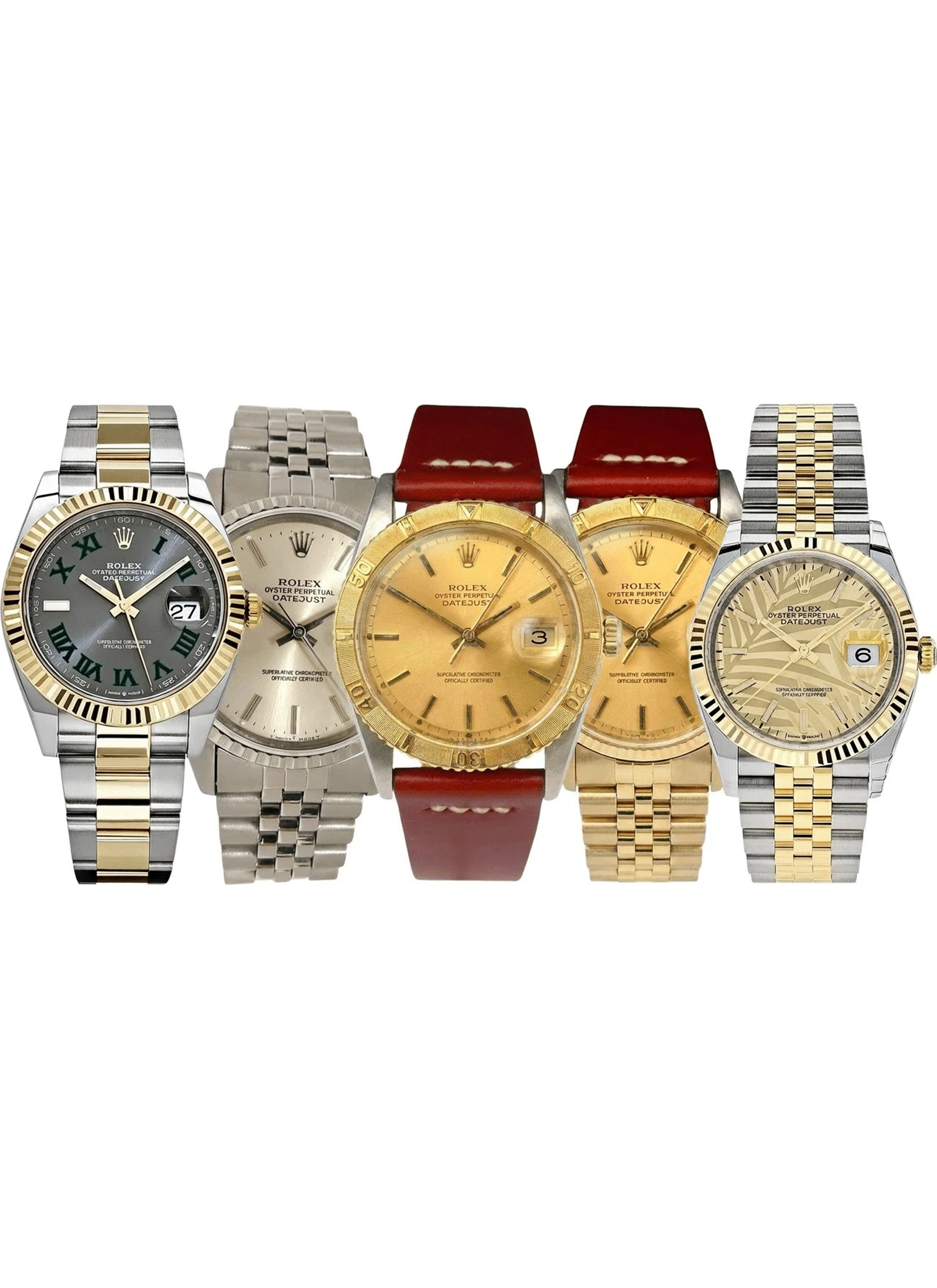
The 1600, 1601, and 1603 generation turned the Datejust into a modular design system. Smooth, fluted, and engine-turned bezels gave the same basic watch different social registers, while pie-pan dials, Jubilee bracelets, Oyster bracelets, steel, gold, and Rolesor combinations made the Datejust both standardized and endlessly varied.
By the 1970s and 1980s, the Datejust was no longer only a 36 mm proposition. The Datejust 31, Lady-Datejust, and angular Oysterquartz branch showed how elastic the family could be: the same date-centered Rolex idea could become smaller, more jewelry-like, more quartz-modern, or more architectural.
The five-digit Datejust kept the familiar proportions while modernizing the experience. Sapphire crystals, quickset date movements, and broad dial choice made references like 16200, 16220, 16233, and 16234 feel like the bridge between vintage Datejust charm and contemporary everyday reliability.
The six-digit period stretched the Datejust in several directions at once. Datejust 36 became more substantial and polished, the Turn-O-Graph kept a rotating-bezel branch alive, Datejust II pushed the case to 41 mm, and Datejust 31 continued the family logic below the classic 36 mm size.
The modern Datejust is a size and material system more than a single watch. Datejust 31, Datejust 36, Datejust 41, and Lady-Datejust translate the same grammar through steel, Rolesor, precious metal, smooth bezels, fluted bezels, Oyster bracelets, Jubilee bracelets, and calibre 3235-family movements.
The Datejust matters because it made useful watchmaking disappear into daily life. In 1945, a self-winding wrist chronometer with a waterproof Oyster case and a date window was not ordinary at all. Over time, that combination became so familiar that it now reads as the default modern watch.
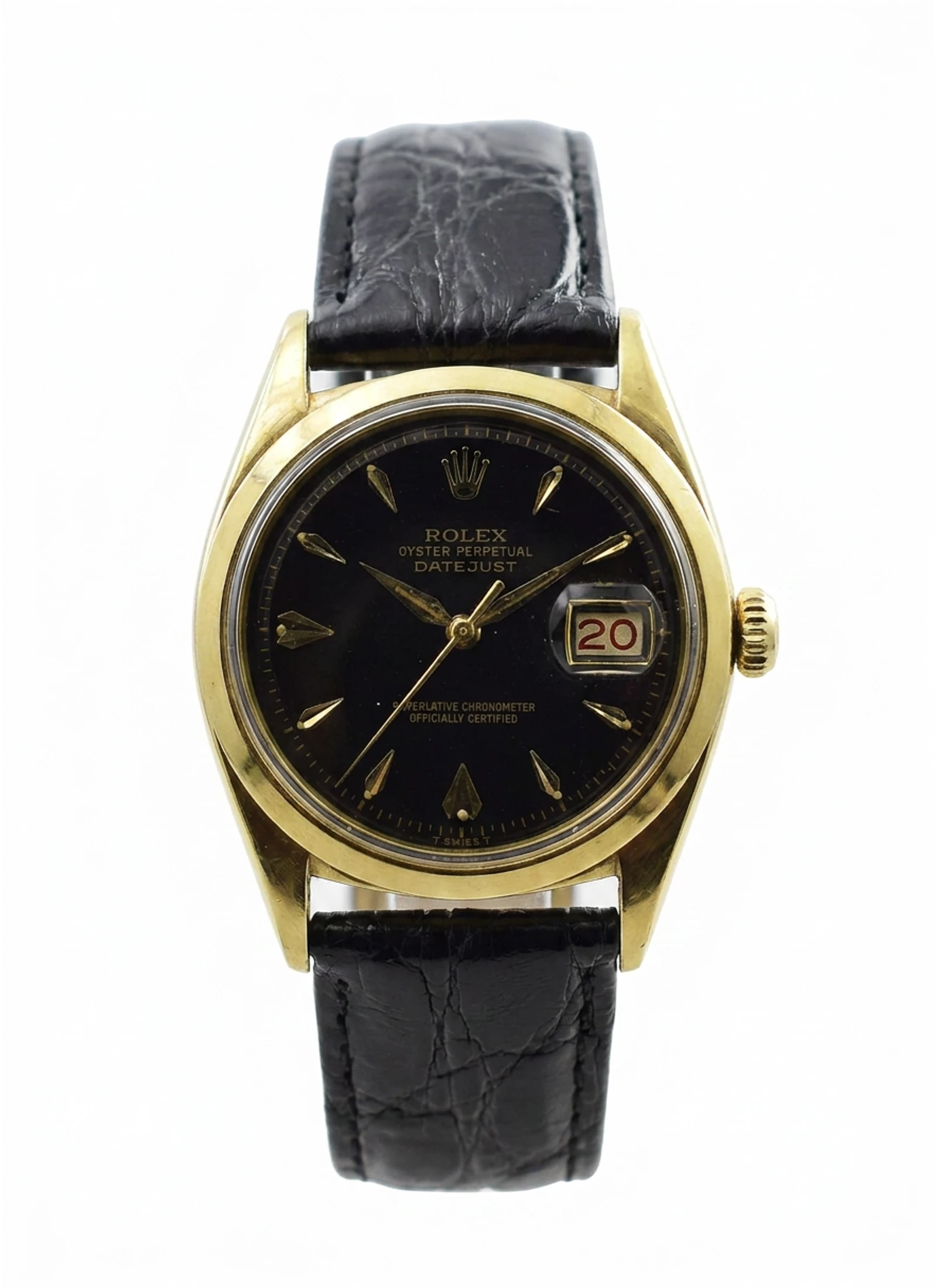
Reference 4467 is the starting point: yellow gold, Jubilee bracelet, date at 3 o'clock, and a rounded Ovettone case profile. It was a commemorative watch for Rolex's own anniversary, but its bigger achievement was turning the calendar into something you expected to see every morning.
A cleared catalog visual of Datejust 5030 Ovettone anchors this chapter to a specific watch reference.
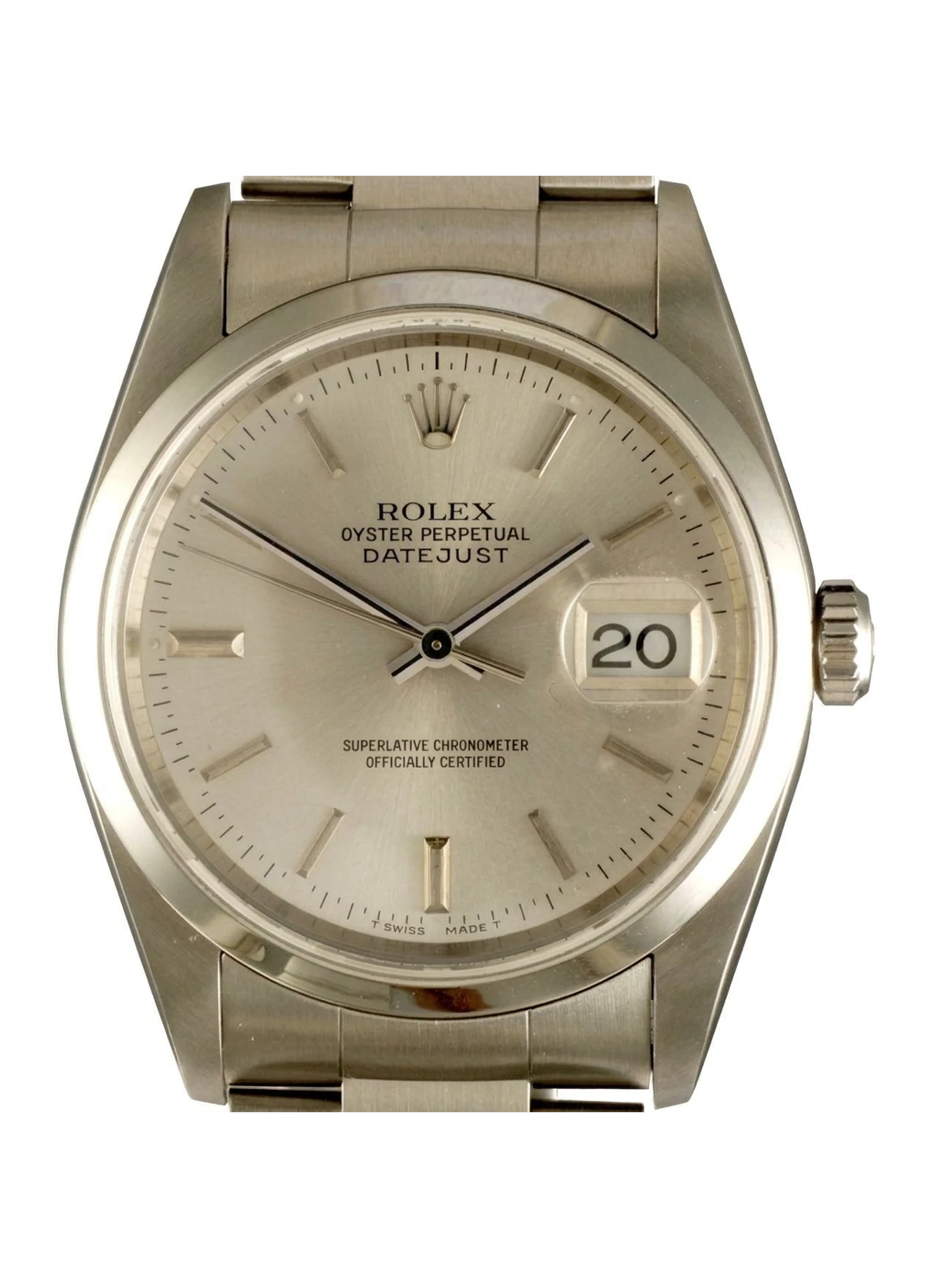
Rolex introduced the Cyclops lens in the 1950s to make the date easier to read. On the Datejust, that practical magnifier became something stronger: a brand signature visible before the text on the dial is legible.
That is why early postwar references like 6305 and 6605 feel so important. They show the Datejust finding its face: the date window is not hidden inside the dial design; it becomes the organizing feature of the whole watch.
A cleared catalog visual of Datejust 6305 anchors this chapter to a specific watch reference.A real Datejust image makes the date window and Cyclops chapter concrete, showing how a practical complication became one of Rolex's most recognizable faces. Mike - Μολὼν λαβέ / Wikimedia Commons - CC0
The four-digit Datejust is where the family becomes a language. A smooth-bezel 1600 can read quiet and steel-forward. A fluted-bezel 1601 can feel formal or precious. An engine-turned 1603 sits somewhere more technical and mid-century.
This is the Datejust's central trick. It is not a sports watch and not only a dress watch. It is the Rolex architecture that can move between those worlds by changing bezel, bracelet, dial, and metal while keeping the same core identity intact.
A cleared catalog visual of Datejust 1600 anchors this chapter to a specific watch reference.
The classic Datejust story often defaults to 36 mm, but the database tells a richer version. Datejust 31, Lady-Datejust, and Pearlmaster-adjacent branches are not side notes; they are part of how the Datejust became Rolex's broadest everyday platform.
Oysterquartz is the sharpest detour. Reference 17000 keeps the date, bracelet integration, and Rolex solidity, but expresses them through an angular case and quartz movement. It is proof that the Datejust idea can survive even when the silhouette and technology change dramatically.
A cleared catalog visual of Datejust Oysterquartz 17000 anchors this chapter to a specific watch reference.
For many collectors, five-digit Datejust references sit in the sweet spot. They keep the older case proportions and dial warmth, but add sapphire-crystal practicality and the modern rhythm of a quickset date.
That makes 16200, 16220, 16233, and 16234 especially useful anchors in DialAtlas. They explain why the Datejust is often less about one mythical reference than about choosing a personal balance: steel or Rolesor, smooth or fluted, understated or bright.
The 2000s and 2010s did not simply replace the Datejust. They tested how big, polished, and contemporary the family could become. The 116200 and 116234 modernized the 36 mm formula, while the 116233 kept two-tone Datejust culture very much alive.
Datejust II was the boldest experiment: a 41 mm Datejust with a larger wrist presence. The later Datejust 41 would refine that idea, but Datejust II is the key transitional branch because it shows Rolex learning how to scale a watch whose charm came from balance.
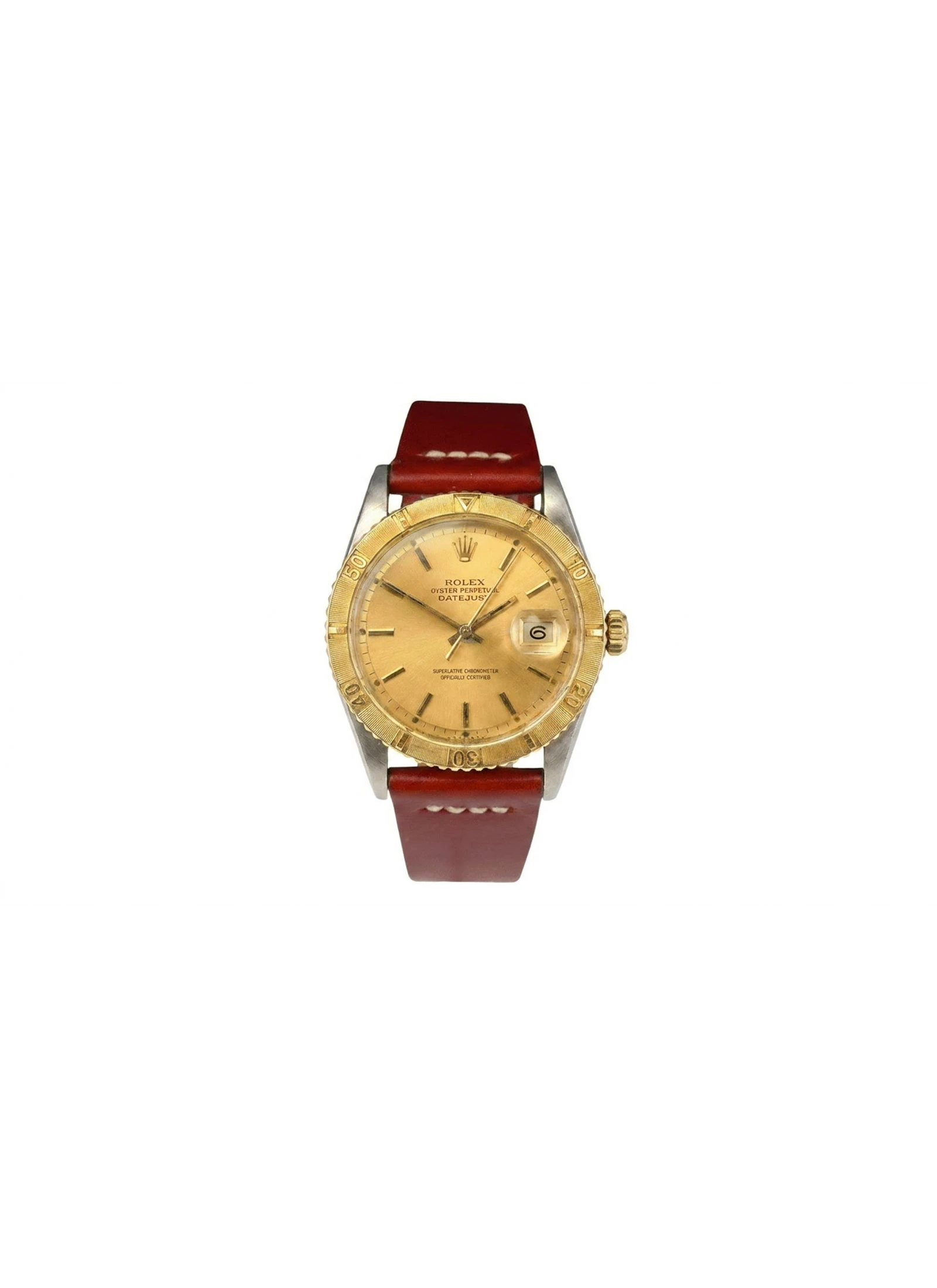
The Datejust Turn-O-Graph is the family outlier that makes the taxonomy messy in a useful way. It carries Datejust DNA but adds a rotating bezel, pulling the watch closer to Rolex's tool-watch vocabulary without fully leaving the dress-sport center.
That is why a reference like 116264 belongs near the story rather than outside it. It helps explain that Datejust is not one mood. It is a platform flexible enough to absorb decoration, utility, precious metal, and sporty timing language.
Today's Datejust line feels almost architectural. Datejust 31, Datejust 36, Datejust 41, and Lady-Datejust give Rolex a grid of sizes, metals, bezels, bracelets, and dials that can cover an enormous range of wrists and tastes while staying unmistakably Datejust.
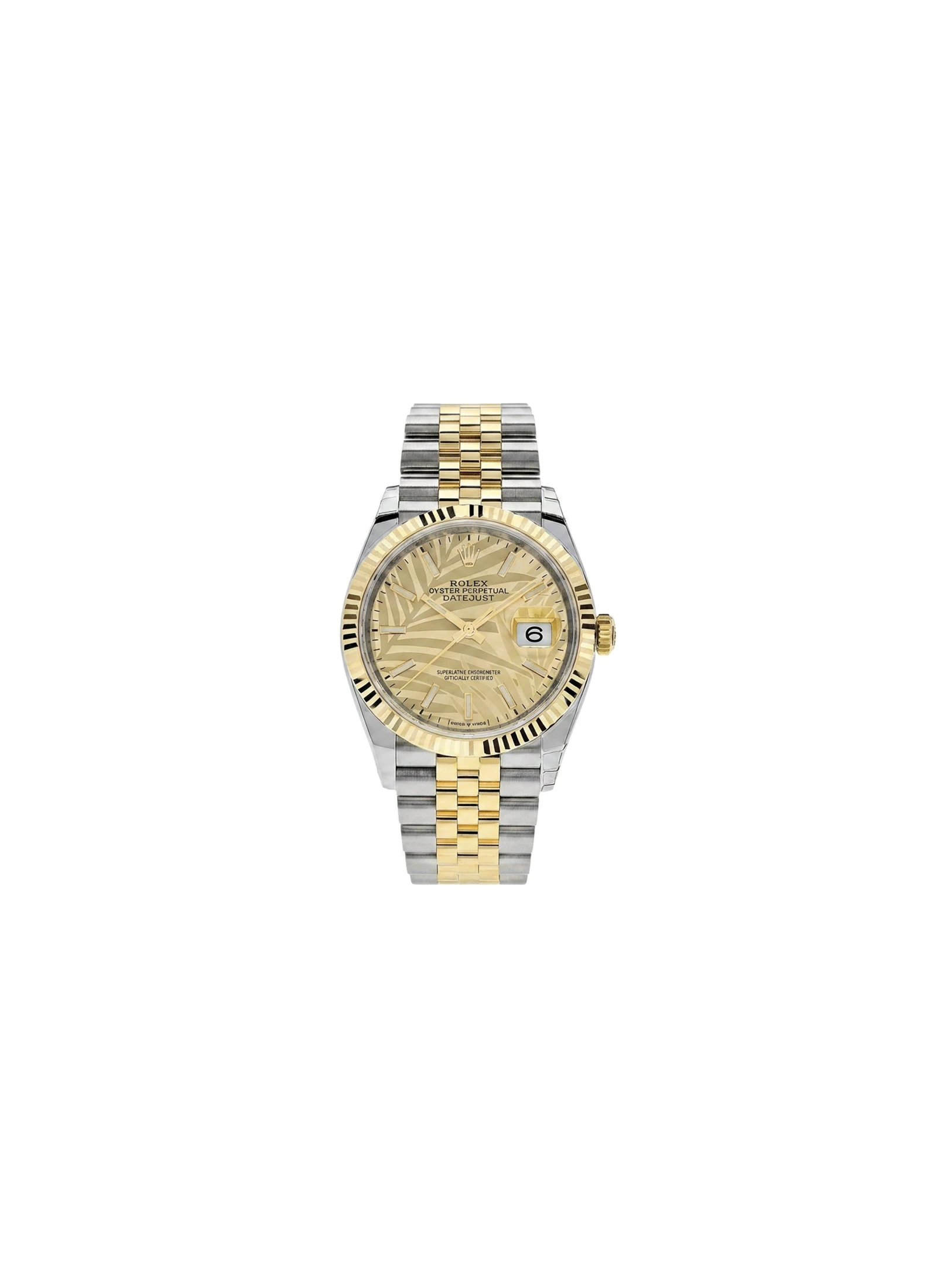
The modern references make that visible. The 126200 is clean steel Datejust 36. The 126234 adds white-gold fluting. The 126300 and 126334 scale the idea to Datejust 41. The 278274 and 279171 show how the same language continues through Datejust 31 and Lady-Datejust.