Patek Philippe Calatrava: The Round Watch That Became the Rule
A connected history of the Calatrava, from the reference 96 and Patek Philippe's Bauhaus-inflected round-watch ideal to mid-century variants, enamel-dial automatic refinement, hobnail minimalism, 5196 and 5296 revival pieces, officer-case 5227, graphic 6007G, clous de Paris 6119, and the platinum 6196P return to small-seconds purity.
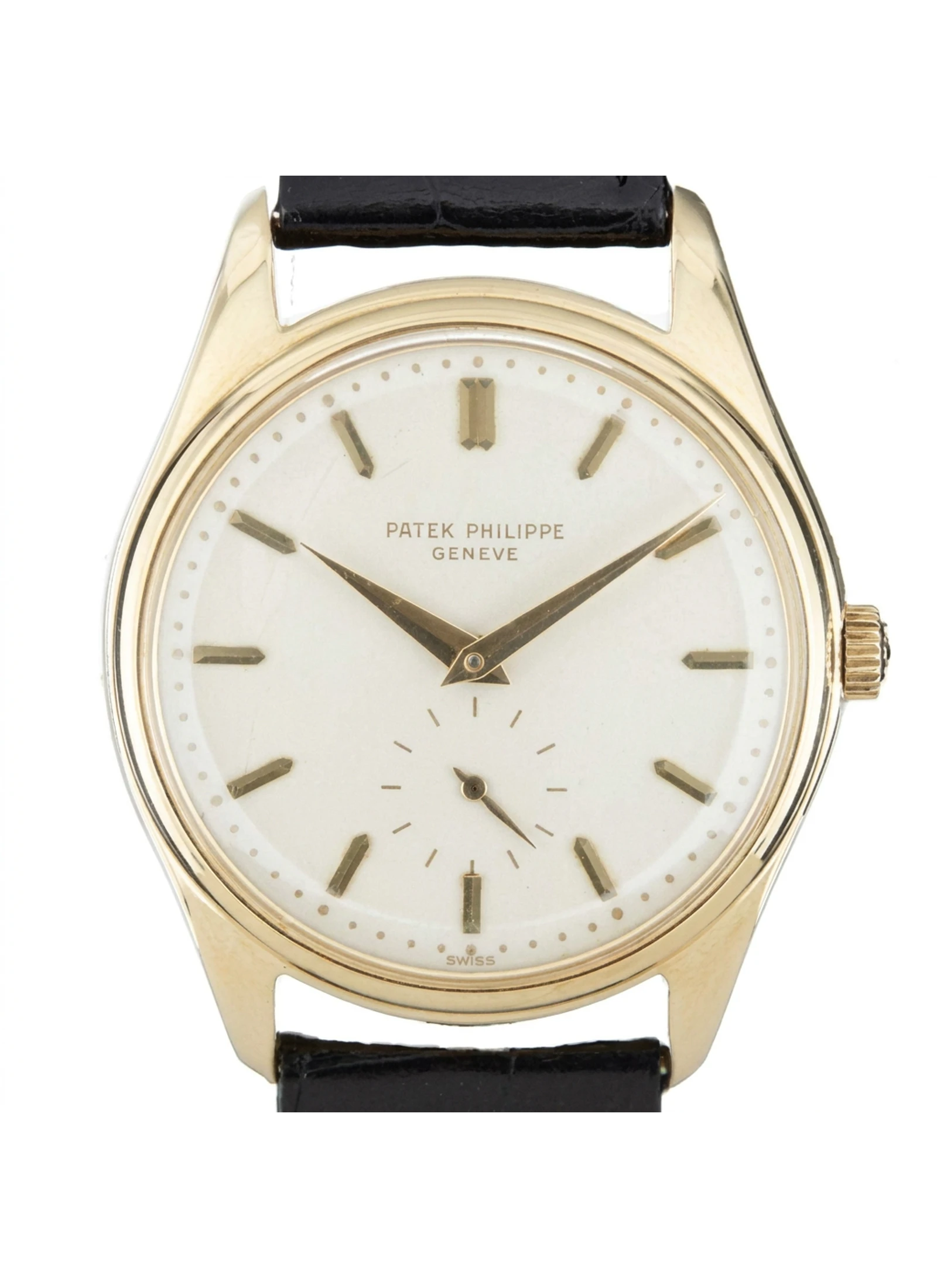
The Calatrava story begins with the reference 96, introduced as Patek Philippe entered the Stern family era. It made the round wristwatch feel definitive: thin bezel, integrated lugs, small seconds, and a design logic often summarized through Bauhaus ideas of restraint, proportion, and function.
Mid-century Calatrava references proved that the 96 was not a one-reference accident. Larger waterproof cases, center seconds, automatic movements, enamel dials, and different lug forms all orbited the same idea: a Patek Philippe watch should be quietly legible before it is visibly expensive.
By the late twentieth century, the Calatrava became a way to defend classical watch design against changing fashion. Ultra-thin round cases, small diameters, hobnail bezels, and clean dials made watches such as the 3520, 3796, and 3919 feel strict, almost architectural.
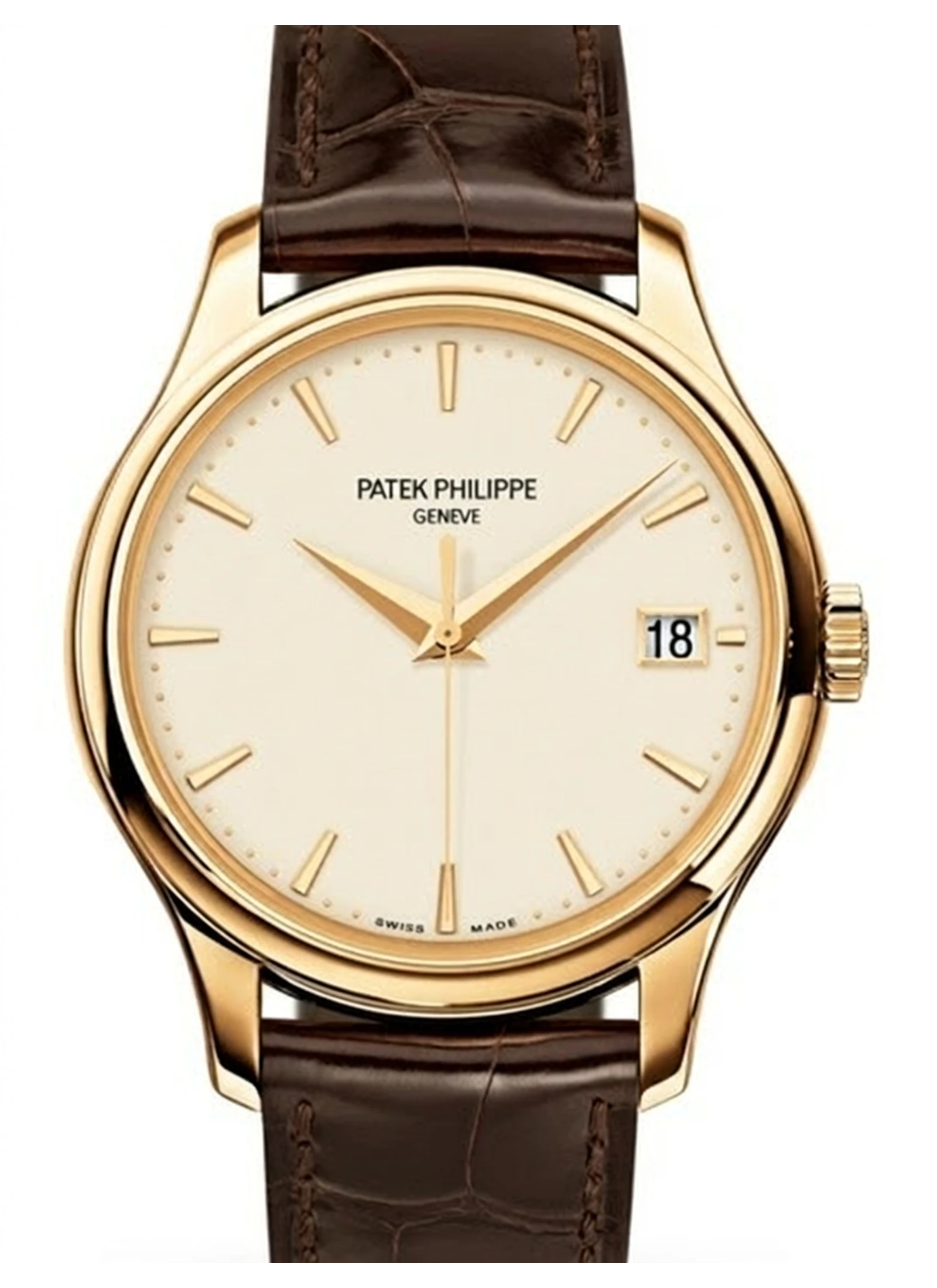
The modern Calatrava did not abandon the old code. References such as 5119 and 5120 extended the hobnail and automatic-slim traditions, while the 5196 deliberately echoed the reference 96. The 5296 brought a date and, in sector-dial form, a scholarly mid-century memory.
The 5227 shows how Patek can add drama without making the Calatrava loud. Its officer-style hinged dust cover hides a sapphire display back, so the watch remains clean from the front while rewarding the wearer with a mechanical reveal.
The current Calatrava is not only a white-dial dress watch. The 5226G moves hobnail decoration to the caseband and adds a textured, vintage-camera dial, while the 6007G series uses color accents, carbon-pattern centers, and calfskin straps to make the round Patek idea feel more casual and graphic.
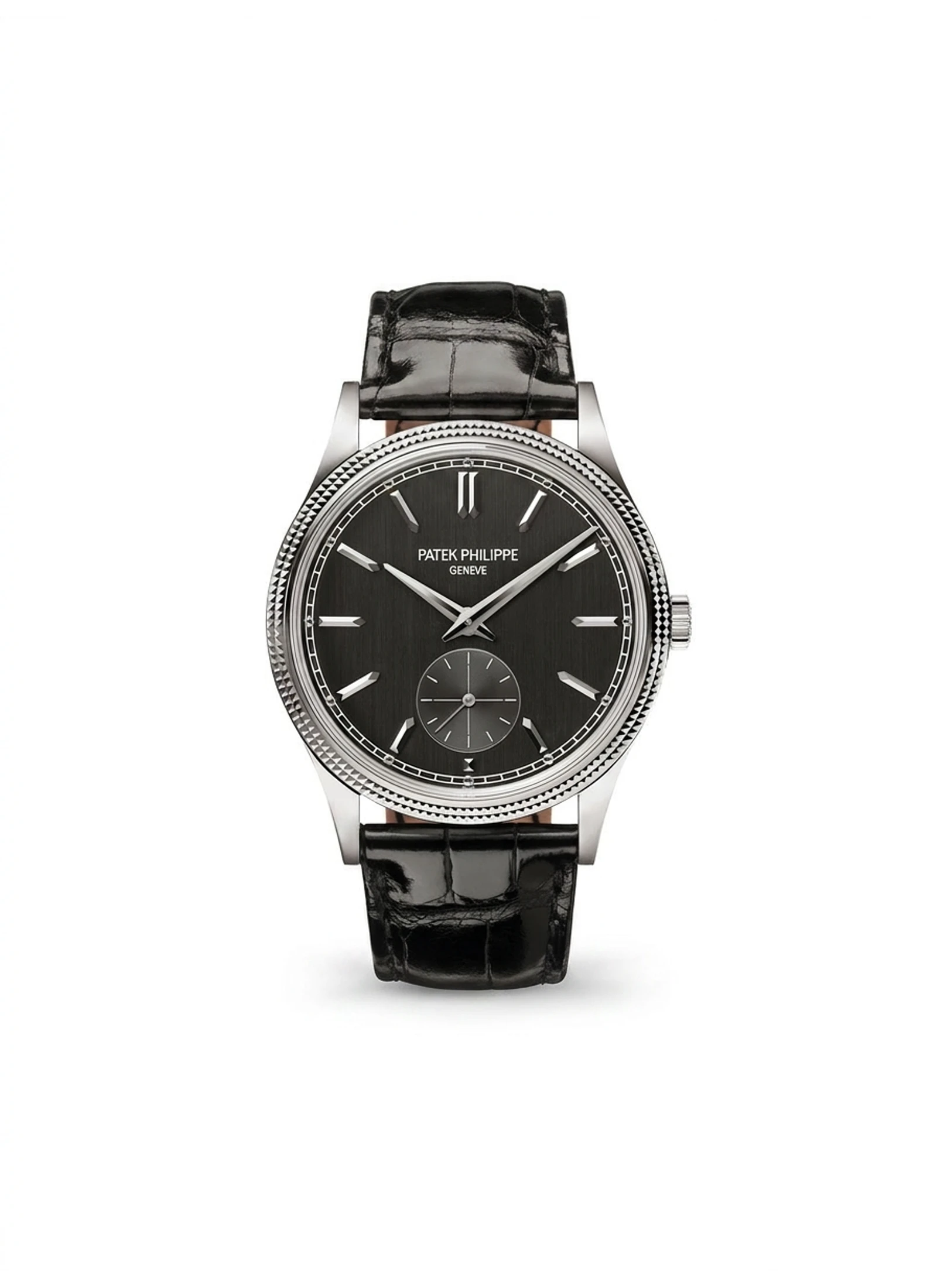
The 6119 sharpened the hobnail Calatrava with a larger case, small seconds, and calibre 30-255 PS. The 6196P then made the historical echo even clearer: platinum, rose-gilt dial, manually wound small seconds, and a cleaner case that looks back to the 96 without pretending to be vintage.
The Calatrava is tricky because it is both a family and a design principle. Collectors use the word for simple round Patek Philippe dress watches, Patek uses it for a formal collection, and the reference 96 retroactively became the origin point for the whole language.
That is why this story should connect to the catalog but not flatten it. A Calatrava can be manual or automatic, small seconds or center seconds, smooth or hobnail, date or no date. The rule is proportion, clarity, and restraint.
The cross connects the watch family to Patek Philippe's emblematic language, reinforcing why the Calatrava reads as a design rule rather than only a reference line. Wikimedia Commons - CC BY-SA 3.0
Introduced in 1932, the reference 96 is the watch that gives the Calatrava its center of gravity. It arrived as Patek Philippe entered the Stern family era, when a simpler serially produced wristwatch could speak to a different market than grand pocket-watch complications.
The design looks inevitable now: a round case, flat bezel, strong lugs, clean dial, and small seconds. But that inevitability is the achievement. The 96 made reduction feel like authority rather than compromise.
Mid-century Calatrava is a field, not a single reference
The mid-century Calatrava world is broad. The 570 enlarges the basic round idea. The 565 brings a more robust, water-resistant case vocabulary. The 2508 and 2552 show how center seconds, case shape, and automatic-era tastes could alter the feel without breaking the code.
Then there is the 2526, one of Patek's great automatic watches, remembered for its enamel dial and calibre 12-600 AT. It is more opulent than the 96, but its power comes from the same disciplined surface: a dial that looks quiet until you understand what you are looking at.
The clous de Paris bezel is one of Patek Philippe's cleverest Calatrava moves. It adds texture and recognizability without disturbing the dial. From a distance the watch stays formal; close up, the bezel becomes a precise frame.
References such as 3520 and 3919 show how that decoration became almost architectural. The watch remains small, thin, and simple, but the hobnail pattern lets minimalism have a signature.
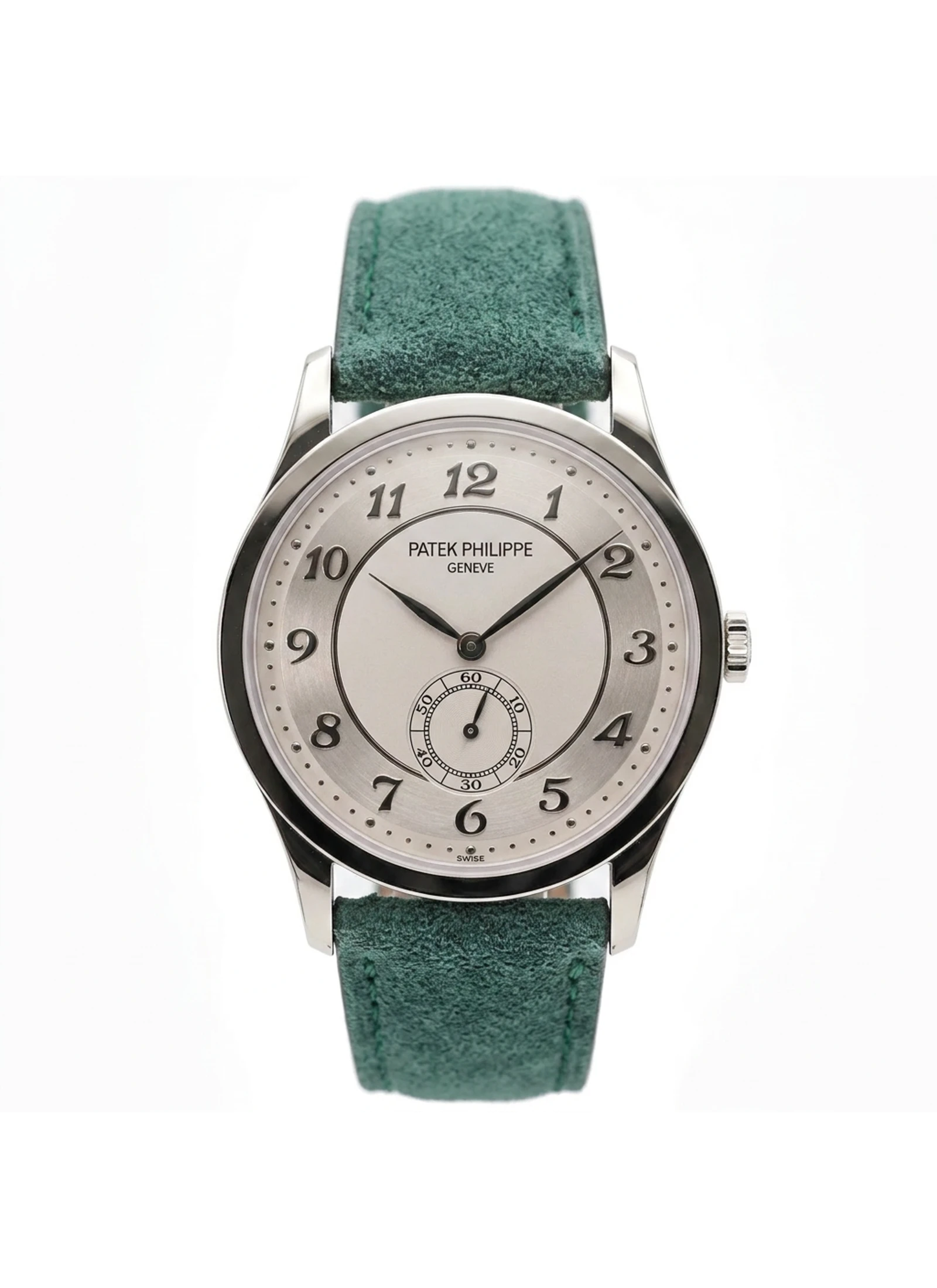
The 5196 is the modern reference that most directly asks to be read beside the 96. It keeps the formula spare: manual winding, small seconds, a restrained dial, and proportions that feel intentionally classical even as the watch grows for modern wrists.
The platinum 5196P adds Breguet numerals and a cooler tone, while the broader 5296 line shows another path: automatic winding, date, and sector-dial references that recall vintage scientific-dial Patek Philippe without becoming costume.
A cleared catalog visual of Calatrava 5196P anchors this chapter to a specific watch reference.
The 5227 is a beautiful Calatrava lesson because its special feature is almost invisible from the front. The dial stays composed; the caseback carries the surprise.
Its officer-style dust cover protects a sapphire display back, so the owner can choose between the uninterrupted dignity of a closed back and the pleasure of seeing the movement. That is Calatrava drama at the correct volume.
A cleared catalog visual of Calatrava anchors this chapter to a specific watch reference.
The current collection splits purity from personality
Modern Calatrava is no longer one conservative lane. The 6119 keeps the clous de Paris idea alive with sharper contemporary proportions and a larger hand-wound movement. The 6007G references, by contrast, use black dials, color accents, and textured centers to make the family feel younger and more graphic.
The 5226G sits between those poles. It keeps a round precious-metal case and Calatrava identity, but uses a textured dial, syringe hands, and hobnail caseband to suggest a field-watch memory translated into Patek grammar.
A cleared catalog visual of Calatrava anchors this chapter to a specific watch reference.
The 6196P is not a remake, but it knows exactly where it comes from. Its 38 mm platinum case, rose-gilt dial, manually wound calibre 30-255 PS, and small-seconds layout return the Calatrava to the quiet problem the 96 solved: how little can a great Patek Philippe need?
That is why it belongs at the end of the story. After graphics, dates, hinged covers, hobnails, and modern proportions, the Calatrava can still be most convincing when it does almost nothing loudly.