Omega Speedmaster: From Racing Chronograph to Moonwatch
A connected history of the Speedmaster, from its 1957 motorsport origins and calibre 321 roots to NASA qualification, Apollo 11, Apollo 13, the long-running Moonwatch, calibre 321 revival, and the modern 3861 Master Chronometer generation.
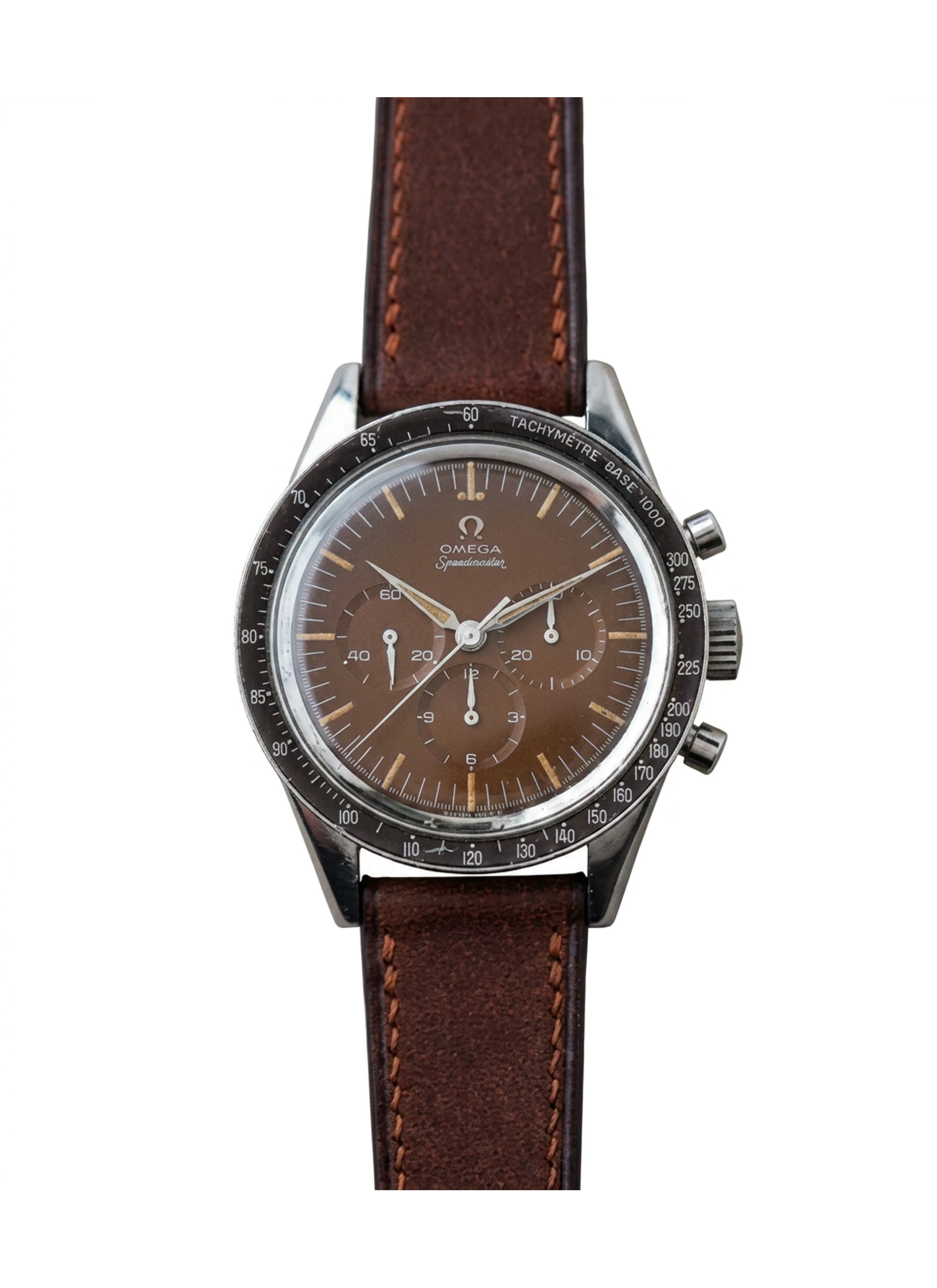
The Speedmaster began as a motorsport chronograph rather than a space watch. The CK2915 put the tachymeter scale on the bezel, paired it with Broad Arrow hands, and used the hand-wound calibre 321. The CK2998 softened the design with alpha hands and became the first Omega worn in space when Wally Schirra wore his own Speedmaster on Mercury-Atlas 8.
The straight-lug 105.003 is the pivot point. It passed NASA's qualification program in 1965, then appeared on Ed White's wrist during the first American spacewalk. The watch was still a public retail chronograph, but NASA turned it into mission equipment.
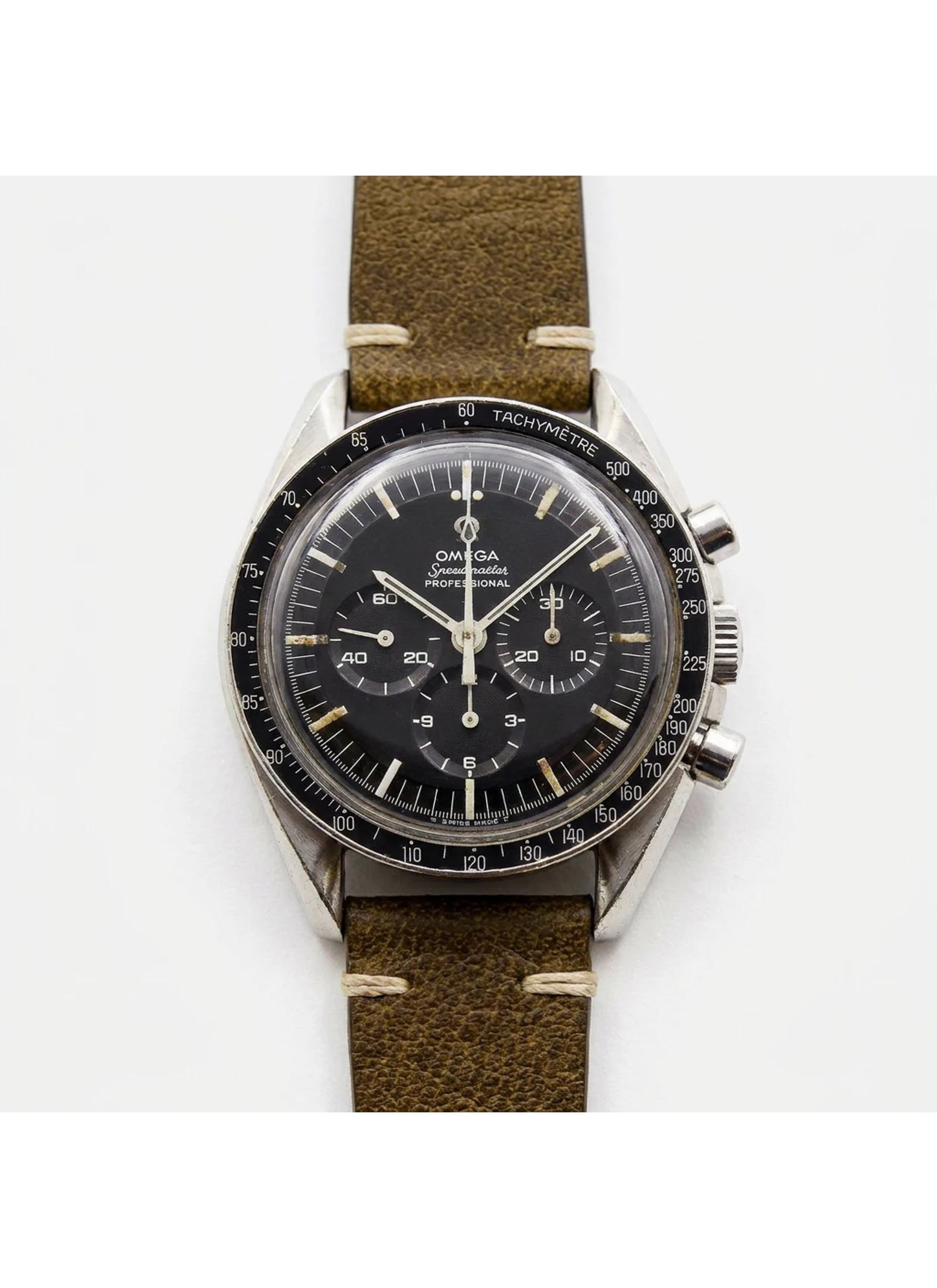
The asymmetrical case, crown guards, and Professional dial text formed the Moonwatch silhouette. The 105.012 and 145.012 kept calibre 321 inside while giving the Speedmaster the case architecture most collectors now picture when they hear Moonwatch.
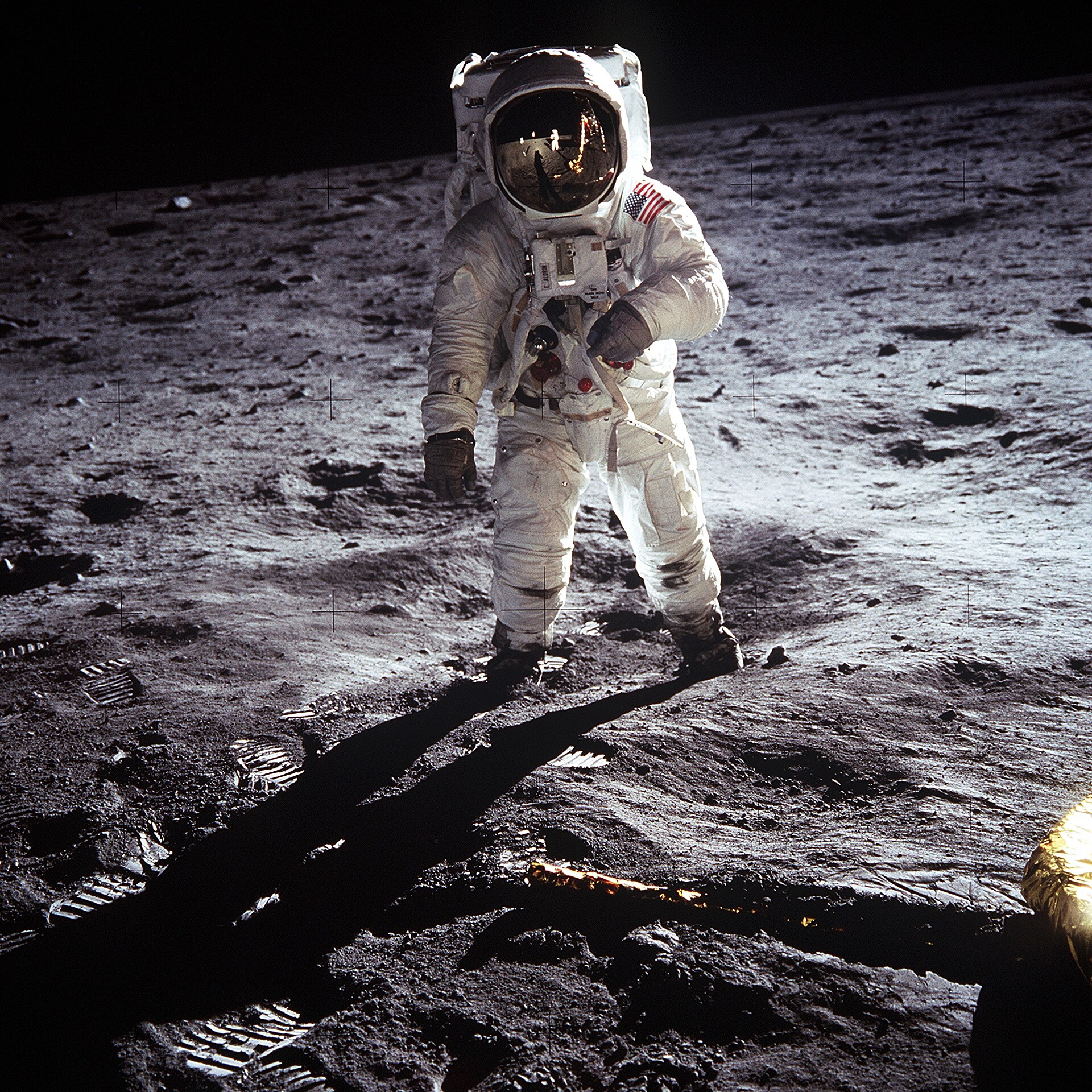
Apollo 11 gave the Speedmaster its defining myth. Neil Armstrong left his issued watch inside the Lunar Module as a backup timer, while Buzz Aldrin wore his Speedmaster onto the lunar surface. Almost immediately, Omega had both a technical credential and one of the strongest stories in watchmaking.
The 145.022 moved the production Moonwatch from calibre 321 to calibre 861 and became the long-running backbone of the line. Apollo 13 added a second kind of legend: the Speedmaster as emergency timer, later tied to Omega's Silver Snoopy Award and a whole collector language of mission-backed editions.
The modern collector Moonwatch is built around continuity. Hesalite crystals, black dials, lyre lugs, manual winding, and NASA caseback language kept the watch close to its Apollo identity, while calibre 1861, sapphire display backs, and boxed anniversary sets made the Moonwatch both daily object and ritual object.
Omega turned the Speedmaster's own archive into product strategy: revived calibre 321 pieces for collectors, Apollo 11 anniversary editions, and then the 2021 Moonwatch with calibre 3861. The modern watch still reads as a Moonwatch, but it adds Master Chronometer certification, co-axial architecture, magnetic resistance, and a sharper vintage-inspired bracelet and dial.
It was made for speed before it was made for space
The Speedmaster's first identity was terrestrial. In 1957, Omega introduced a chronograph meant for drivers, engineers, and timing work, with the tachymeter scale moved from the dial to the bezel so speed calculations could be read quickly. That single design decision made the watch cleaner, more legible, and more modern than many earlier chronographs.
The CK2915 is where the collector grammar begins: Broad Arrow hands, steel bezel, symmetrical straight-lug case, and calibre 321. Later CK2998 references shifted the bezel and handset toward the pre-Moon shape, but the underlying idea stayed the same: a hand-wound chronograph built to be read under stress.
A cleared catalog visual of Speedmaster anchors this chapter to a specific watch reference.
A private astronaut watch becomes public space hardware
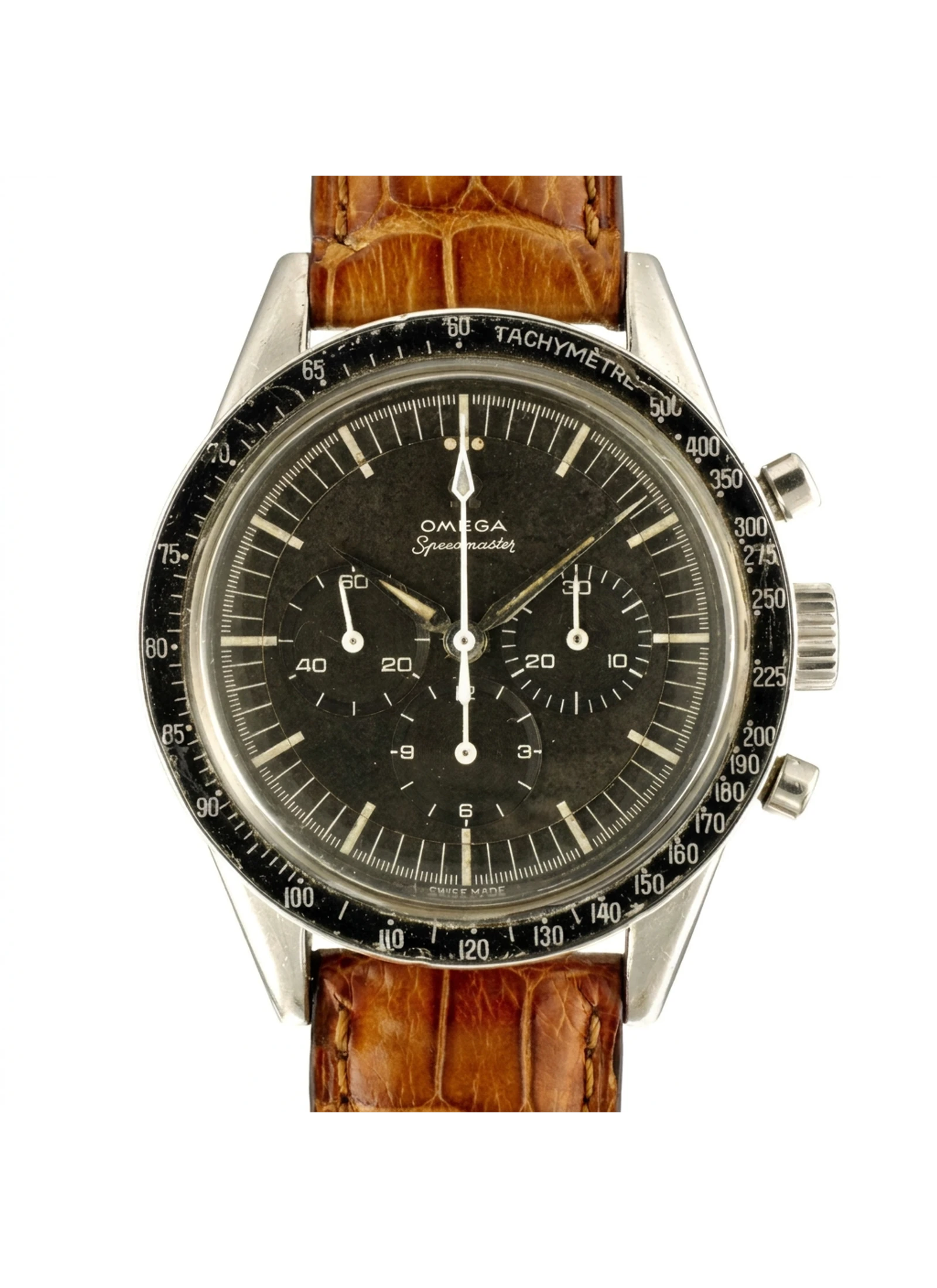
The Speedmaster entered space before NASA formally selected it. Wally Schirra wore his personal CK2998 during Mercury-Atlas 8 in 1962, which gave the Speedmaster its first orbital chapter without making it official agency equipment.
That distinction matters because the later NASA story was not a marketing shortcut. NASA needed a chronograph that could survive mission conditions, so the Speedmaster had to win its place through testing rather than romance.
A cleared catalog visual of Speedmaster Professional Moonwatch anchors this chapter to a specific watch reference.
NASA turns the Speedmaster into a tool, then Ed White turns it into an image
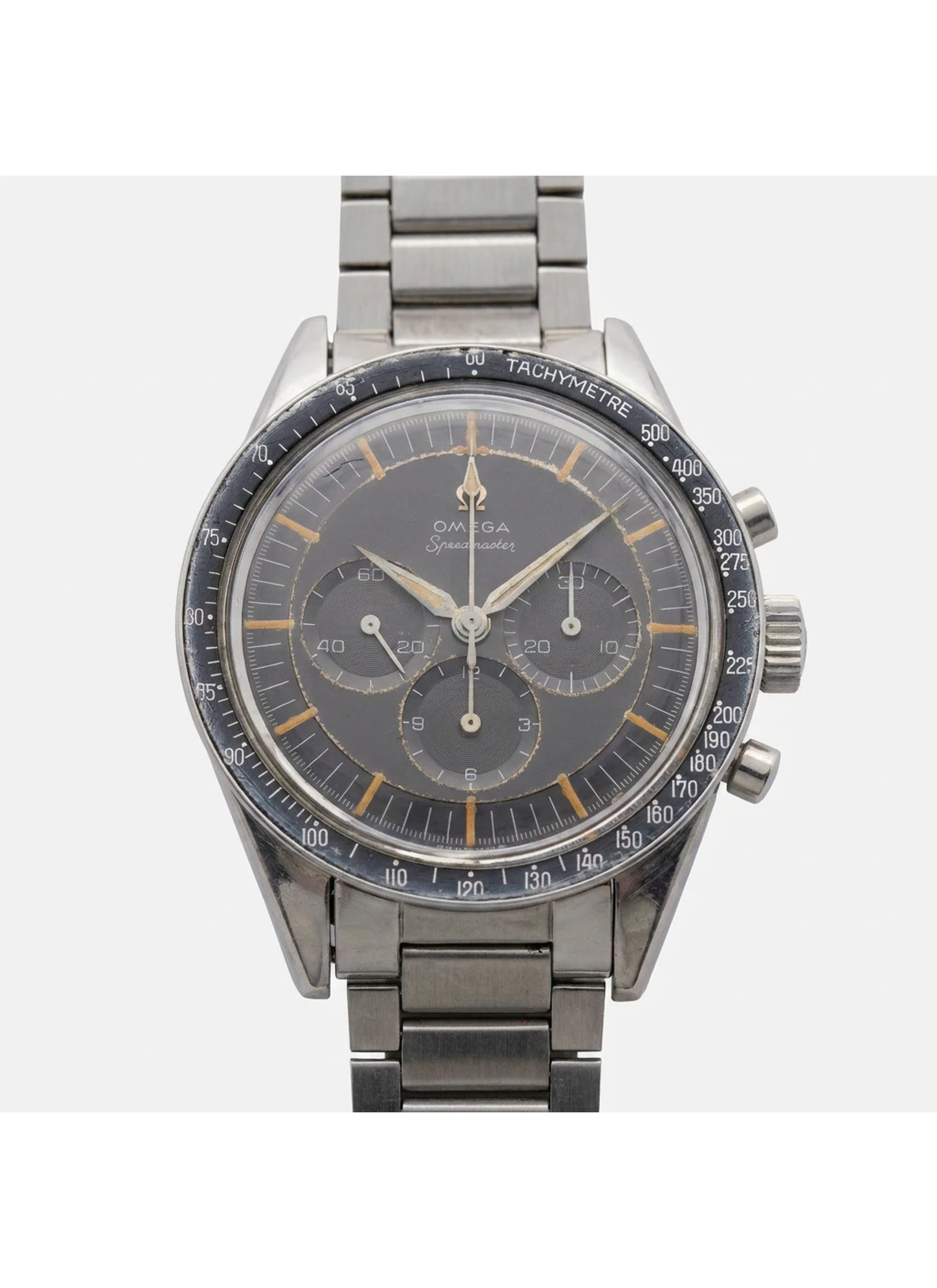
NASA's 1965 qualification is the hinge between chronograph and Moonwatch. The ST 105.003 passed the agency's punishing test program, then went into Gemini service with a long strap so it could be worn over a spacesuit. It was still recognizably the same watch civilians could buy, but the context had changed completely.
Ed White's Gemini 4 spacewalk supplied the picture that collectors never stopped replaying: a Speedmaster strapped over the suit sleeve, visible as a practical instrument in a hostile environment. The later Professional dial text feels inevitable in hindsight, but this was the moment when the watch's purpose visibly expanded.
A cleared catalog visual of Speedmaster Ed White anchors this chapter to a specific watch reference.
Apollo 11 gives the Speedmaster a story no advertisement could invent
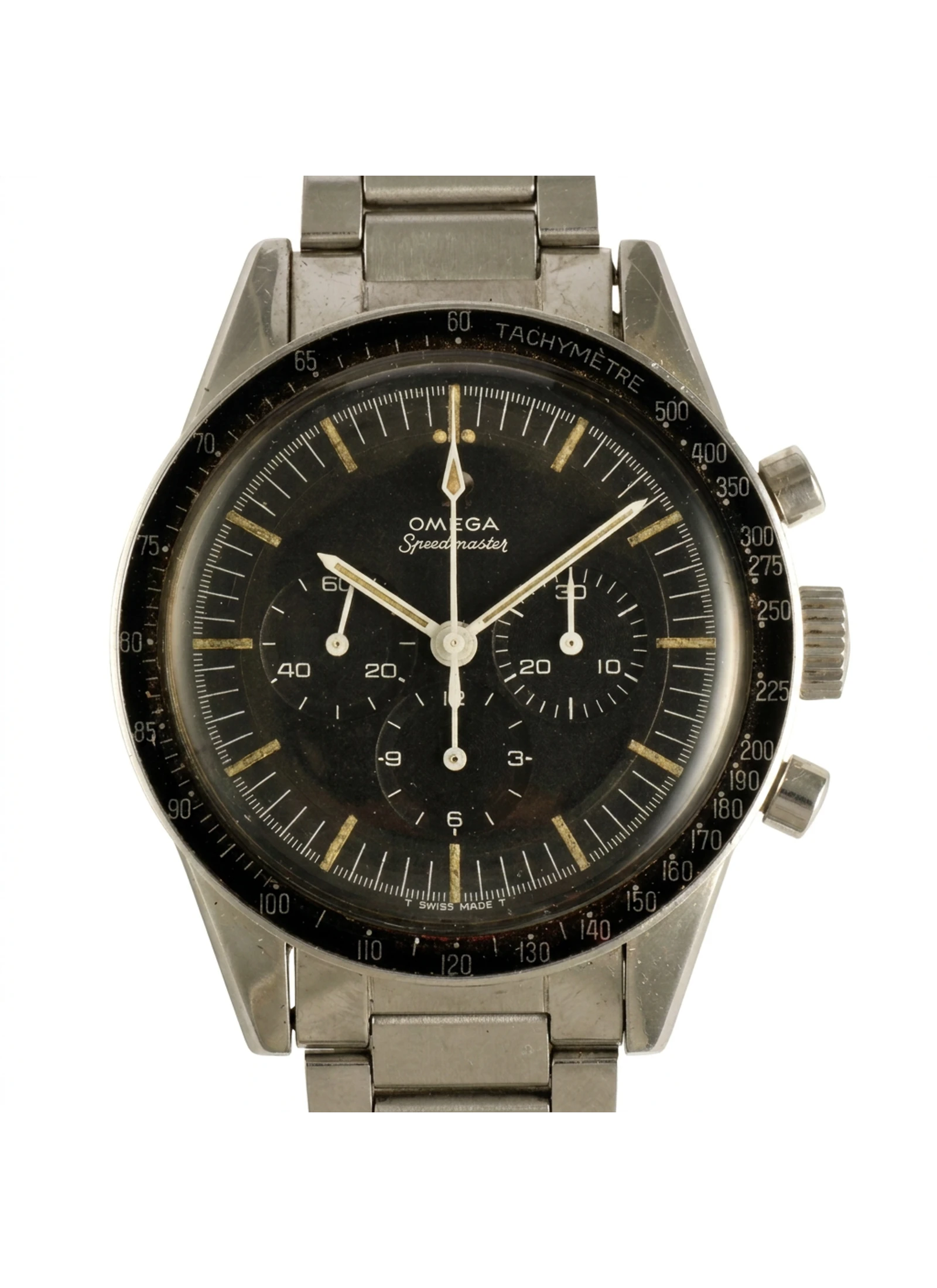
The Moonwatch myth is precise enough to be stranger than the simplified version. Neil Armstrong's Speedmaster stayed inside the Lunar Module because its onboard timer needed backup. Buzz Aldrin's watch therefore became the first watch worn on the lunar surface during Apollo 11.
For DialAtlas, this is where a family story is more useful than a reference list. The 105.012 and 145.012 carry the lunar aura, the 145.022 carries the production future, and the gold BA145.022 shows how quickly Omega began translating mission history into commemorative object.
A cleared catalog visual of Speedmaster Professional Moonwatch anchors this chapter to a specific watch reference.Buzz Aldrin on the lunar surface is the historical scale change: the Speedmaster story moves from racing chronograph to public Moonwatch mythology. Neil A. Armstrong / Wikimedia Commons - Public domain
The 145.022 makes the Moonwatch durable as a product line
The transition from calibre 321 to calibre 861 can look like a footnote, but it is the reason the Moonwatch became a long-running production watch rather than a frozen relic. The 145.022 kept the case language while giving Omega a movement architecture suited to decades of manufacture.
Apollo 13 added a different kind of proof. The Speedmaster's role in timing a critical burn turned reliability into rescue lore, and the Silver Snoopy Award gave Omega a second iconography to weave into later Moonwatch editions.
By the 1990s and 2000s, the Speedmaster Professional was already a watch about continuity. References such as 3590.50.00, 3592.50.00, 3570.50.00, and 311.30.42.30.01.005 kept the black-dial, manual-wind, Hesalite Moonwatch idea alive for new buyers while collectors debated tritium, Super-LumiNova, display backs, bracelets, and boxes.
The Speedmaster also branched outward. Reduced, Schumacher, Moonphase, Mark II, Dark Side, Snoopy, and anniversary editions all live around the Moonwatch center. Some are purist, some are playful, but they work because the core narrative is so stable.
The recent Speedmaster era is not a break with the Moonwatch. It is Omega learning how to modernize without severing the thread. The calibre 321 revival gave collectors a near-mythic movement again, while the Apollo 11 50th Anniversary pieces turned archival cues into high-production watchmaking theater.
The 2021 calibre 3861 Moonwatch is the clearest expression of that balance. The step dial, dot-over-90 bezel, vintage bracelet feel, and classic case shape speak to the past; the co-axial Master Chronometer movement, magnetic resistance, and current finishing make it a modern Omega. The story still points backward, but the watch is no longer technologically stuck there.