A connected history of the Cartier Tank, from Louis Cartier's 1917 rectangular design and the Tank Louis grammar to Must de Cartier, elongated and asymmetrical forms, bracelet Tanks, modern steel revivals, and the many subfamilies that make the Tank feel less like one model than a design system.
The Tank begins as an idea before it becomes a reference family: two parallel brancards, a rectangular dial, Roman numerals, a rail-track minute scale, and a shape that turns the case itself into the design. The earliest production sits before the local database, so these live anchors point to later Tank Louis, Normale, and Cintrée descendants that preserve the original grammar.
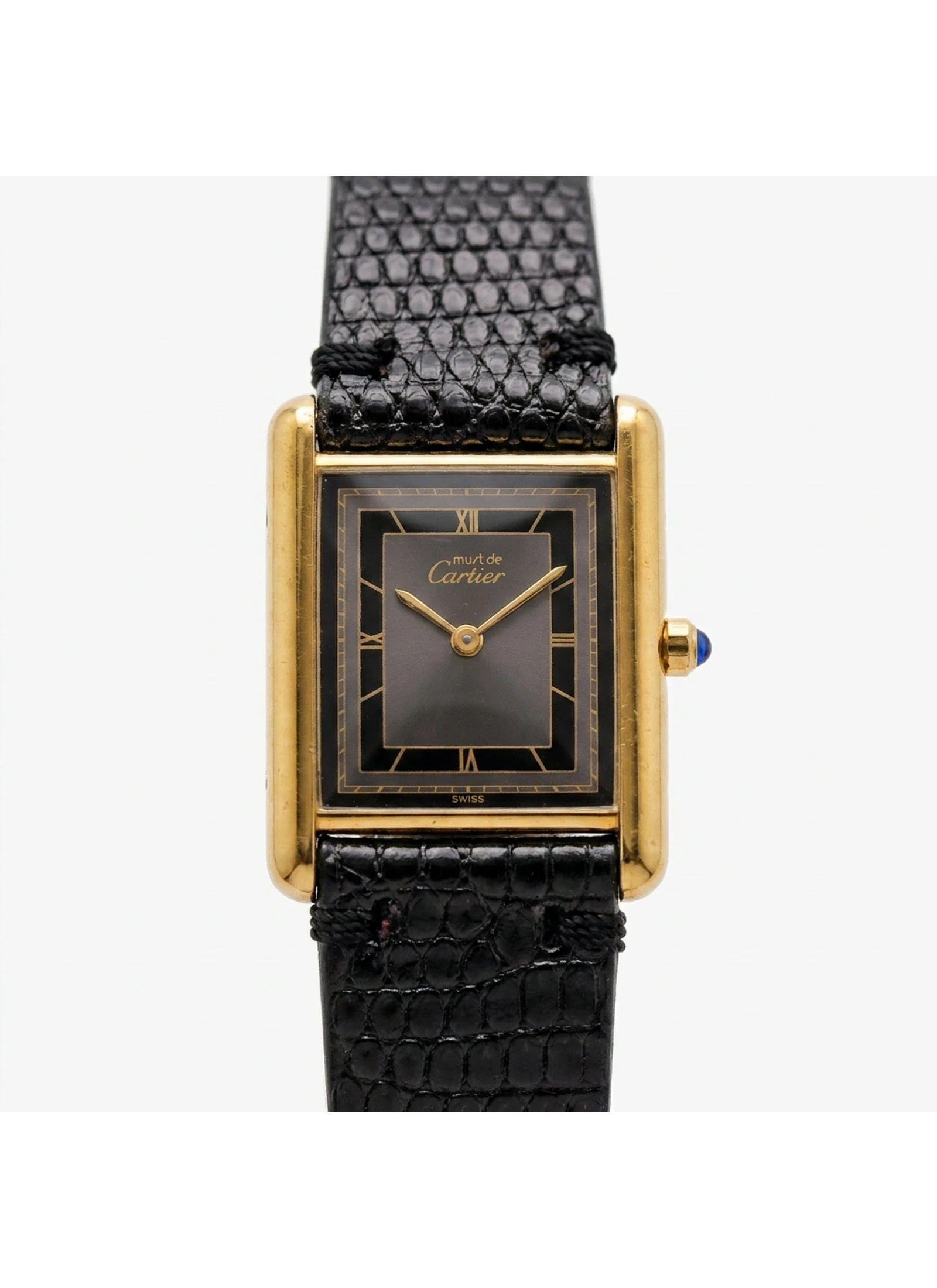
Must de Cartier changed the Tank from precious design icon into cultural object. Vermeil cases, lacquered dials, quartz movements, and more accessible pricing brought the Tank language to a broader audience without abandoning the Roman numerals, blue hands, and rectangular discipline.
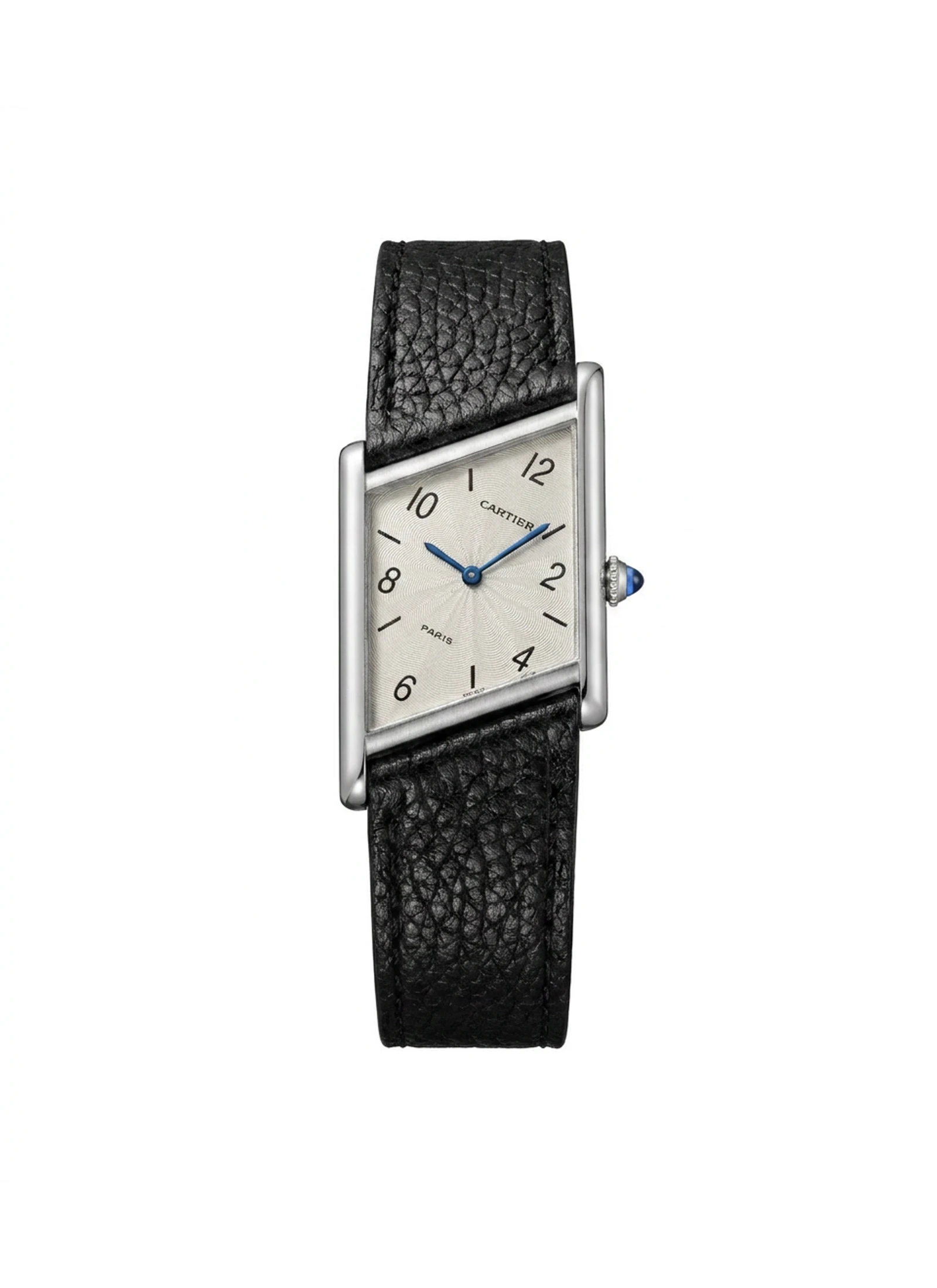
The Tank is unusually elastic because its core idea is architectural. The Américaine stretches the case vertically, the Cintrée curves it around the wrist, and the Asymétrique tilts the dial into a diagonal gesture. These branches prove the Tank can mutate while still reading as a Tank.
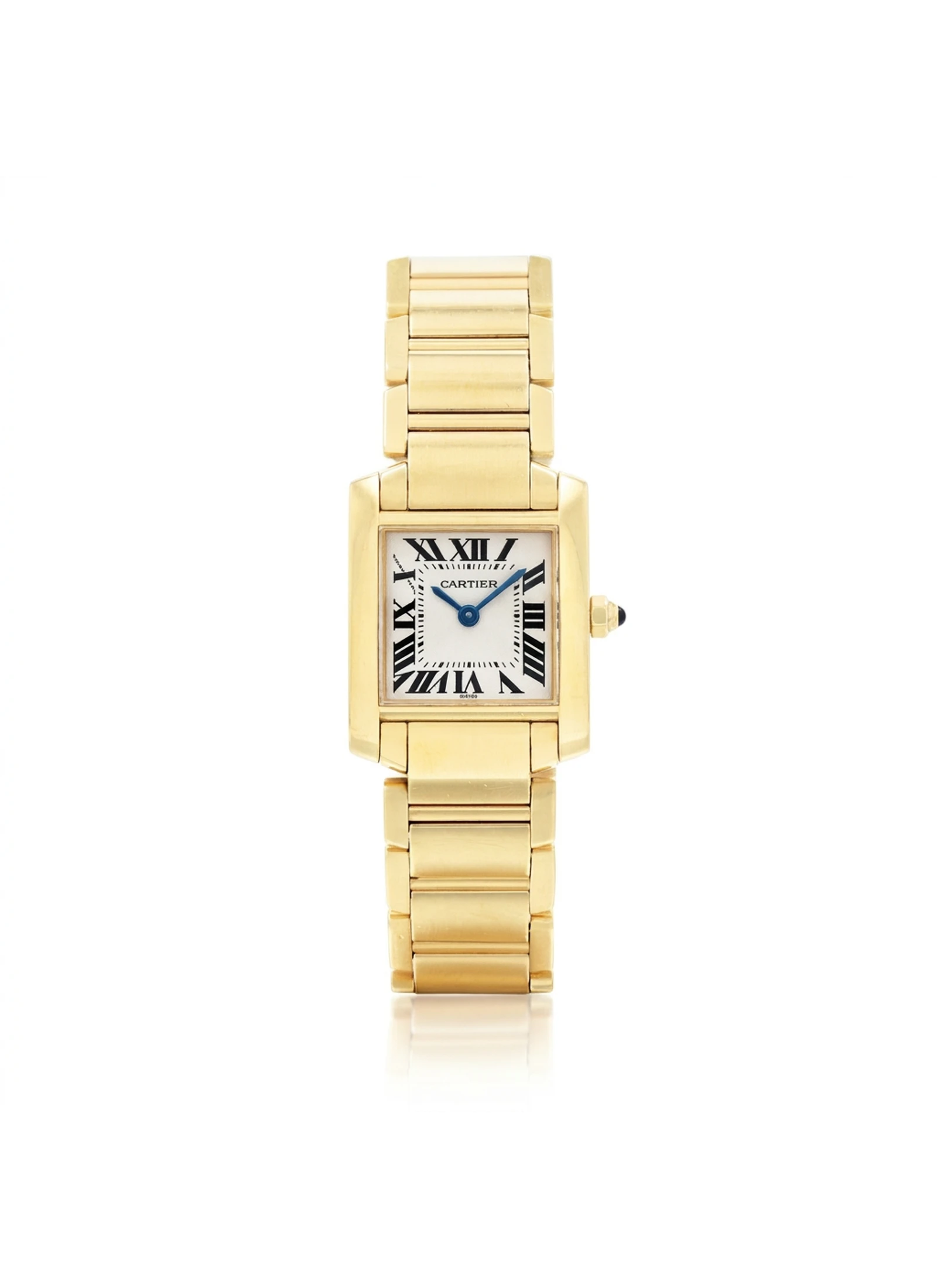
The Tank Française pulled the Tank into the bracelet-watch era. Its integrated bracelet made the brancards feel more like links in an architectural chain, giving the Tank a sport-chic fluency without turning it into a conventional sports watch.
By the 2000s, the Tank was less a single model than a house vocabulary. Basculante added a reversible-style hinged case, Chinoise emphasized horizontal bars, Anglaise integrated the crown into the brancard mass, Solo simplified the entry point, and MC gave the design a larger mechanical presence.
The modern Tank Must revival brought steel, monochrome dials, Solarbeat-era thinking, and the same broad-access instinct that made Must de Cartier so important in the 1970s. It also made the Tank feel newly visible to a generation that cares as much about design language as mechanical complication.
Recent Tank releases show Cartier treating the archive as a set of shapes to refresh: Française in steel, Américaine in a cleaner modern profile, and Cintrée as a collector-facing form-watch object. The Tank remains current because it is not tied to one size, one movement, or one market tier.
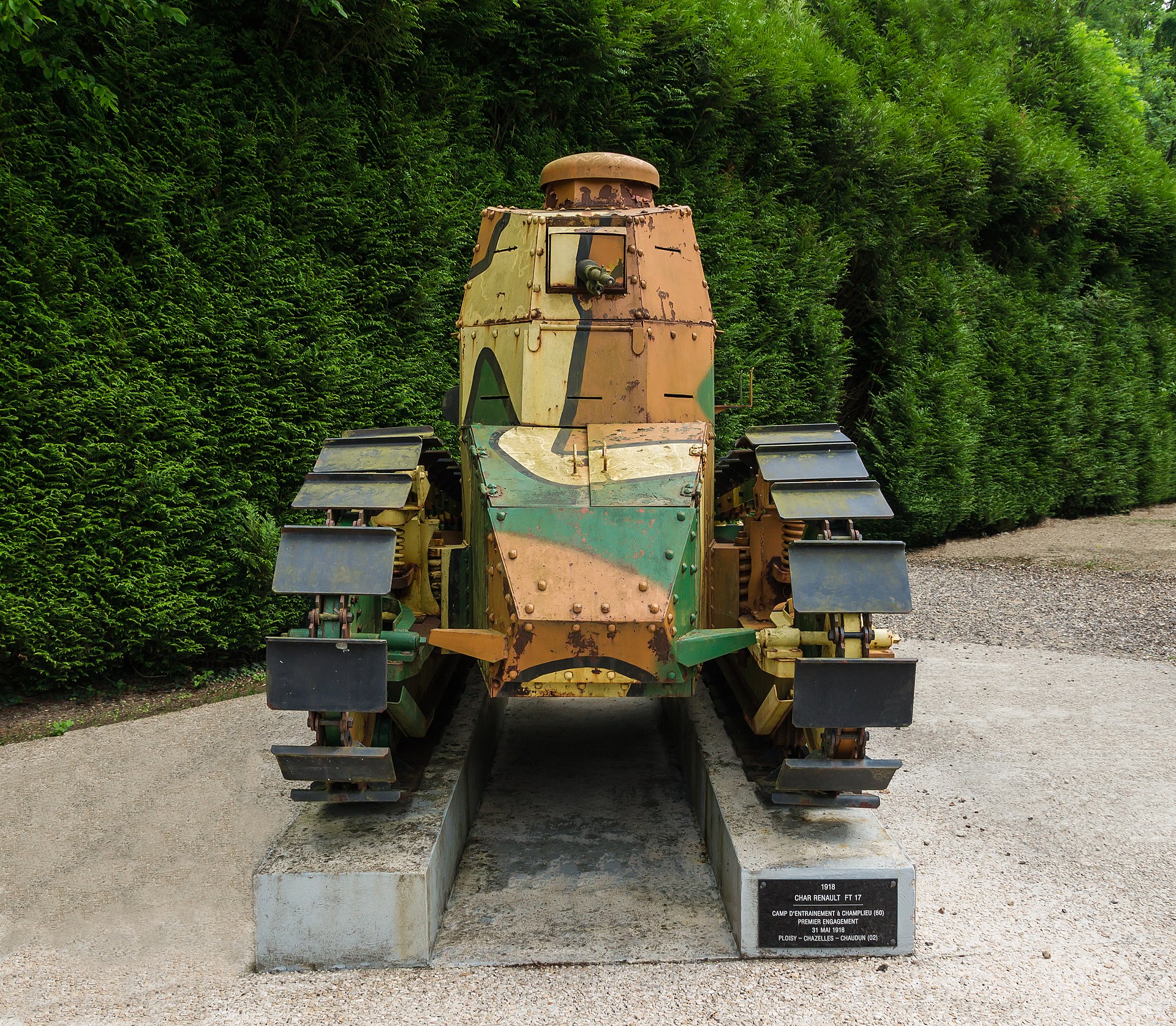
Most watch families begin with a function. The Tank begins with a silhouette. Louis Cartier's 1917 idea translated the long parallel lines of wartime machinery into a watch case, but the result is not militaristic on the wrist. It is controlled, spare, and architectural.
That is why the Tank is difficult but interesting for DialAtlas. The database has a broad Tank family and many subfamilies, while the story itself runs through all of them. A Tank Louis, a Cintrée, and a Française can look very different, yet each is legible because the brancards and rectangular discipline remain the root language.
A cleared catalog visual of Tank anchors this chapter to a specific watch reference.A Renault FT viewed from the front makes the Tank's brancard-and-track metaphor legible as design language, not just a poetic origin story. Jebulon / Wikimedia Commons - CC0
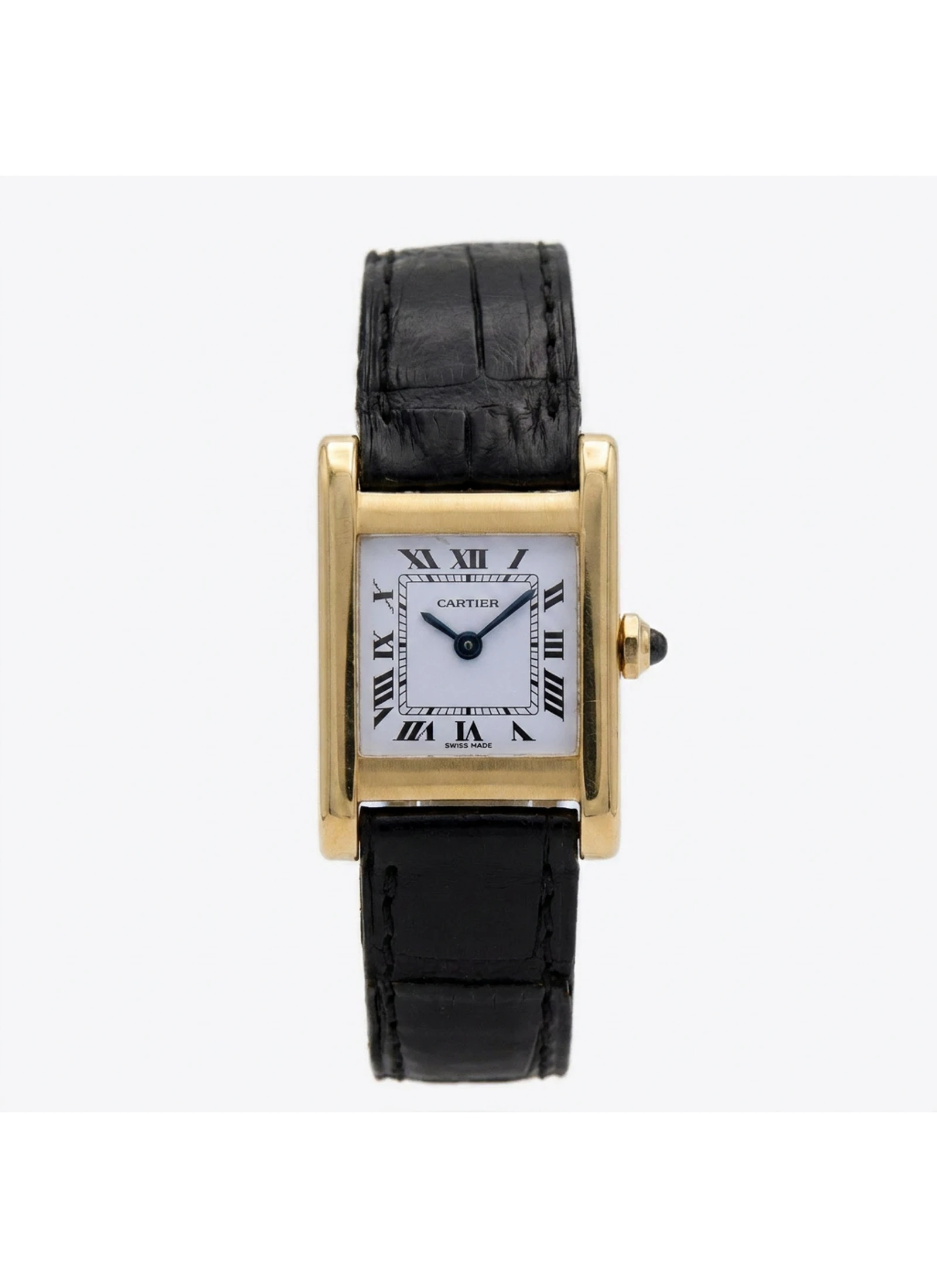
Tank Louis and Cintrée turn the origin into a lasting grammar
The Tank Louis Cartier is the purest way to understand the line: softened rectangular case, strap pulled between the brancards, Roman numerals, and a cabochon crown that makes the watch feel like jewelry without making it ornamental in the usual sense.
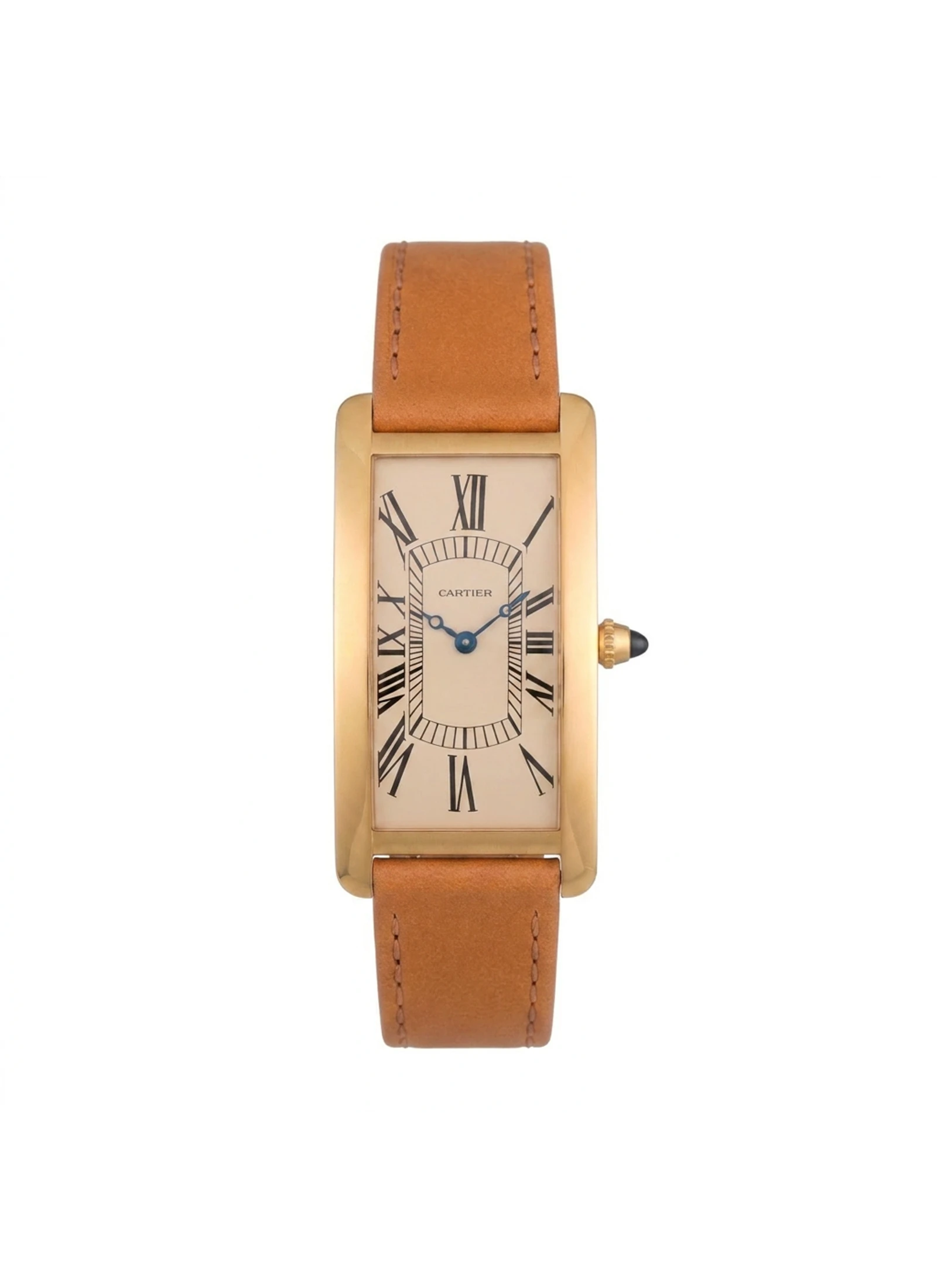
The Cintrée shows another path. By lengthening and curving the case, Cartier made the Tank more dramatic while preserving its geometry. This is the pattern repeated across the family for a century: alteration without loss of identity.
A cleared catalog visual of Tank anchors this chapter to a specific watch reference.
Must de Cartier opens the door without flattening the design
The 1970s Must de Cartier era is essential because it made Cartier's design language more attainable. Vermeil, quartz, and colored dials were not compromises in the story; they were the mechanism that turned the Tank into a broader cultural object.
Collectors often come to vintage Must Tanks through texture and color: burgundy, black, blue, Roman dial, lacquer dial, vermeil case. In story terms, Must is where the Tank stops being only a precious Parisian rectangle and starts becoming a design everybody recognizes.
A cleared catalog visual of Tank anchors this chapter to a specific watch reference.
The Américaine and Asymétrique prove the Tank can bend
The Américaine gives the Tank a more elongated presence, carrying forward the Cintrée idea in a way that feels formal, vertical, and distinctly late-20th-century Cartier. It is still a Tank, but the proportions change the emotional temperature.
The Asymétrique is more radical. By tilting the dial, Cartier turns legibility into composition. These watches explain why Tank taxonomy can feel messy in the database: the family is organized less by one case template than by a shared design alphabet.
A cleared catalog visual of Tank anchors this chapter to a specific watch reference.
The Tank Française is one of the clearest examples of Cartier modernizing the Tank without making it generic. The integrated bracelet extends the case's geometry across the wrist, so the watch becomes a single architectural object rather than a case attached to a strap.
That made the Française perfect for the 1990s and 2000s: dressy but not fragile, recognizable but less formal than a Tank Louis. In the database, it deserves its own branch, but in the story it is one of the Tank's most important adaptations.
Basculante, Chinoise, Anglaise, Solo, MC: the names can feel like taxonomy clutter until you read them as design experiments. Each pulls on a different part of the Tank idea. Some emphasize motion, some emphasize horizontal bars, some make the case larger and more mechanical, and some simplify the line into a clean entry point.
For DialAtlas, this is the reason a story layer matters. A plain database view can make these families look disconnected. The story explains why they belong together without pretending they are the same watch.
The modern Tank revival is about clarity, not nostalgia
The modern Tank Must and updated Française show Cartier understanding its own archive with unusual discipline. Steel cases, clean dials, quartz and Solarbeat-era accessibility, and refreshed bracelets make the Tank feel current without requiring a new shape every season.
That is the Tank's deepest advantage. It can absorb fashion, price-point shifts, gender shifts, mechanical and quartz movements, and collector attention because the core design is simple enough to survive all of them.