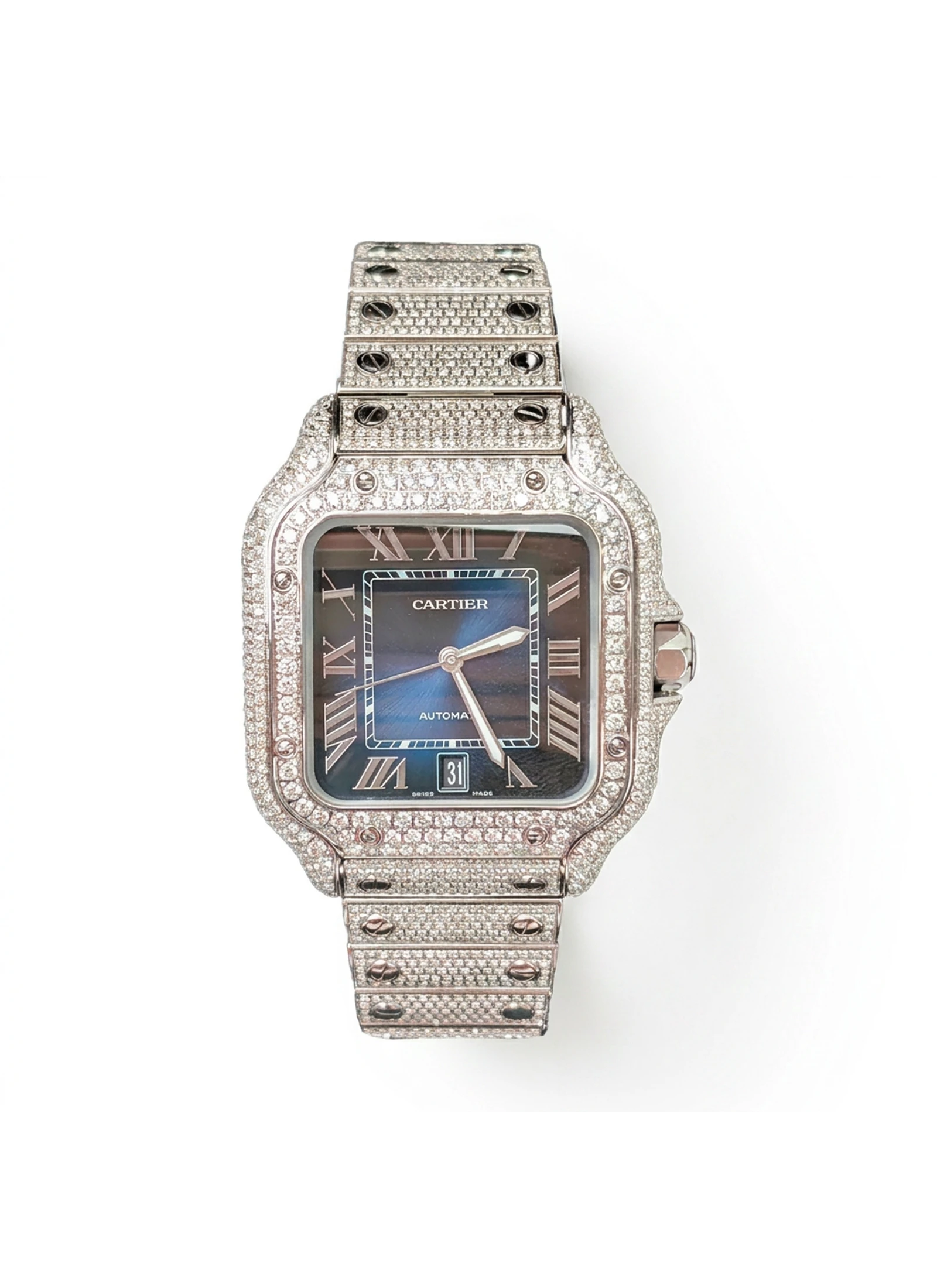
A connected history of the Cartier Santos, from Louis Cartier's 1904 watch for Alberto Santos-Dumont to the steel-and-gold 1978 breakthrough, the curved Galbee era, the oversized Santos 100, the modern Santos de Cartier, and the parallel Santos-Dumont revival.
The Santos starts with a practical request: Alberto Santos-Dumont needed to read the time in flight without reaching for a pocket watch. Louis Cartier's answer turned a friendship into one of watchmaking's defining early wristwatch stories. The catalog anchors here are later descendants, because the local database starts long after the original 1904 object.
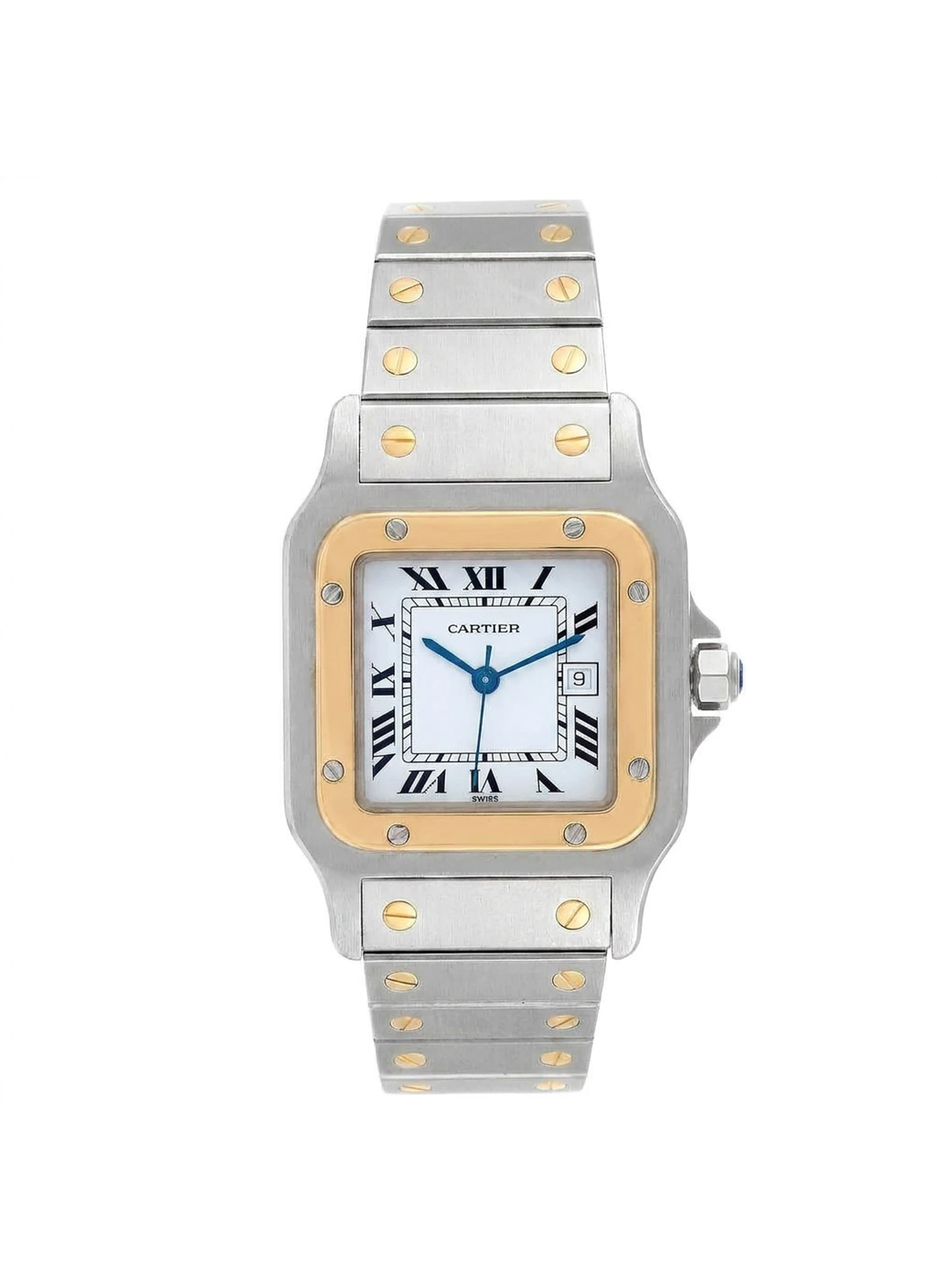
The late-1970s Santos made Cartier's square watch newly public. Steel, gold accents, visible bezel screws, and a bracelet made the Santos feel less like a precious dress object and more like a modern everyday icon. This is where the Santos becomes one of Cartier's great design systems rather than only an origin myth.
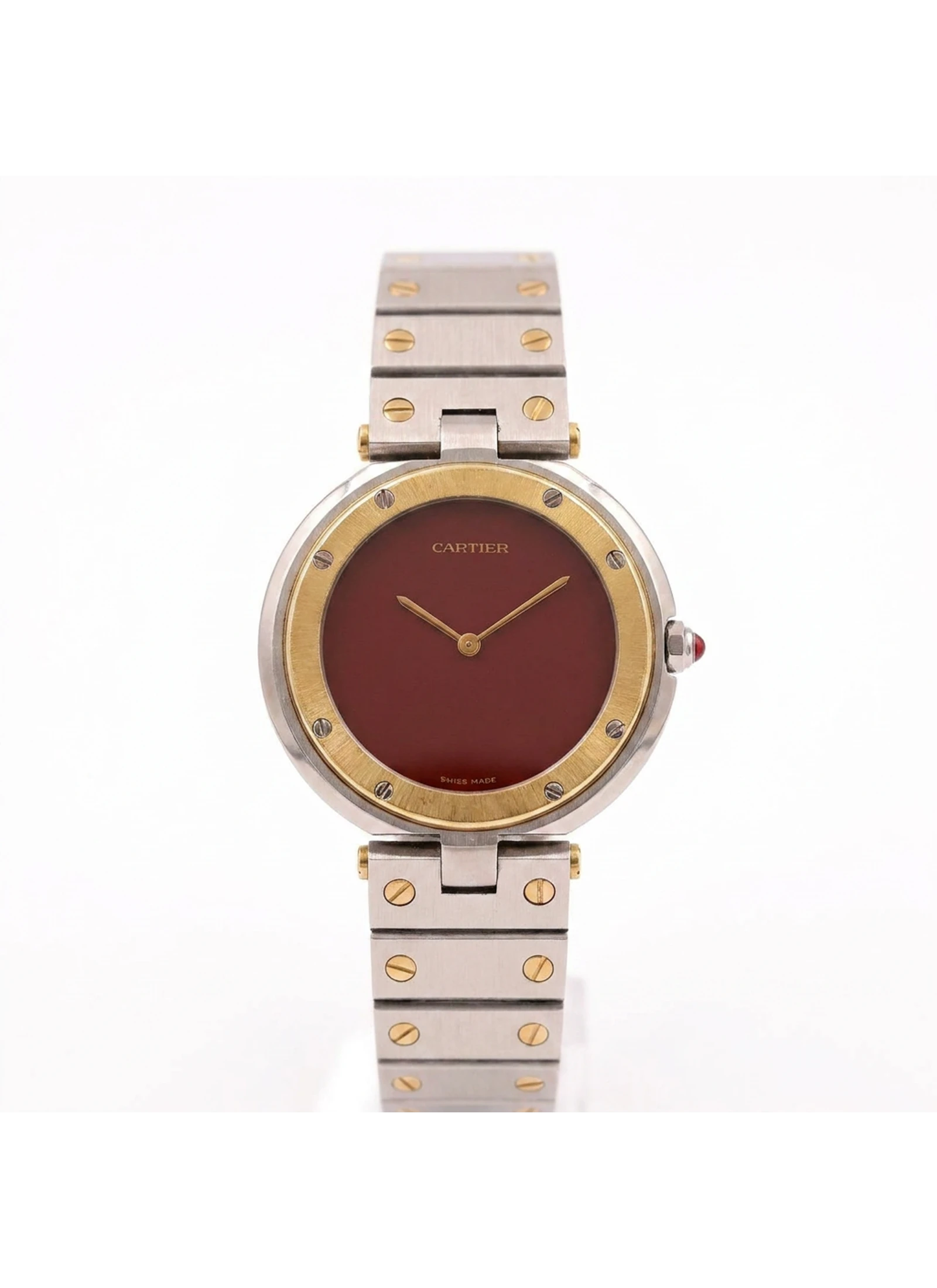
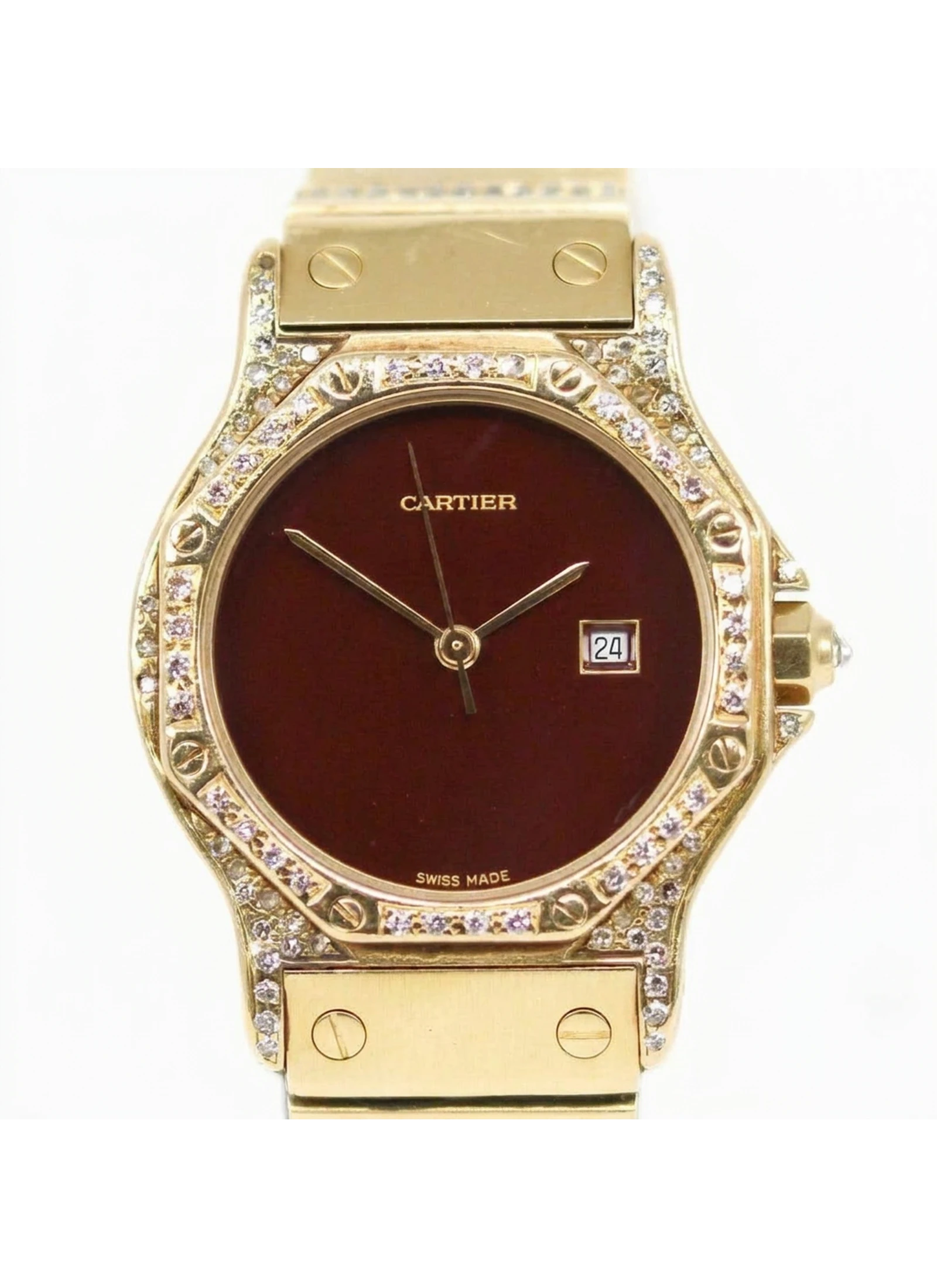
The Galbee softened the Santos into a more curved wrist object, while Octagon and other branches show how flexible the idea had become. The common thread was not one exact case profile; it was the square dial, the metal architecture, and the exposed hardware that made the watch readable as a Santos from across a room.
The Santos 100 translated the centenary story into a larger watch for the 2000s. It amplified the bezel, case, and strap presence, keeping the Santos language intact while giving it the scale and confidence of the era.
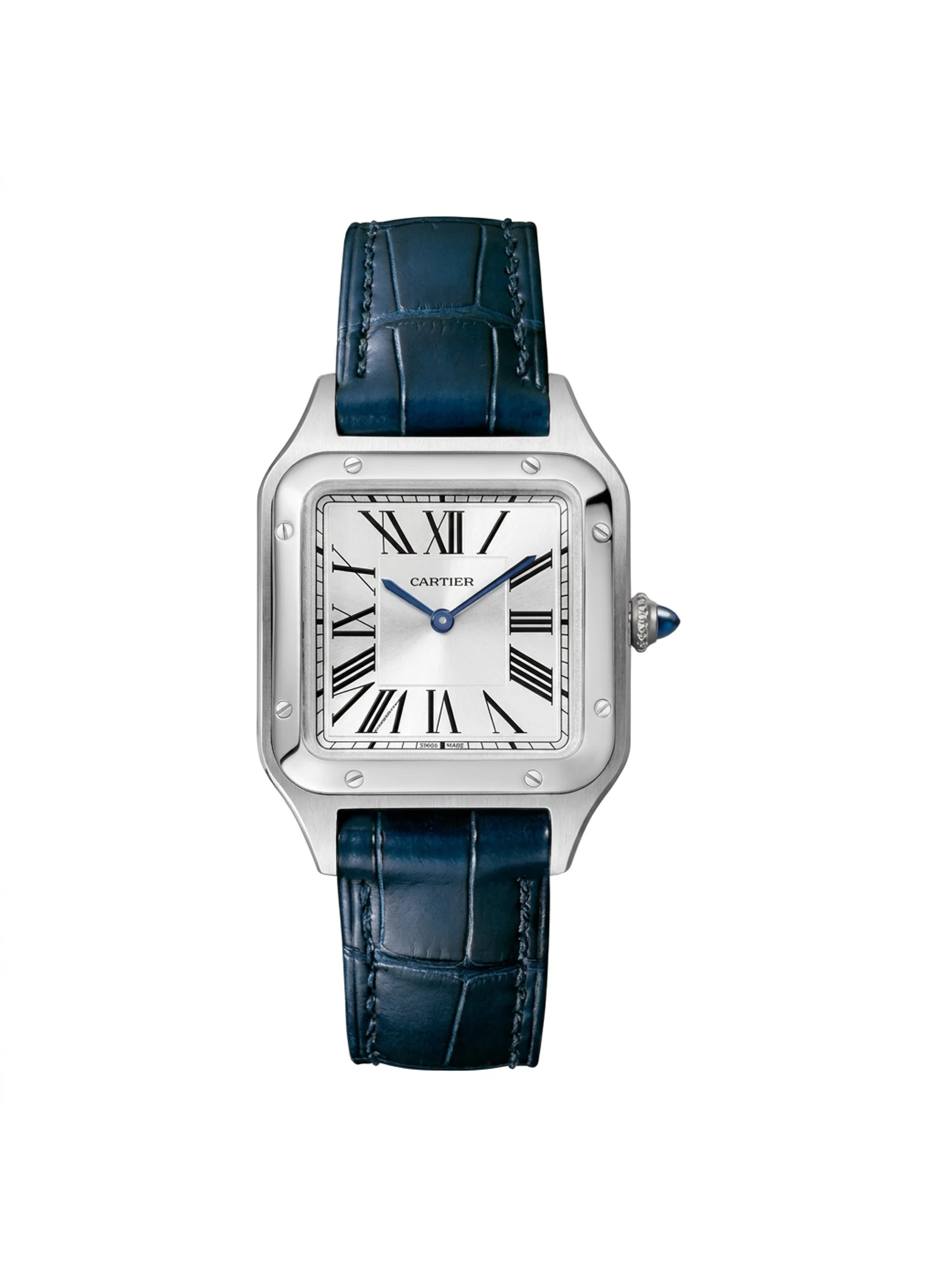
The Santos-Dumont branch keeps the line closest to the original pilot-watch myth: thinner, more formal, and usually strap-led rather than bracelet-led. Modern high-autonomy quartz and precious-metal versions show Cartier separating the elegant Dumont reading from the sportier Santos de Cartier line.
The 2018 Santos de Cartier made the design feel current without erasing its history. The rounded square, exposed screws, automatic 1847 MC movement, QuickSwitch straps, and SmartLink bracelet adjustment made the Santos practical again in a modern way: not a museum piece, but a watch built to move between bracelet, strap, dress, and travel.
The Santos begins as a solution, not a style exercise
The Santos story is powerful because it begins with use. Alberto Santos-Dumont was not asking for a decorative novelty; he needed a way to read time while flying. Louis Cartier's answer gave the wristwatch a public, modern, technical purpose at a moment when pocket watches still defined men's timekeeping.
That practical origin is why the Santos can carry so much design weight later. The square case, visible screws, Roman numerals, and direct legibility are not separate decorations. They make the watch feel engineered, even when Cartier renders it as jewelry.
A cleared catalog visual of Santos Dumont anchors this chapter to a specific watch reference.The 14-bis image puts the Santos origin back in the cockpit problem that made a wrist-worn timekeeper useful before it became a Cartier design icon. Unknown author Unknown author / Wikimedia Commons - Public domain
The 1978 Santos is the moment the design becomes broadly visible. Cartier took a form associated with precious-metal elegance and gave it steel, gold accents, a bracelet, and industrial-looking screws. The result was luxurious, but it was also easier to wear daily than a pure dress watch.
That combination explains why the Santos sits differently from the Tank. The Tank is architectural restraint. The Santos is architecture with hardware showing. It makes Cartier's design intelligence feel more urban, more tactile, and more obviously connected to the wrist.
A cleared catalog visual of Santos anchors this chapter to a specific watch reference.
Galbee softens the square without losing the hardware
The Santos Galbee is important because it proves the Santos could evolve by touch as much as by outline. Curvier surfaces, softened case lines, and more wrist-friendly proportions made the watch feel less planar while keeping the bezel screws and square grammar intact.
The database makes this era look like many small branches: Galbee, Octagon, Ronde, and related Santos executions. The story layer helps explain the shared idea underneath them: Cartier was testing how much the Santos could bend before it stopped feeling like a Santos.
A cleared catalog visual of Santos anchors this chapter to a specific watch reference.
The Santos 100 answered the early-2000s appetite for larger watches while tying itself to the 1904 origin. Its broader case, stronger bezel, and strap presence made the Santos more assertive without needing to abandon the square, screws, or Cartier dial codes.
It is not the subtlest Santos, and that is the point. The Santos 100 shows that the design can survive a change in volume. It carries the same grammar in a louder register.
Modern Cartier splits Santos into two clear readings
The modern Santos de Cartier and Santos-Dumont are complementary, not redundant. Santos de Cartier is the bracelet-led, automatic, highly adaptable branch, with QuickSwitch and SmartLink making the hardware part of the daily experience. Santos-Dumont is thinner, calmer, and closer to the original formal pilot-watch line.
That split is one reason the Santos remains current. Cartier can refresh the bracelet watch, the strap watch, the skeleton watch, the dual-time watch, and the precious dress watch without weakening the root story.
A cleared catalog visual of Santos anchors this chapter to a specific watch reference.
The Santos lasts because it makes function visible
Many watch icons hide their construction. The Santos advertises it. The screws, bracelet, bezel, and square dial all tell the wearer that this is a built object, not only a decorated one.
That is the Santos' rare trick: it can be elegant, commercial, historical, and practical at the same time. The watch began by solving a pilot's problem, then became a Cartier signature because the solution had a shape strong enough to become style.