Cartier Panthère: The Watch That Behaves Like Jewelry
A connected history of the Panthère de Cartier, from the Maison's 1914 panther motif and the bracelet-led 1983 watch to its steel-era breadth, 2000s pause, 2017 return, and current role as one of Cartier's clearest jewelry-watch signatures.
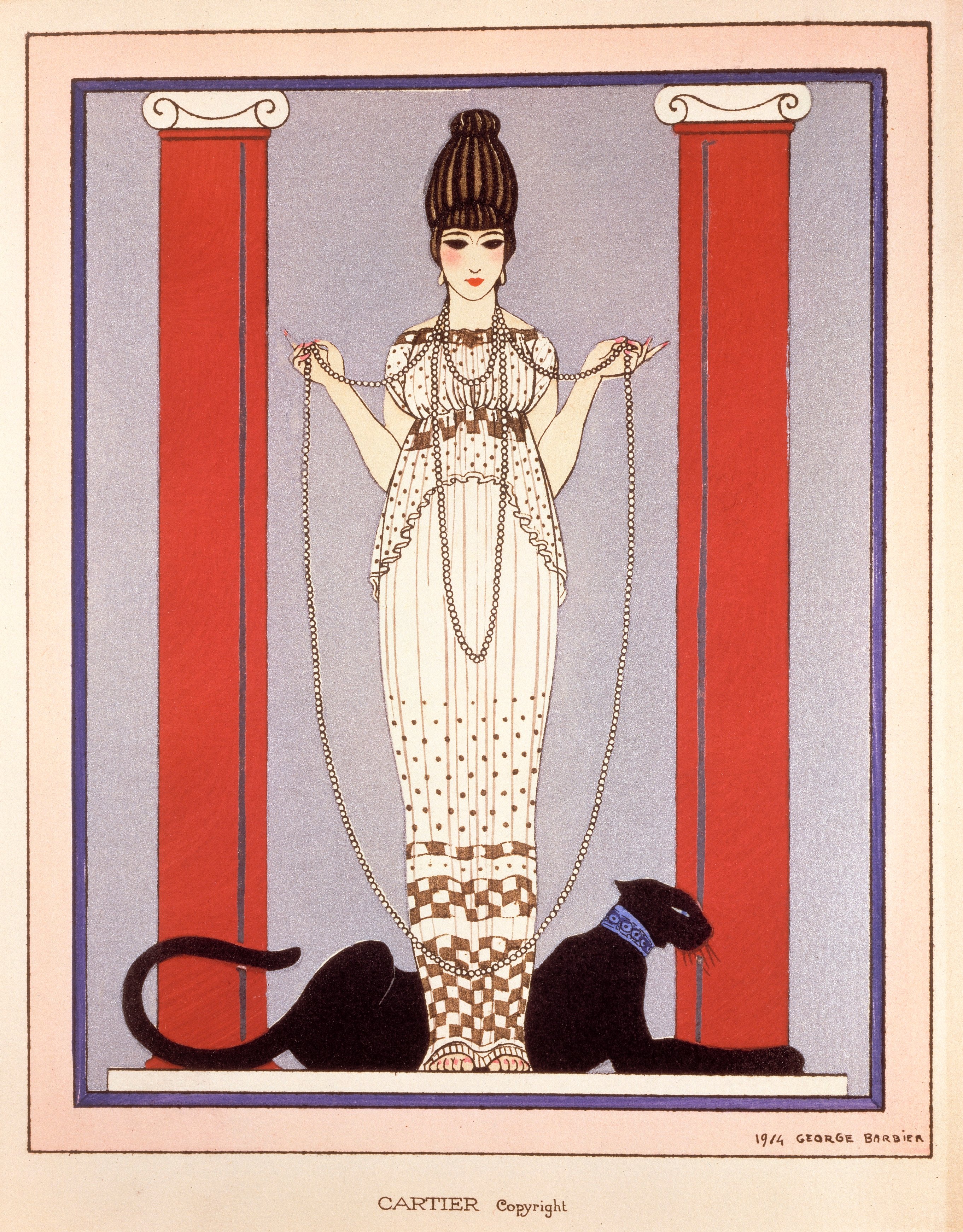
The Panthère watch makes more sense when it is read as Cartier jewelry before it is read as a watch. Cartier's panther motif entered the Maison's visual language in 1914, then became a deeper house emblem through the work and taste of Jeanne Toussaint. The later watch inherits that feline idea as motion, suppleness, and attitude.
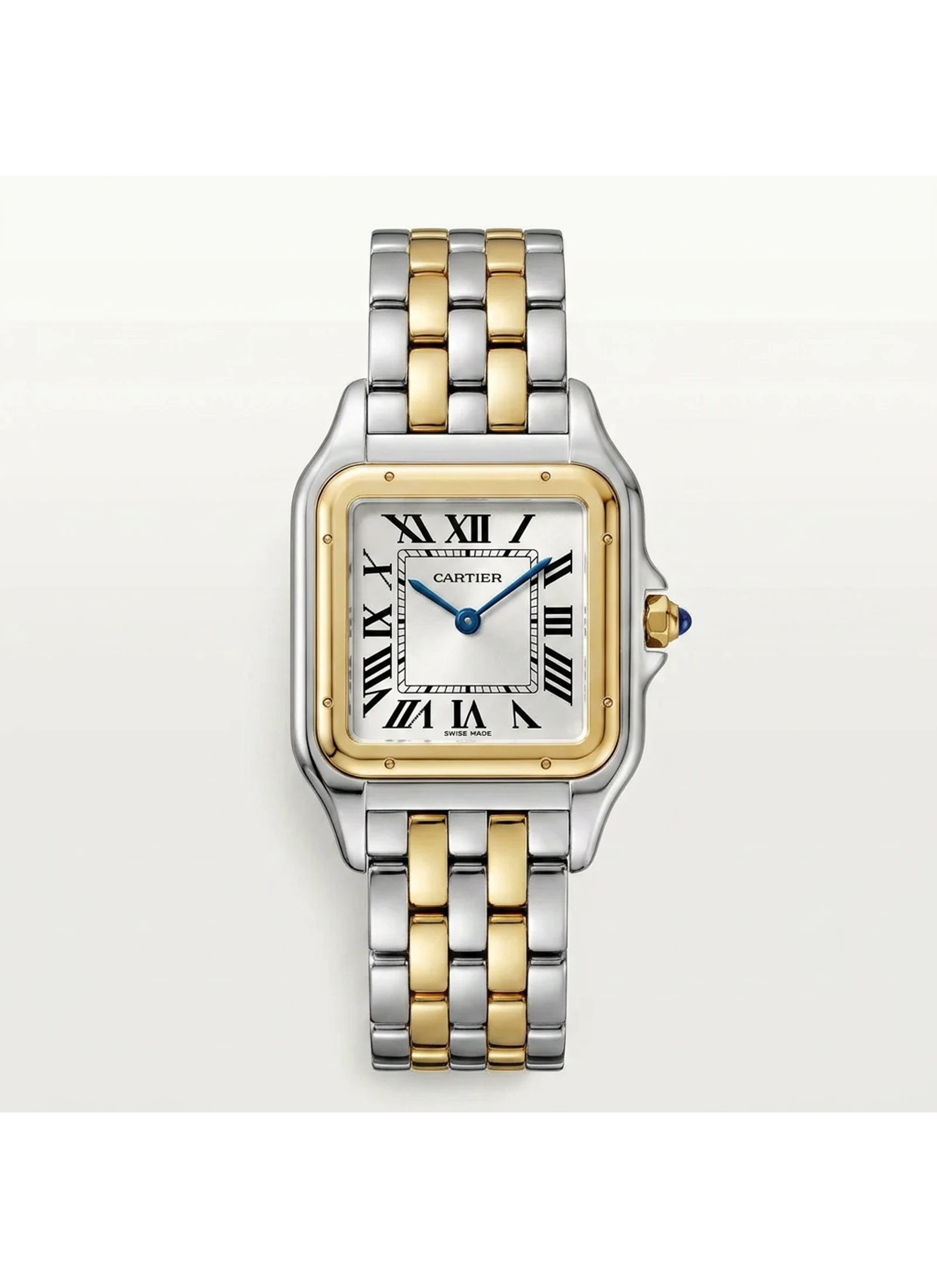
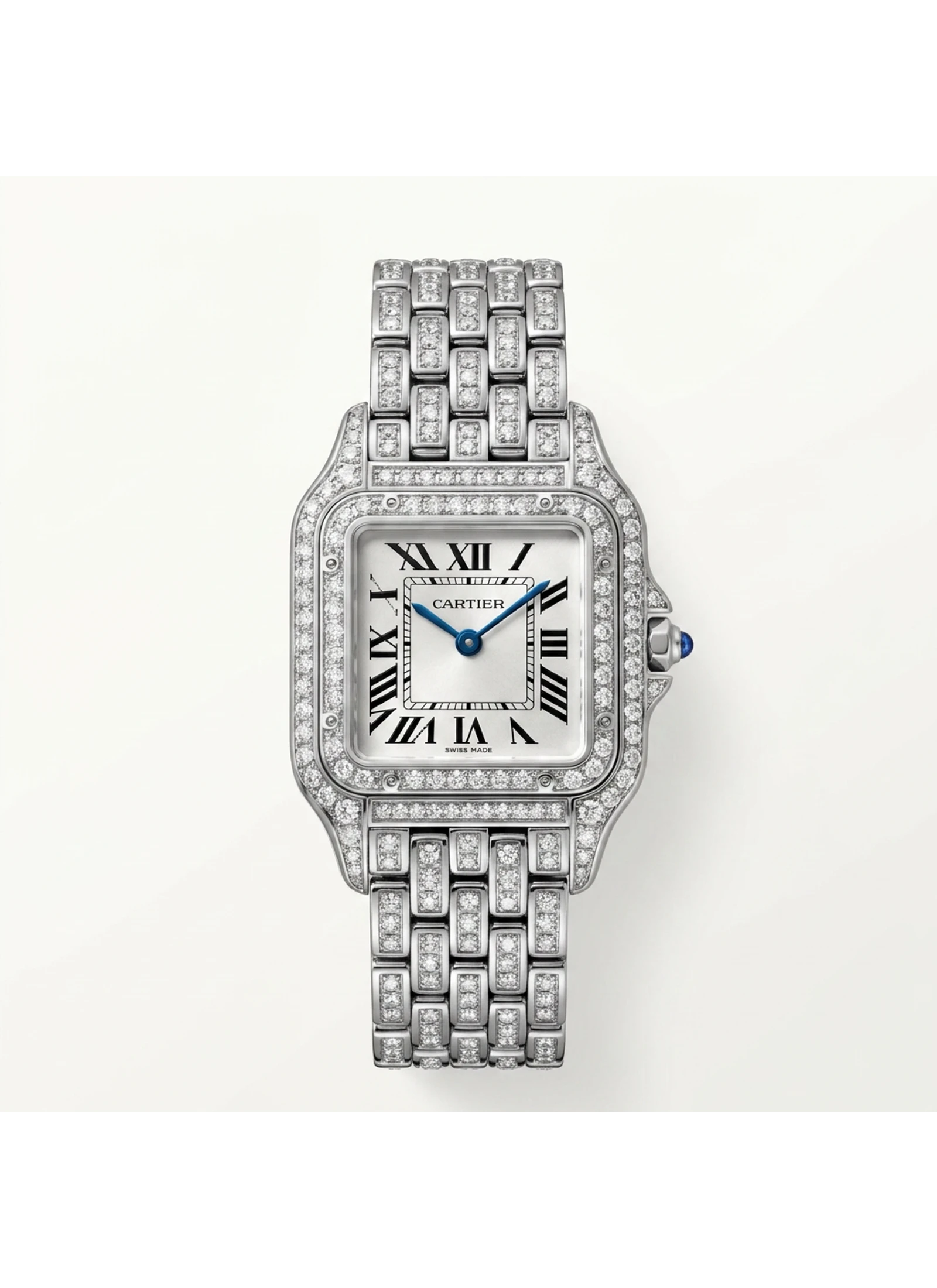
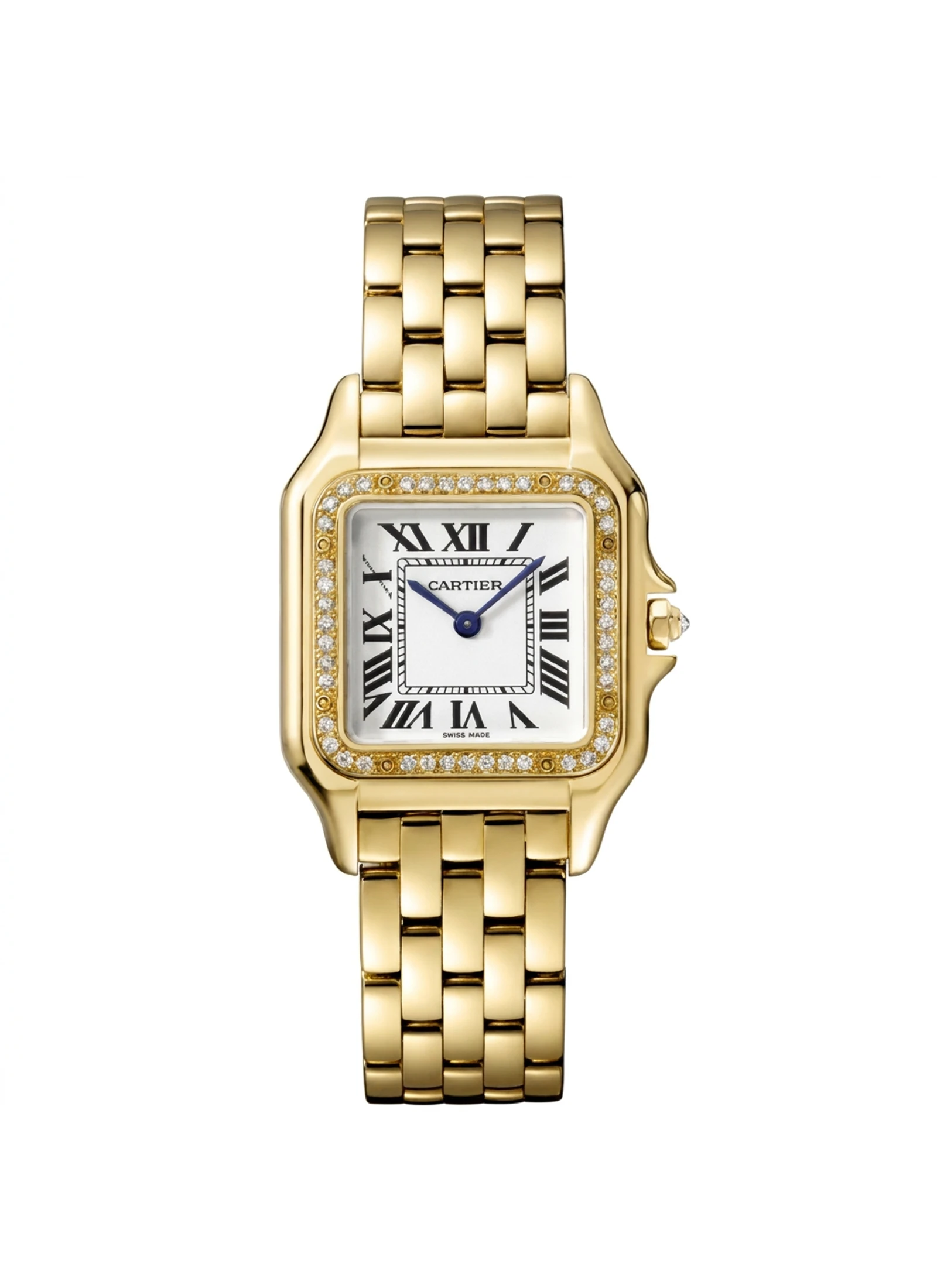
Launched in the 1980s, the Panthère de Cartier turned a small square watch into a bracelet object. The soft-cornered case, visible screws, Roman dial, cabochon crown, and brick-link bracelet made timekeeping feel like one element in a larger jewelry composition.
The Panthère did not have to be precious metal to feel like Cartier. Steel, two-tone, diamond-set, and compact executions widened the watch's range while keeping the bracelet as the design center. It became dressy without being fragile, luxurious without needing mechanical spectacle.
When the Panthère left Cartier's active lineup in the 2000s, the design did not disappear from memory. Its proportions, bracelet, and celebrity-era associations kept it legible as a Cartier object even before the modern revival put it back in boutiques.
Cartier's 2017 relaunch worked because it resisted overexplaining the watch. The revived Panthère kept the small and medium proportions, quartz simplicity, square screwed bezel, Roman numerals, and supple bracelet, proving that the original grammar still felt current.
The current Panthère line treats the watch as jewelry with a dial, not a spec-first platform. Steel, yellow gold, two-tone, diamonds, and larger modern sizes all orbit the same idea: a flexible bracelet whose movement gives the collection its name.
The Panthère de Cartier is not simply a watch named after an animal. The panther had already become one of Cartier's great emblems before this square bracelet watch appeared. That matters because the watch's most important quality is not a complication or a movement; it is the feeling of controlled motion.
George Barbier's 1914 image and Cartier's later panther jewels make the watch feel like part of a longer visual vocabulary. The Panthère watch translates that vocabulary into bracelet links, curved case corners, a cabochon crown, and a wrist presence that feels closer to jewelry than to tool watch design.
George Barbier's 1914 Cartier image makes the panther motif visible before the Panthère watch translated that symbol into a bracelet object. George Barbier / Wikimedia Commons - Public domain
Many watch families begin with a case. The Panthère begins with the bracelet. Cartier's current language even points to that idea: the watch takes its name from the bracelet, whose flexible structure echoes the movement of the Maison's animal emblem.
That is why the model can be small, quartz, and technically simple without feeling minor. The bracelet carries the watch. Its brick-link construction gives the whole object a liquid quality, so the dial reads as the center of a jewel rather than a standalone instrument.
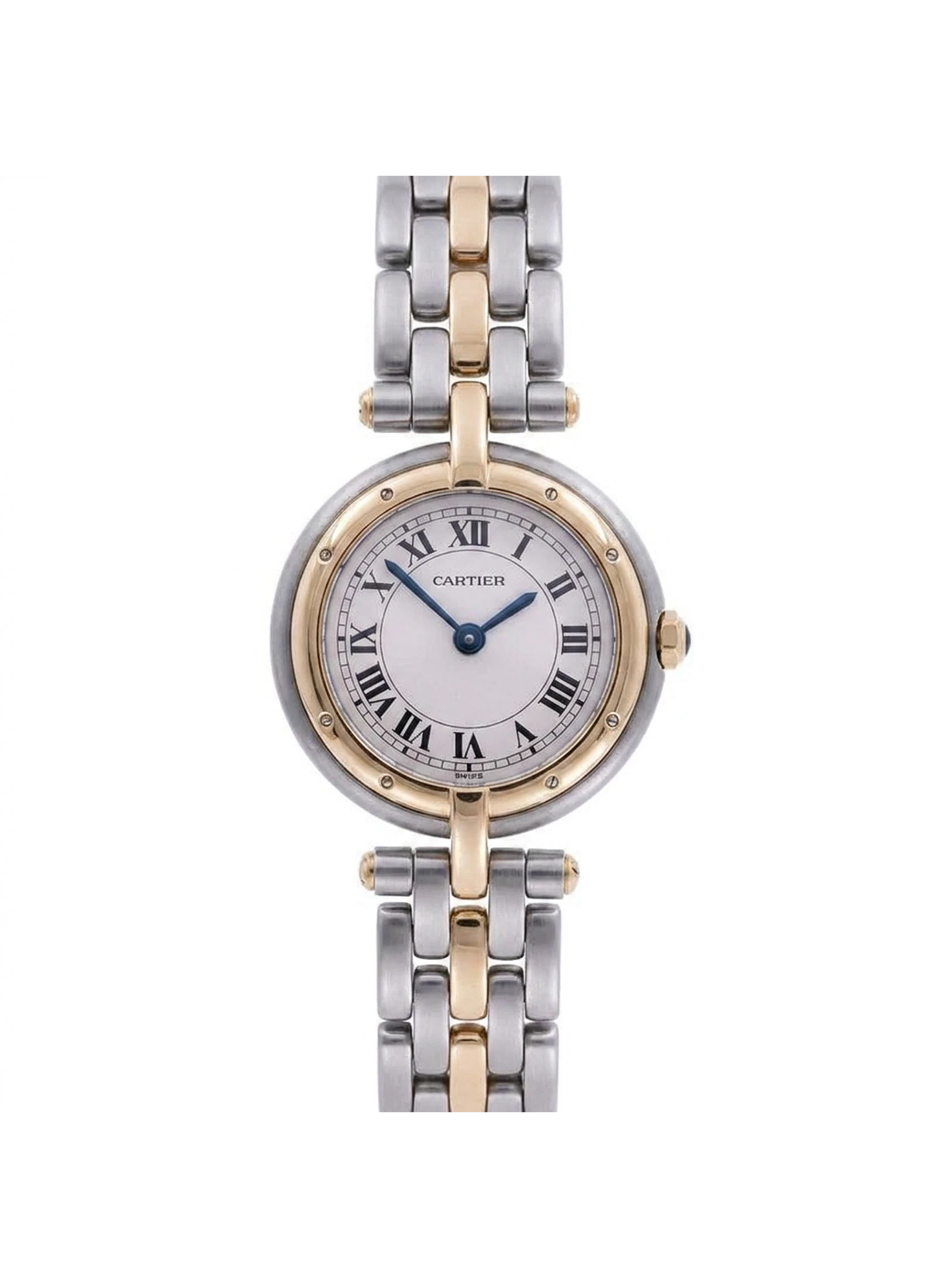
A cleared catalog visual of an early Panthère makes the compact case and brick-link bracelet readable as one design gesture.
The Panthère's 1980s context is easy to flatten into nostalgia, but the design is sharper than that. It used small scale, shine, and bracelet fluency to make a watch that could sit with tailoring, jewelry, and celebrity style without pretending to be a sports watch.
Quartz helped the idea rather than weakening it. The point was not mechanical drama. The point was a Cartier object that behaved effortlessly on the wrist and could be worn as part of a whole look.
Steel Panthère, two-tone Panthère, diamond Panthère, yellow-gold Panthère: the line can change materials without changing its identity because the bracelet and case shape stay so recognizable.
That range is useful in the catalog. A steel small model and a diamond-set version belong to very different price and dress registers, but they are clearly the same design system. Panthère is one of Cartier's cleanest examples of luxury expressed through proportion and surface rather than through watchmaking complexity.
A cleared catalog visual of a diamond-set Panthère shows how the same bracelet-and-case architecture can move into a more jewelry-forward register.
The return worked because Cartier did not over-fix it
The 2017 relaunch is a quiet lesson in restraint. Cartier did not need to make Panthère larger, louder, or more technical to make it current. Keeping the square case, visible screws, quartz movement, and linked bracelet made the watch feel continuous rather than revived from scratch.
That continuity is why modern references can sit beside vintage ones without the story feeling broken. The watch is not frozen, but its appeal depends on the design staying close to itself.
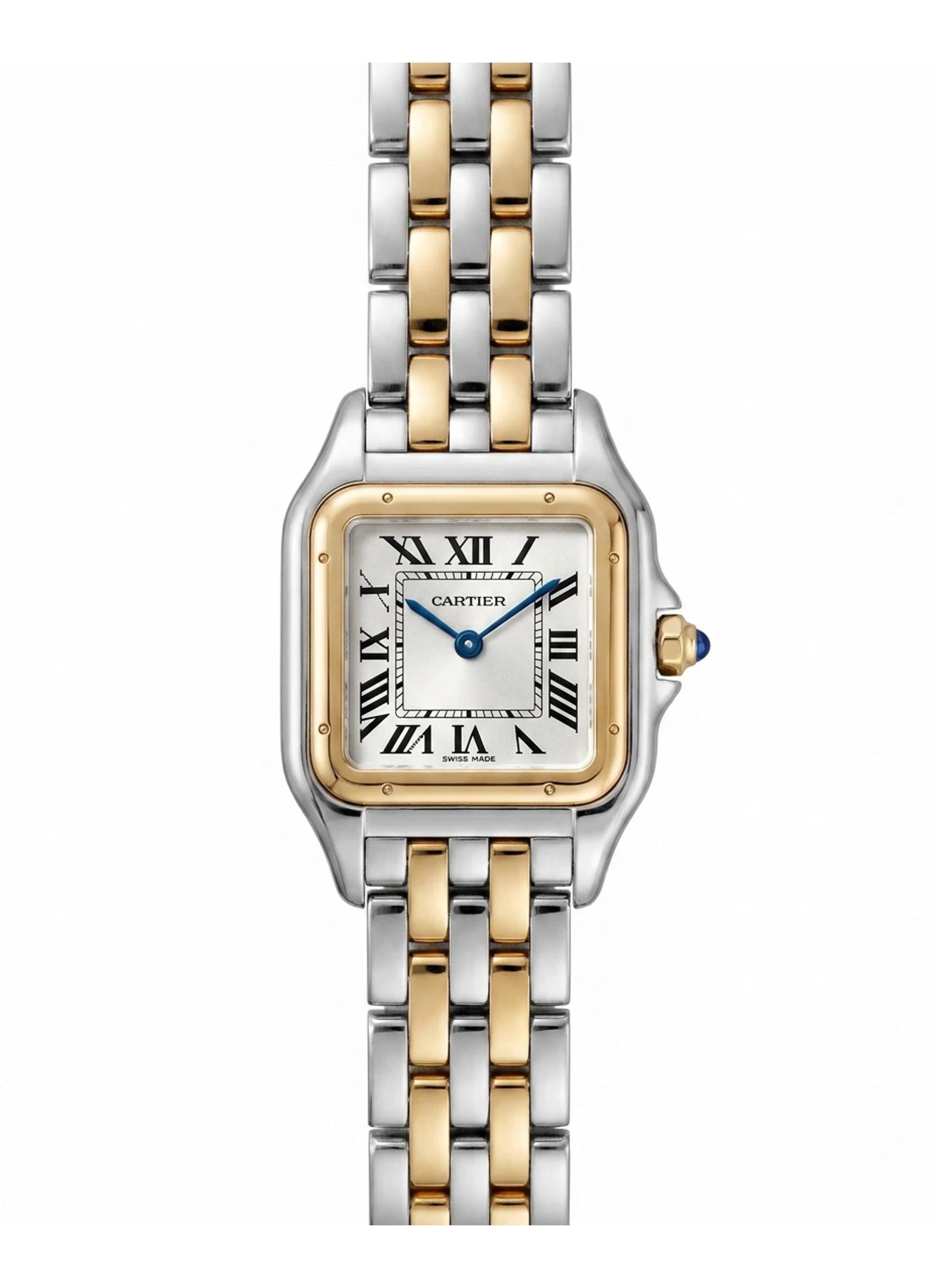
A cleared catalog visual of a modern steel Panthère shows the 2017-era return keeping the line close to its original grammar.
Panthère is important because it makes Cartier's watch philosophy obvious. The Maison is not only making timekeeping products; it is making wearable design objects where case, bracelet, dial, jewelry language, and cultural memory all matter at once.
That is also why the family belongs in the story layer. A raw grid of references makes the Panthère look like many small quartz watches. The story restores the real hierarchy: the bracelet comes first, the panther gives the metaphor, and the watch succeeds because Cartier knows exactly how little it needs to add.
A cleared catalog visual of a current larger Panthère points to the modern collection's continued bracelet-first identity.