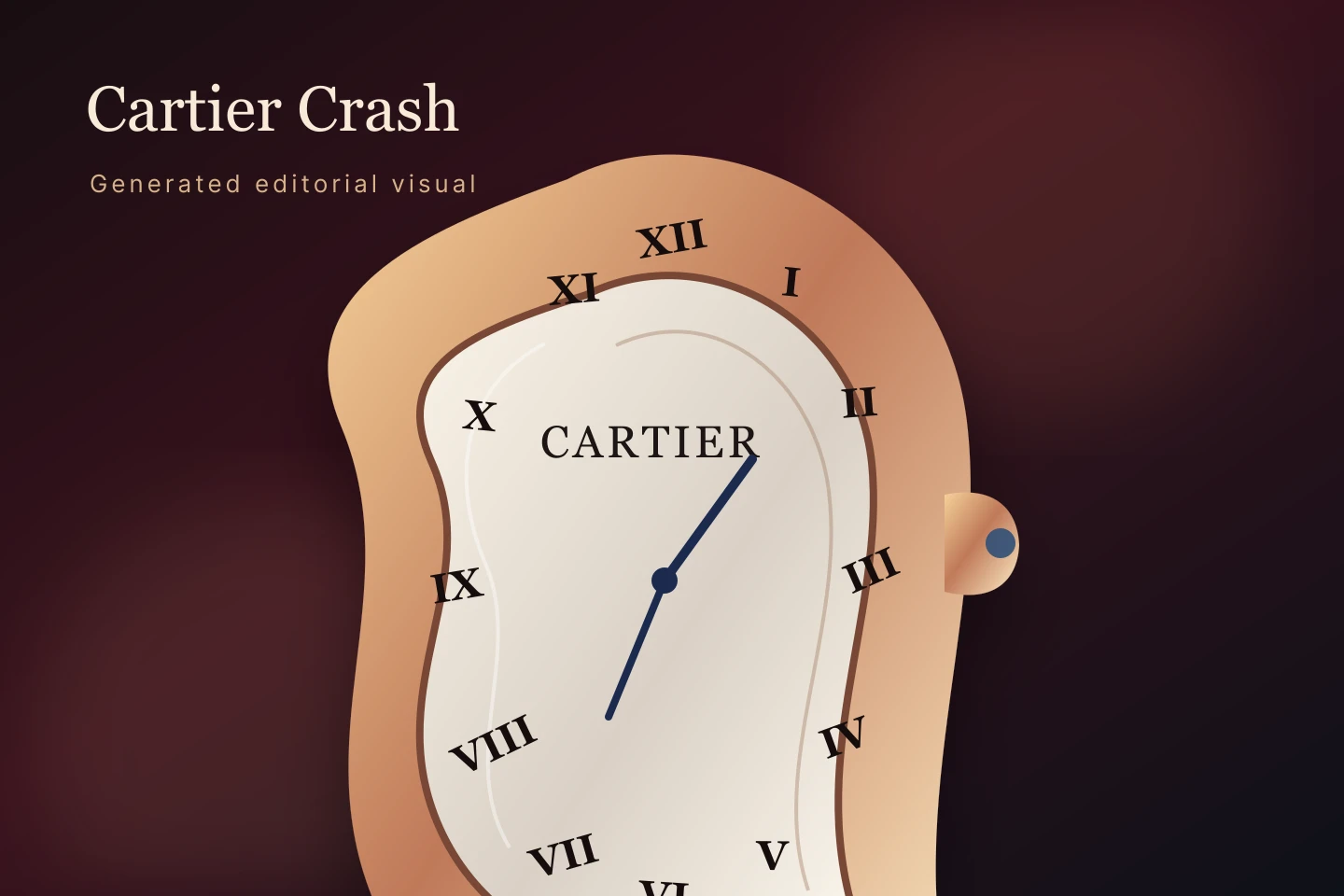
A connected history of the Cartier Crash, from Cartier London's 1967 asymmetric experiment and the Jean-Jacques Cartier/Rupert Emmerson design account to early rarity, the 1991 Paris re-edition, later special orders, and the rose-gold WGCH0031 New Special Order anchor in the local catalog.
The Crash begins at Cartier London, not as a normal reference launch but as a radical shape study. The famous damaged-watch legend remains useful as lore, yet the stronger account points to Jean-Jacques Cartier and designer Rupert Emmerson deliberately pulling the Maxi Oval/Baignoire Allongée form into a controlled asymmetric object.
The Crash's distortion created practical work. Case making, movement fitting, and dial painting all became harder because the numerals could not sit where a normal oval watch expected them to sit. The watch succeeded because the distortion stayed beautiful and legible, not because it simply looked broken.
Early London Crash production was extremely small and artisanal. That scarcity changed the watch's cultural afterlife: the Crash became less a broad commercial line than a design idea that kept resurfacing through rare examples, special orders, and collector memory.
Cartier Paris revived the Crash in 1991 as a more formal limited series, preserving the warped case language while making the watch part of a clearer modern production chapter. The Paris edition is important because it moved the Crash from London anomaly into repeatable Cartier vocabulary.
Later Crash watches appeared through special orders, limited runs, skeletonized interpretations, bracelet versions, and boutique-linked production. The modern Crash is still scarce, but it is no longer just an archival curiosity. It has become one of Cartier's clearest proof points for shape-led watch design.
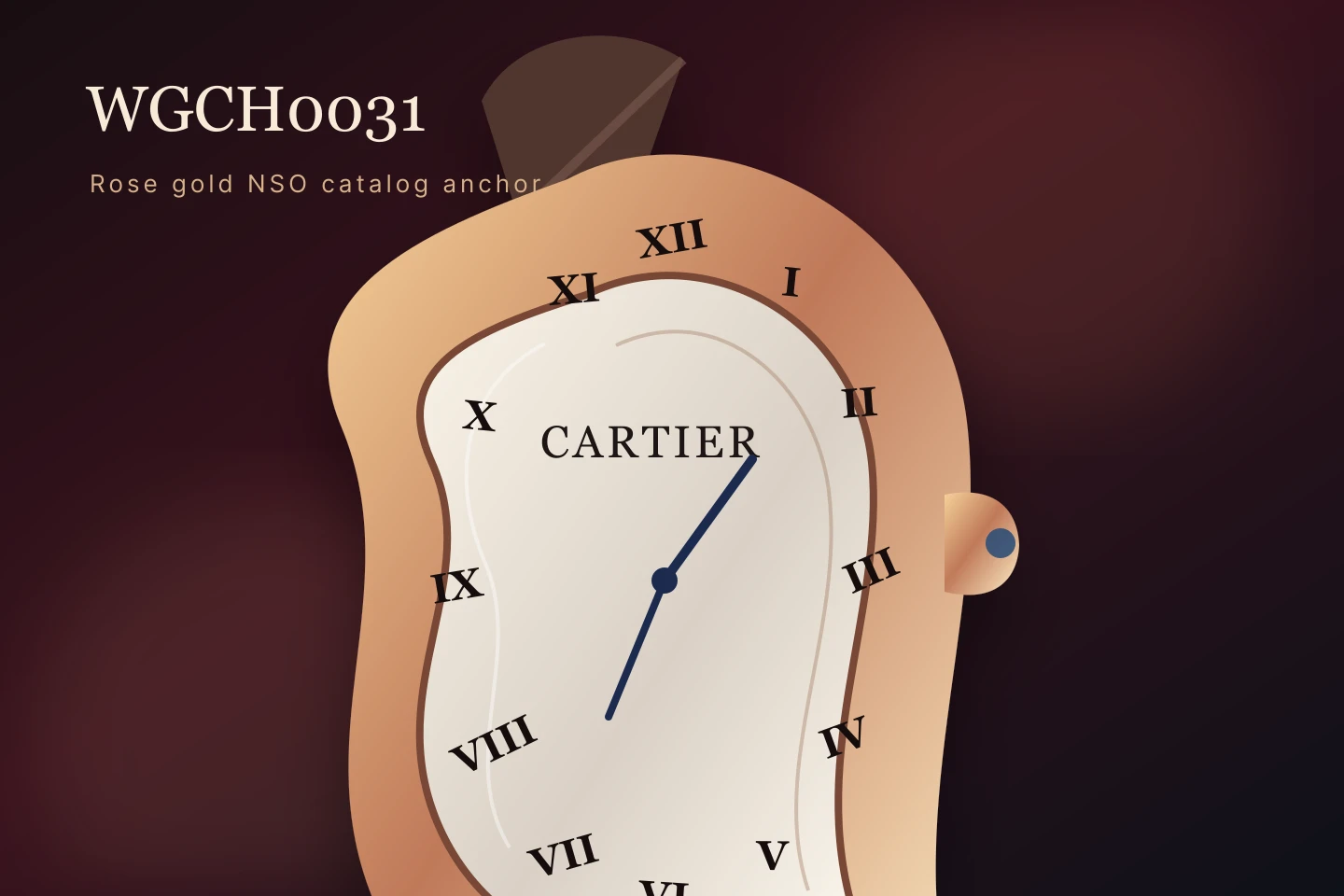
The local catalog's Crash anchor is WGCH0031, a rose-gold New Special Order example documented with a silvered Roman dial, manual 1917 MC calibre, calfskin strap, and asymmetric case proportions around 42 mm by 24 mm.
The Crash is usually introduced through a story about a Cartier watch distorted in an automobile accident. That story is sticky because it makes the watch instantly memorable. It also risks making the design sound passive, as though Cartier merely found an accident beautiful.
The better reading is more interesting. Cartier London was already unusually independent in the 1960s, and Jean-Jacques Cartier worked with Rupert Emmerson on an object that looked as if an oval watch had been pushed beyond obedience. The Crash is not randomness. It is controlled distortion.
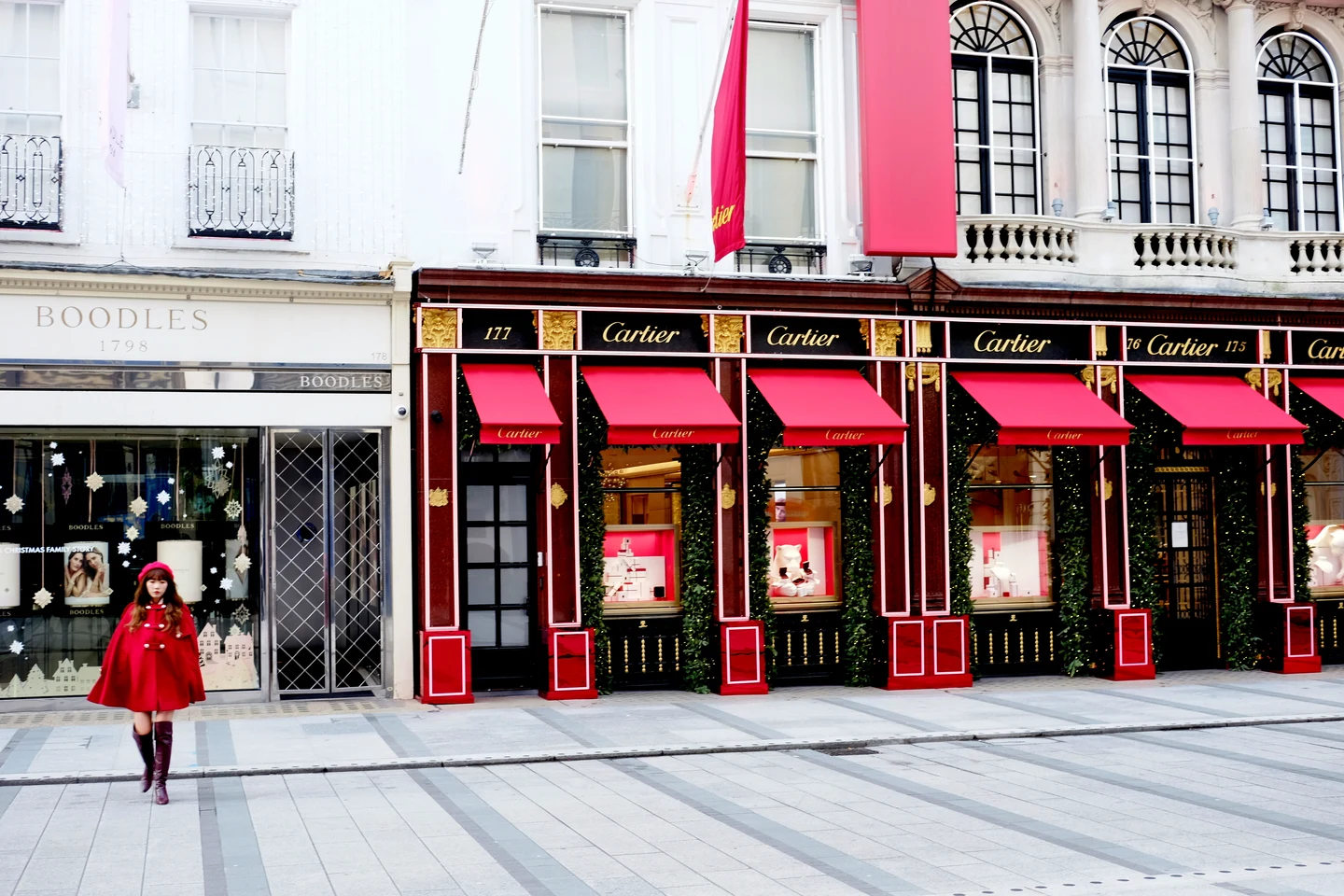
Cartier's New Bond Street presence gives the Crash story a London setting beyond the generated watch visuals. Roy Katzenberg - CC BY 2.0
The important thing about the Crash is not that it is asymmetrical. It is that the asymmetry still behaves like Cartier. The case bends, the numerals stretch, and the minute track warps, but the watch keeps a jeweler's sense of proportion.
That balance separates the Crash from novelty design. The dial is strange without becoming unreadable, and the case is dramatic without surrendering to caricature. Cartier did not reject elegance to make something radical; it made elegance more unstable.
A warped case is only the first problem. The harder task is making time legible inside it. Phillips' account of the early Crash emphasizes how much work went into fitting the movement and repainting the dial so that the distorted numerals still marked time properly.
That is why the Crash belongs in watch history rather than only design history. Its weirdness is not pasted onto a normal watch. The movement, dial, case, crown, and numerals all have to negotiate the same irregular frame.
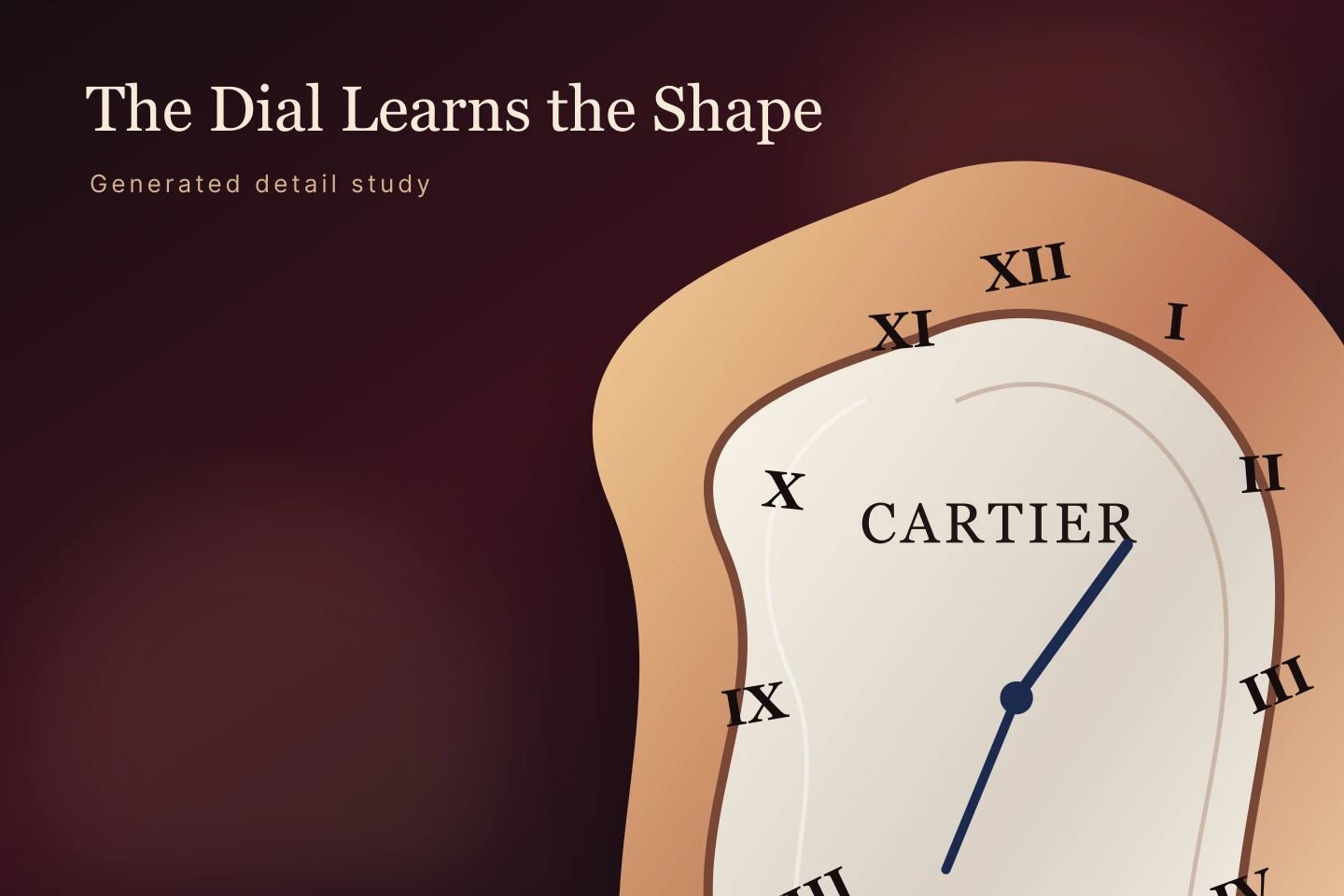
A generated close-detail visual emphasizes how the Crash's Roman numerals and minute track adapt to an irregular case.
Early Crash production was so limited that rarity became part of how the watch is understood. A broad catalog line can normalize a shape; the Crash stayed strange because there were so few watches available to make it ordinary.
The 1991 Paris re-edition changed the tempo without flattening the idea. It made the Crash more legible as a Cartier chapter while keeping production narrow enough that the watch remained an event rather than a collection anyone could easily browse.
By the 2000s and 2010s, the Crash had become one of Cartier's clearest signs of design confidence. Special orders, diamond versions, skeletonized interpretations, bracelet executions, and boutique-linked releases all orbit the same point: the case shape is the complication.
WGCH0031 fits that modern chapter. It is not the original London watch, and it should not be presented as one. It is a modern New Special Order expression that preserves the essential Crash vocabulary in rose gold, silvered dial, elongated Roman numerals, and manual-wind Cartier movement.
A generated rose-gold Crash-style visual supports the local WGCH0031 anchor while keeping source photography out of the app.
The Crash is a useful corrective to spec-first watch collecting. It is not important because of depth rating, chronograph architecture, or movement count. It is important because it proves that a watch case can carry an entire idea.
For DialAtlas, that makes the Crash a story object even when the local catalog has only one reference anchor. The database can identify WGCH0031; the story explains why that single asymmetric rose-gold watch belongs to one of Cartier's most influential design lines.