Breitling Navitimer: The Wristwatch Flight Computer
A connected history of the Navitimer, from AOPA and the circular slide-rule chronograph to the 806, Scott Carpenter's 24-hour Cosmonaute, Chrono-Matic experiments, the Schneider-era revival, manufacture B01 movements, the 806 Re-Edition, and the 70th-anniversary generation.
The Navitimer began as a pilot's chronograph built around a circular slide rule. Developed with the Aircraft Owners and Pilots Association in mind, it turned calculations for speed, distance, rate, and fuel into something a pilot could perform on the wrist.
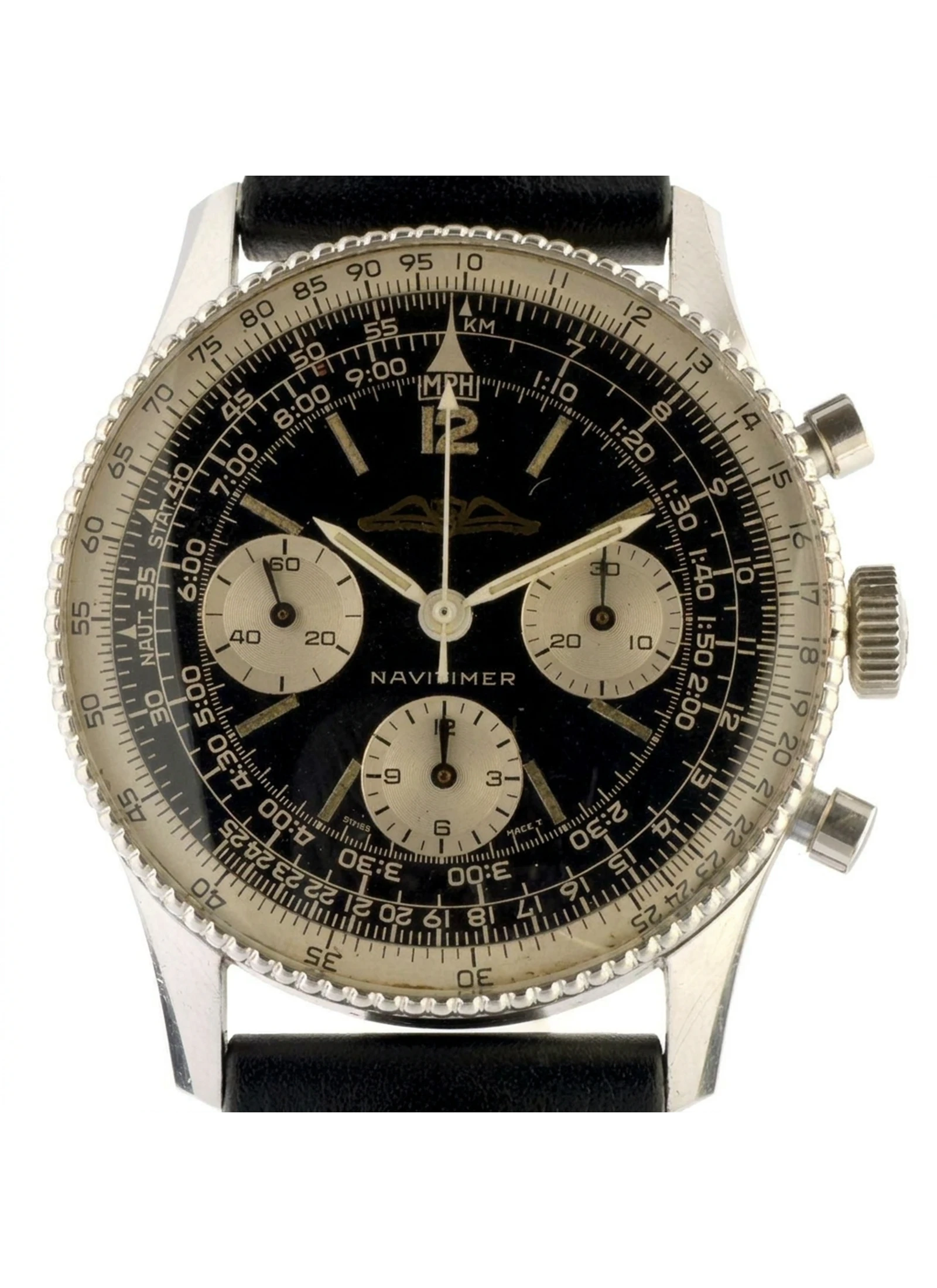
The early 806 established the Navitimer look: black dial, three-register chronograph, dense logarithmic scales, beaded bezel, and an AOPA or Breitling signature at 12. It is busy because it is useful; its complexity is the point.
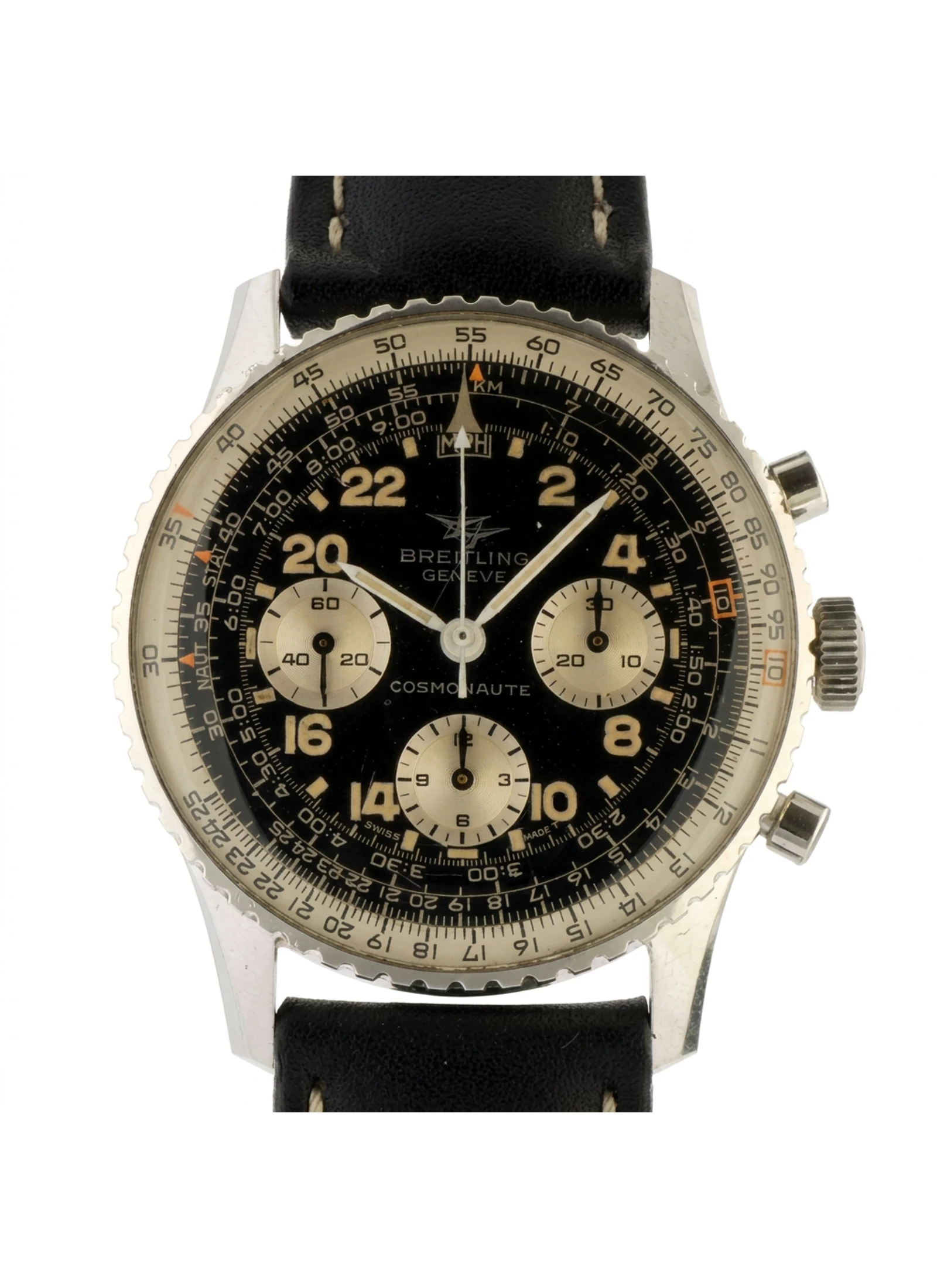
Scott Carpenter's need for a 24-hour display gave the Navitimer its space branch. The Cosmonaute kept the slide-rule chronograph idea but changed the reading of time itself, using a 24-hour dial suited to orbital sunrises and spacecraft timekeeping.
The late 1960s and 1970s pushed the Navitimer through automatic chronograph architecture, larger cases, and bolder design. The 1806 Chrono-Matic made the family feel more technical and more period-specific, while the slide rule remained the visual anchor.
After Breitling's crisis years, the Navitimer returned as the model that could reconnect the brand to aviation. Old Navitimer references and later A-series chronographs kept the slide-rule identity alive while making the watch commercially stable again.
Modern Breitling broadened the Navitimer into GMT, World, larger-case, and manufacture-movement variants. The B01 era was especially important: the family kept its analog-computer face while gaining a modern in-house automatic chronograph backbone.
The 806 Re-Edition proved how much collectors still cared about the original grammar. The 70th-anniversary generation then softened and broadened the Navitimer with AOPA wings, slimmer visual profiles, multiple sizes, richer dial colors, and the continuing B01 movement story.
The Navitimer was an analog computer before it was a style icon
The Navitimer's lasting power starts with a specific kind of usefulness. It was not merely a chronograph for pilots; it paired elapsed-time measurement with a circular slide rule, letting pilots work through practical aviation calculations on the wrist.
That is why the dial can look overwhelming to modern eyes. The density is not decoration. It is the visible interface of a pre-digital tool, a flight computer compressed into a watch case.
Most iconic watches become recognizable by subtraction. The Navitimer became recognizable by controlled overload. The 806's black dial, white scales, three counters, beaded bezel, and winged logo created a look that was intricate but coherent.
The design is almost impossible to separate from its function. Remove the slide rule and it stops being a Navitimer in the full sense. Keep the slide rule, and even later references still speak the same language.
The Cosmonaute gives Breitling its own space story
The Navitimer's space chapter is easy to miss because the Speedmaster owns the public Moon Watch narrative. But Scott Carpenter's 24-hour Cosmonaute is a different kind of space watch: one adapted to orbital time rather than lunar EVA testing.
The 24-hour dial solved a real problem. In orbit, ordinary day-night intuition collapses. The Cosmonaute made the Navitimer's already technical language even more specialized.
A cleared catalog visual of Navitimer Cosmonaute 809 anchors this chapter to a specific watch reference.Carpenter's Mercury-Atlas 7 preparation connects the Cosmonaute chapter to a real astronaut context rather than treating the 24-hour dial as a collector footnote. NASA / Wikimedia Commons - Public domain
Chrono-Matic made the Navitimer look like the 1970s
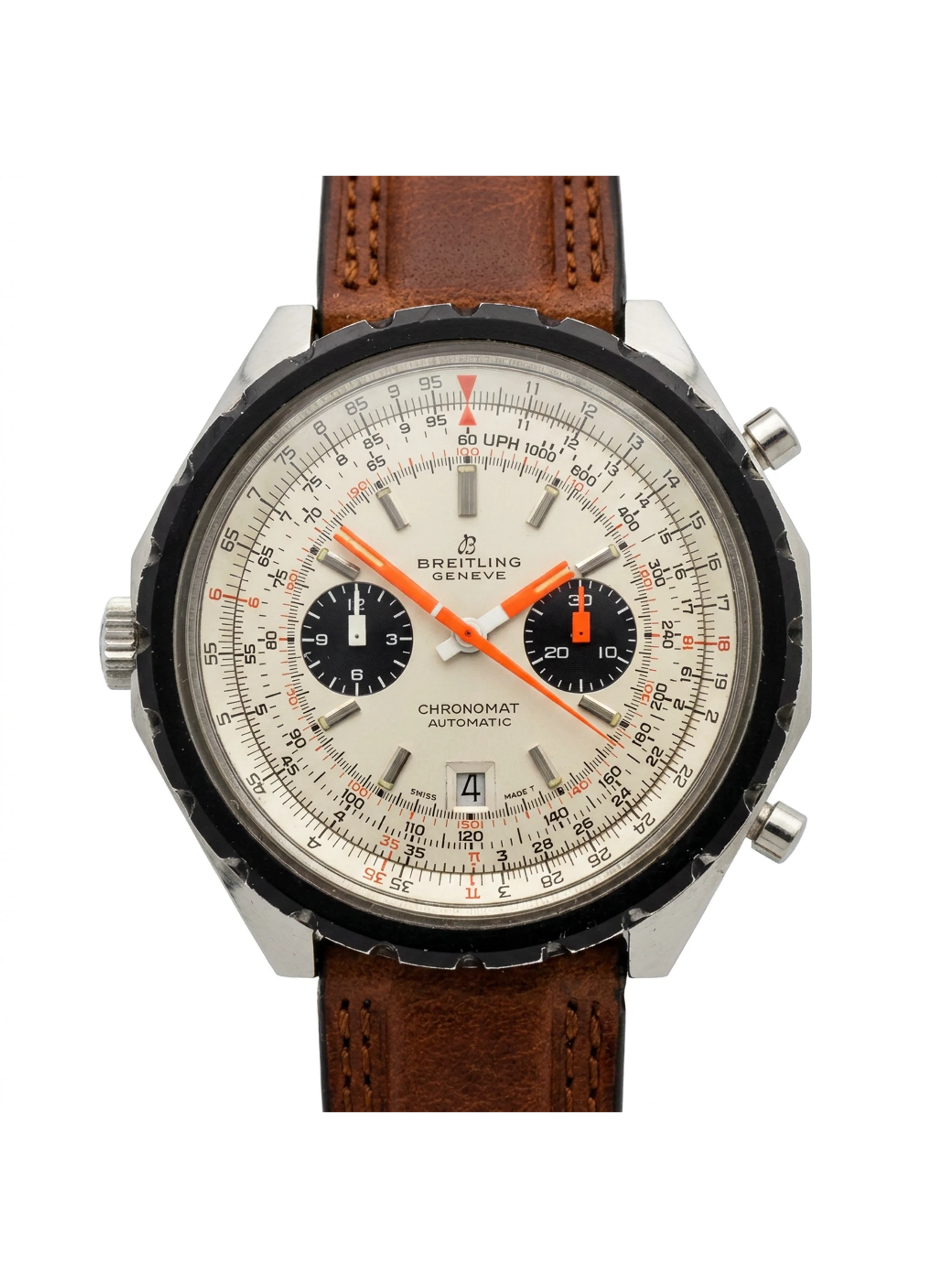
The Chrono-Matic era is the Navitimer at its most period-specific. Automatic chronograph technology, larger cases, and left-side crowns moved the watch away from the tidy early-806 profile and toward the bolder instrument design of the 1970s.
That can make these references polarizing, but they matter because the Navitimer did not freeze itself as a 1950s object. It absorbed the shock of automatic chronographs and kept its slide-rule identity through the transition.
A cleared catalog visual of Navitimer anchors this chapter to a specific watch reference.
The Navitimer helped Breitling become Breitling again
When Breitling rebuilt itself after the quartz crisis, the Navitimer was more than a catalog model. It was proof that the brand still had a distinct aviation identity: not generic pilot styling, but a recognizable instrument tied to flying, calculation, and chronographs.
The Old Navitimer and later A-series references are not always as romantic as the 806, but they are historically important. They carried the design through a period when continuity itself was the achievement.
The modern Navitimer had to solve a subtle problem: keep the old cockpit face while making the watch feel technically current. GMT, World, and larger-case references widened the practical brief, but the B01 manufacture movement gave the family a stronger mechanical center.
That is why the B01 era feels like more than a movement swap. It lets Breitling argue that the Navitimer is not only a heritage design; it is a current chronograph platform.
A cleared catalog visual of Navitimer 1 B01 Chronograph anchors this chapter to a specific watch reference.
The current Navitimer treats heritage as a living interface
The 806 Re-Edition was a collector signal: Breitling understood that the exact old grammar mattered, right down to the Plexiglas feel, bead detail, and hand-wound B09 movement. It was less a nostalgia exercise than a calibration point.
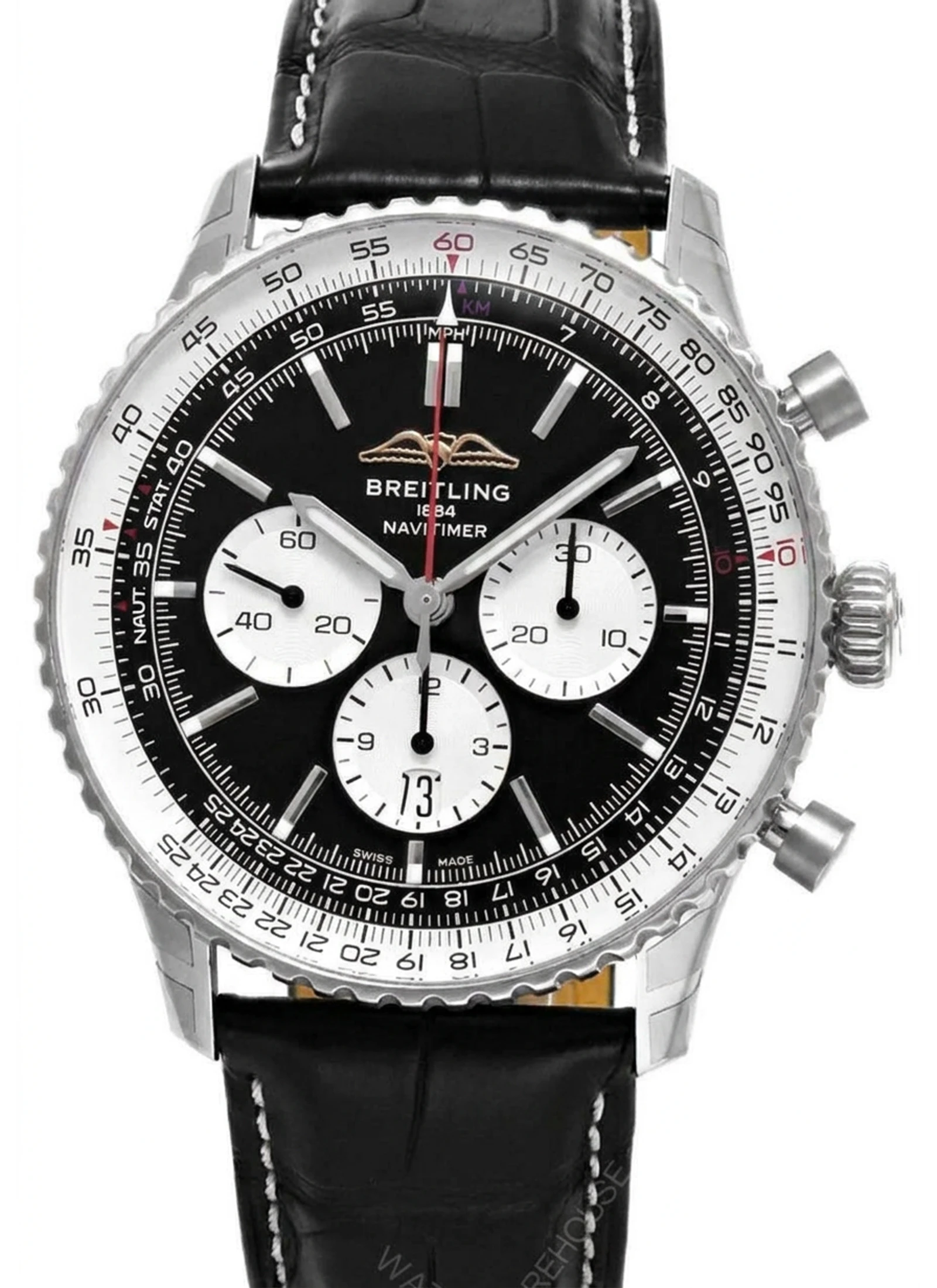
The 70th-anniversary generation uses that calibration more freely. AOPA wings return, the slide rule stays, and the B01 remains central, but color, size, and proportion open the Navitimer to people who may never calculate fuel burn and still understand the romance of the instrument.
A cleared catalog visual of Navitimer B01 Chronograph 43 anchors this chapter to a specific watch reference.