Blancpain Fifty Fathoms: The Dive Watch Born Under Pressure
A connected history of the Fifty Fathoms, from Jean-Jacques Fiechter, Bob Maloubier, Claude Riffaud, and the French combat swimmers to Tornek-Rayville, No Rad, Bathyscaphe, the 2003 revival, modern Automatique references, heritage tributes, and the Tech Gombessa.
The Fifty Fathoms was born from overlapping needs: Jean-Jacques Fiechter was a diver who understood timing risk underwater, while Bob Maloubier and Claude Riffaud needed a reliable watch for the French combat swimmer unit. The resulting watch established the family grammar: high legibility, automatic winding, water resistance, and a rotating timing bezel.
The Bathyscaphe branch translated the dive-watch idea toward smaller, everyday-wearable watches, while Aqua Lung and No Rad dials show how distribution, equipment culture, and luminous-material anxiety shaped the family beyond military procurement.
Few dive watches are as tangled with military collecting as the Fifty Fathoms. The Tornek-Rayville TR-900, created through the U.S. distributor Allen Tornek for American procurement, became one of the family grails. German Bund and No Rad examples added more provenance-driven branches.
The 2003 50th Anniversary edition made the Fifty Fathoms modern again. Blancpain then expanded the family into the large modern 5015 Automatique architecture, complicated versions, and chronographs, turning a cult vintage diver into a contemporary collection pillar.
The modern Bathyscaphe gave Blancpain a cleaner, more instrument-led counterweight to the domed-sapphire drama of the main Fifty Fathoms. Limited editions such as the MIL-SPEC tribute and Barakuda showed how deeply the brand could mine obscure vintage cues.
By the late 2010s, Blancpain had turned Fifty Fathoms history into a living release strategy. MIL-SPEC, Barakuda, No Rad, and other limited editions did not simply copy old watches; they taught newer collectors the vocabulary of the vintage archive.
The 70th Anniversary Act 1 returned to a wearable 42.3 mm case across three regional series. Act 2 went the other direction: Tech Gombessa asked what an analog dive watch can do for long-duration technical diving, with a three-hour timing display and a 47 mm titanium case.
The current Fifty Fathoms is no longer only a large luxury diver. With 38 mm, 42.3 mm, and 45 mm executions, Blancpain has moved the family toward broader wearability while keeping the core dial, bezel, and long-power-reserve automatic identity intact.
The Fifty Fathoms matters because it begins with a blunt problem. A diver needs to know how long he has been underwater. That sounds simple now, but in the early 1950s the modern dive-watch rulebook had not settled into place.
Fiechter's personal diving experience and the French combat swimmer brief pushed Blancpain toward a watch that prioritized legibility, water resistance, automatic winding, and a rotating bezel. Whether one calls it the first modern dive watch or one of the first, it helped define what the category would become.
Fifty fathoms is roughly 91 meters, a depth tied to what divers could safely reach in the era. The name is technical, but it also feels literary and strange, which is part of why the watch carries more atmosphere than a simple meter rating.
That atmosphere helped the family travel. Aqua Lung signatures, No Rad symbols, and later military-issue examples turned one design into many overlapping stories.
Jacques Cousteau belongs to the same postwar diving culture that made timing, depth, and underwater legibility feel urgent rather than decorative. Teresa317 / Wikimedia Commons - CC BY-SA 4.0
Military collecting made the family richer and harder to parse
The Tornek-Rayville TR-900 is the perfect example of why Fifty Fathoms collecting is both intoxicating and difficult. It is a Blancpain-made watch shaped by U.S. procurement rules, sold under a different name, and surrounded by scarcity, decommissioning, and service-history questions.
Bund, No Rad, MIL-SPEC, Aqua Lung, Lip, Technisub, and other signatures create similar catalog trouble. They are not always tidy references in the modern database sense, but they are central to how collectors understand the watch.
The Fifty Fathoms did not become a continuous modern luxury icon by accident. The 2003 50th Anniversary edition brought the watch back with a sharper sense of heritage and a modern sapphire-bezel language.
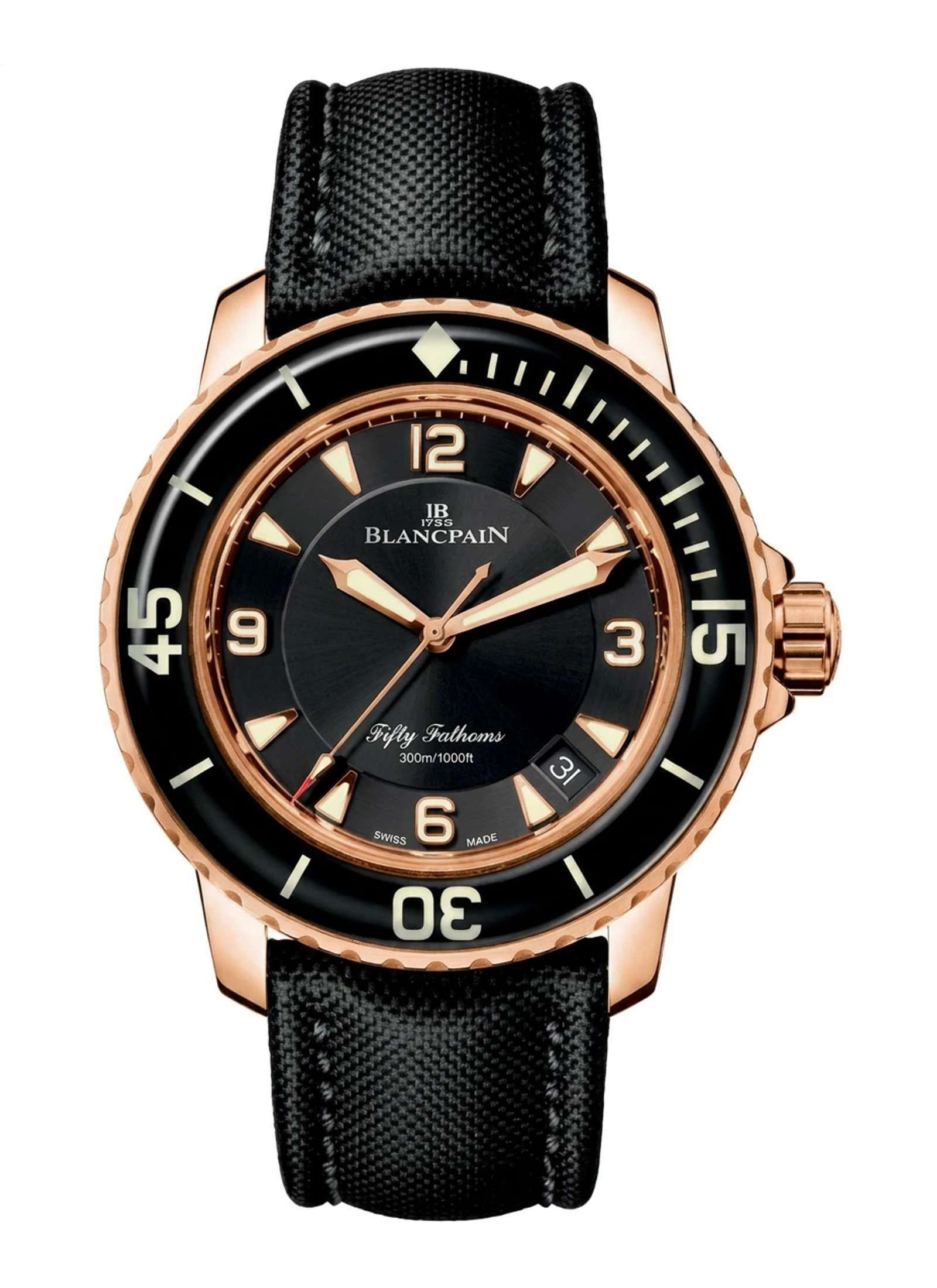
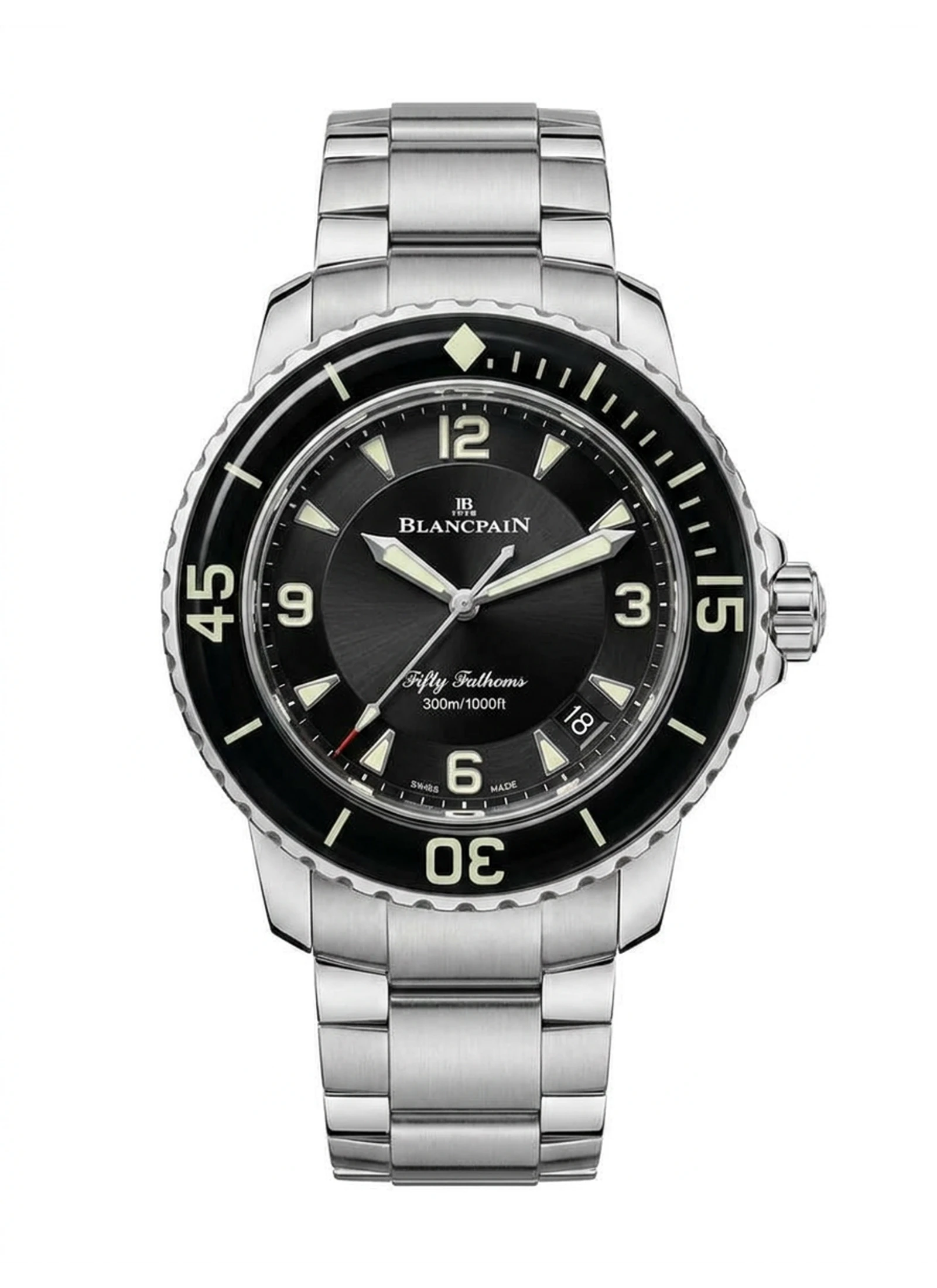
The 2007-era 5015 then gave the family a full contemporary foundation: large case, long power reserve, high water resistance, and enough visual drama to stand apart from the Submariner-shaped idea of a dive watch.
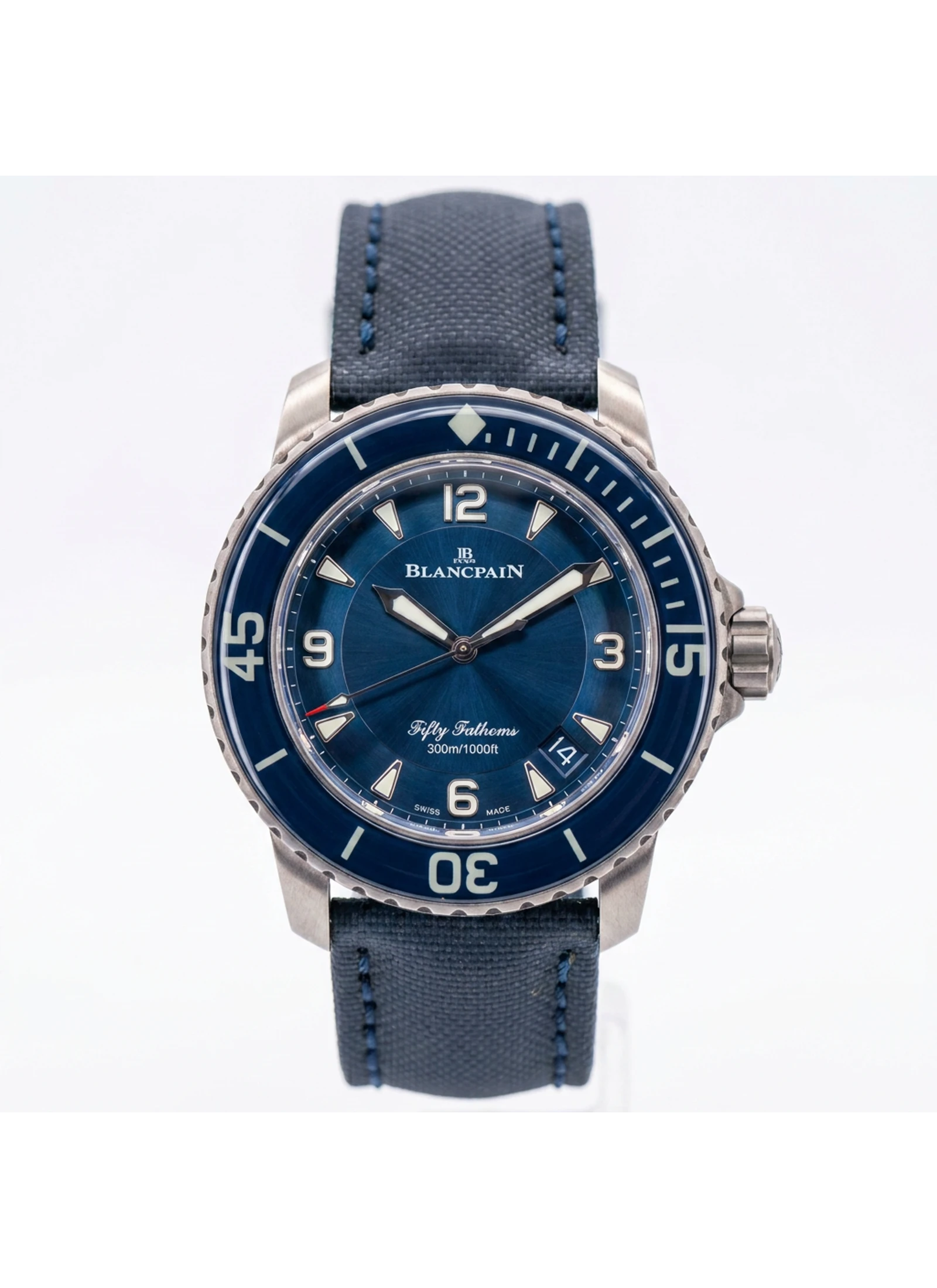
A cleared catalog visual of Fifty Fathoms Automatique anchors this chapter to a specific watch reference.
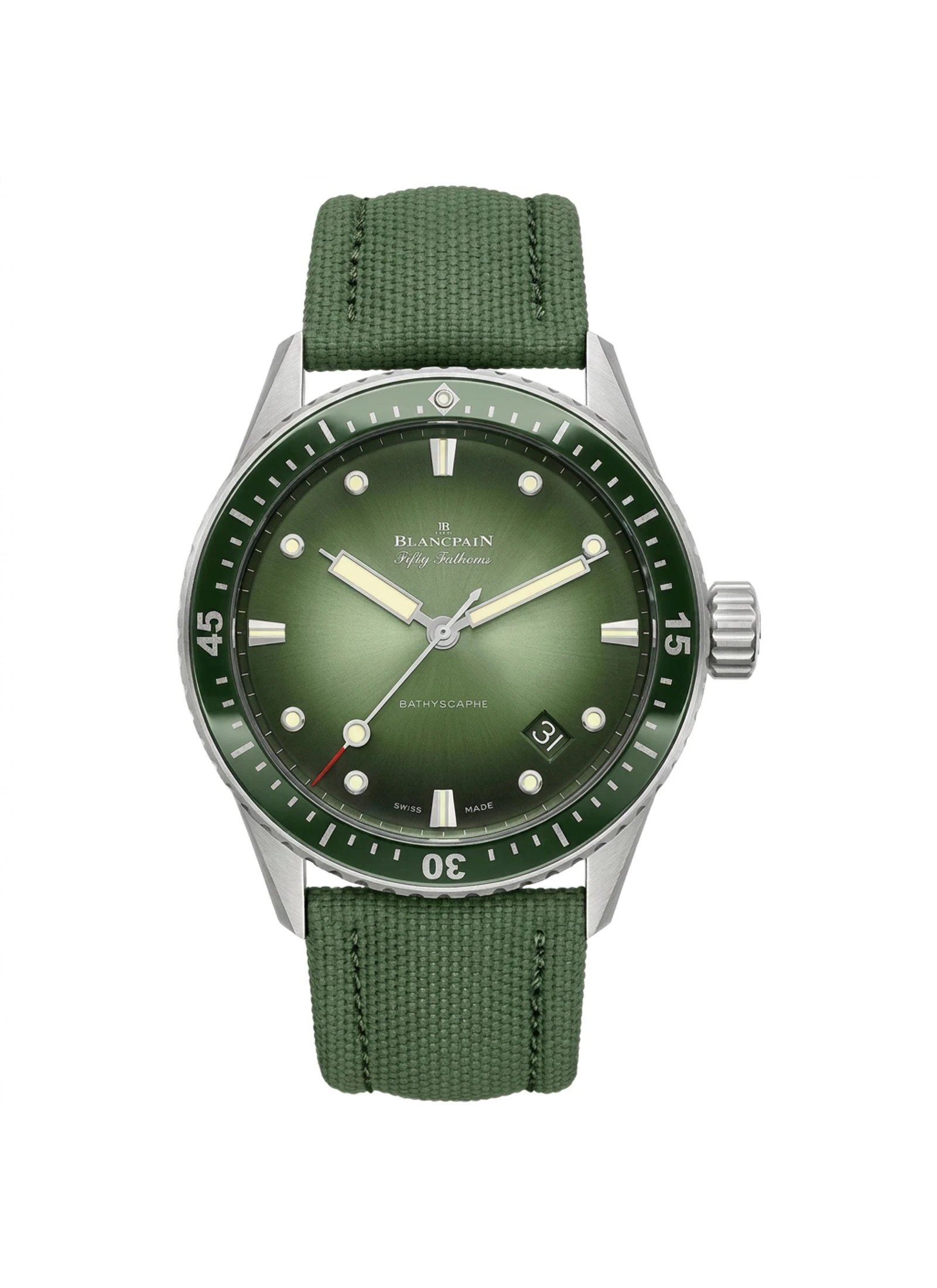
The Bathyscaphe is not just a smaller footnote. It is the restraint branch: slimmer, cleaner, and closer to instrument-watch minimalism than the main Fifty Fathoms Automatique.
That makes it useful in the story architecture. The family can hold both the theatrical domed-bezel Fifty Fathoms and the more controlled Bathyscaphe without flattening one into the other.
A cleared catalog visual of Bathyscaphe anchors this chapter to a specific watch reference.
MIL-SPEC, Barakuda, and No Rad are not just scarcity plays. They teach collectors what to look for in the old watches: humidity indicators, odd dial signatures, orange-red markers, retailer and military context, and the difference between a generic vintage diver and a provenance-rich Fifty Fathoms.
This is where story and catalog really need to talk to each other. Without the story, these codes feel like isolated products. With the story, each chip becomes a doorway into a specific piece of the archive.
Most dive watches treat elapsed time as a one-hour bezel problem. Tech Gombessa asks a different question: how should a mechanical watch support long-duration technical dives and rebreather work?
That is why the three-hour display matters. It is not nostalgia. It is a modern attempt to make the Fifty Fathoms useful for a different kind of underwater practice, developed with Laurent Ballesta and tied to Blancpain's ocean-conservation identity.
For years, the modern Fifty Fathoms could feel intimidating because the main watch lived in large case sizes. The recent 42.3 mm and 38 mm executions change the tone. They make the family easier to wear without abandoning the deep bezel, luminous dial, and long-running automatic movement story.
That matters for DialAtlas because the family is no longer one hero reference. It is a layered system: vintage military anchors, Bathyscaphe restraint, heritage limited editions, professional technical tools, and modern Automatique sizes.
A cleared catalog visual of Fifty Fathoms Automatique anchors this chapter to a specific watch reference.